


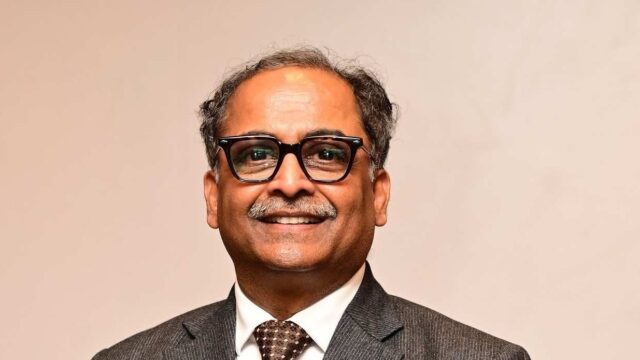
The Reserve Bank of India’s decision to raise the repo rate by 25 basis points to 5.50% is a measured and pre-emptive step aimed at containing inflationary pressures, Indian Overseas Bank Managing Director & CEO Ajay Kumar Srivastava said.
The Monetary Policy Committee’s decision comes against the backdrop of rising risks to the inflation outlook, with CPI inflation projected at 5.2% for FY27. Supply-side pressures from energy prices, a deficient monsoon and the persistence of El Niño conditions could add to price pressures, Srivastava said.
RBI shifts focus to inflation risks
According to Srivastava, the RBI’s calibrated tightening stance is significant as it signals that rate cuts are currently off the table. Future policy action will depend on the evolution of economic growth and underlying inflation.
“The shift to a calibrated tightening stance is equally significant, signalling that rate cuts are off the table for now and that further policy action will depend on how growth and underlying inflation evolve,” Srivastava said.
The rate hike could increase borrowing costs across segments as banks transmit the higher policy rate to their lending rates. Home loan borrowers and small businesses are likely to feel the impact more directly, particularly if the higher rates persist.
Growth provides cushion
Despite the tighter monetary policy environment, Srivastava said the domestic economy remains resilient. GDP growth is projected at 7.1% for FY27, following 7.8% growth in the first quarter.
The strength of domestic demand provides some cushion as monetary conditions tighten, while robust credit flows and continued investment activity remain positive for the economy, he said.
The combination of strong growth and elevated inflation creates a balancing challenge for policymakers, with the RBI seeking to prevent inflation from becoming more broad-based without undermining economic momentum.
Banks face transmission challenge
Higher interest rates are expected to have implications for borrowers, particularly home loan customers and small businesses. Banks will therefore need to balance the transmission of higher policy rates with the need to sustain productive credit demand.
At Indian Overseas Bank, the bank will maintain transparency with customers as the impact of the policy rate change passes through the banking system, while continuing to offer competitive value to depositors, Srivastava said.
“Price stability remains fundamental to sustainable growth, and the banking system remains well placed to support India’s growth and investment,” he added.