CORPWHIZZ NETWORK
Mercedes-Benz’s 2025 sales performance offers a clear message about the evolving contours of the country’s luxury car market: premiumisation is trumping volume growth.
While total deliveries remained broadly flat year-on-year at 19,007 units in calendar year 2025, the German luxury carmaker clocked its best-ever revenue performance in India, driven by strong demand for top-end vehicles, high-performance AMG models and a rapidly expanding battery electric vehicle (BEV) portfolio.
In a market often obsessed with headline volumes, Mercedes-Benz’s numbers point to a more nuanced strategy- one that prioritises margin-rich products, brand desirability and long-term customer loyalty over price-led expansion.
Top-End Vehicles Power Growth
The standout theme of 2025 was the resilience and growth of Mercedes-Benz’s Top-End Vehicle (TEV) portfolio, which includes the S-Class, Mercedes-Maybach range and AMG performance cars.
The TEV portfolio grew 11% year-on-year and accounted for 25% of total sales, a significant share in a price-sensitive market like India. This shows the growing appetite among affluent Indian buyers for ultra-luxury and performance-led vehicles, even amid broader economic volatility.
Notably, the AMG portfolio surged 34% year-on-year, underlining the rise of aspiration-led purchases and the willingness of customers to pay a premium for performance, exclusivity and brand pedigree.
Electric Luxury Finds Its Feet
Mercedes-Benz’s electric vehicle strategy also gathered momentum in 2025. The BEV portfolio posted 12% year-on-year growth, with electric models accounting for 20% of all top-end Mercedes-Benz vehicles sold in India.
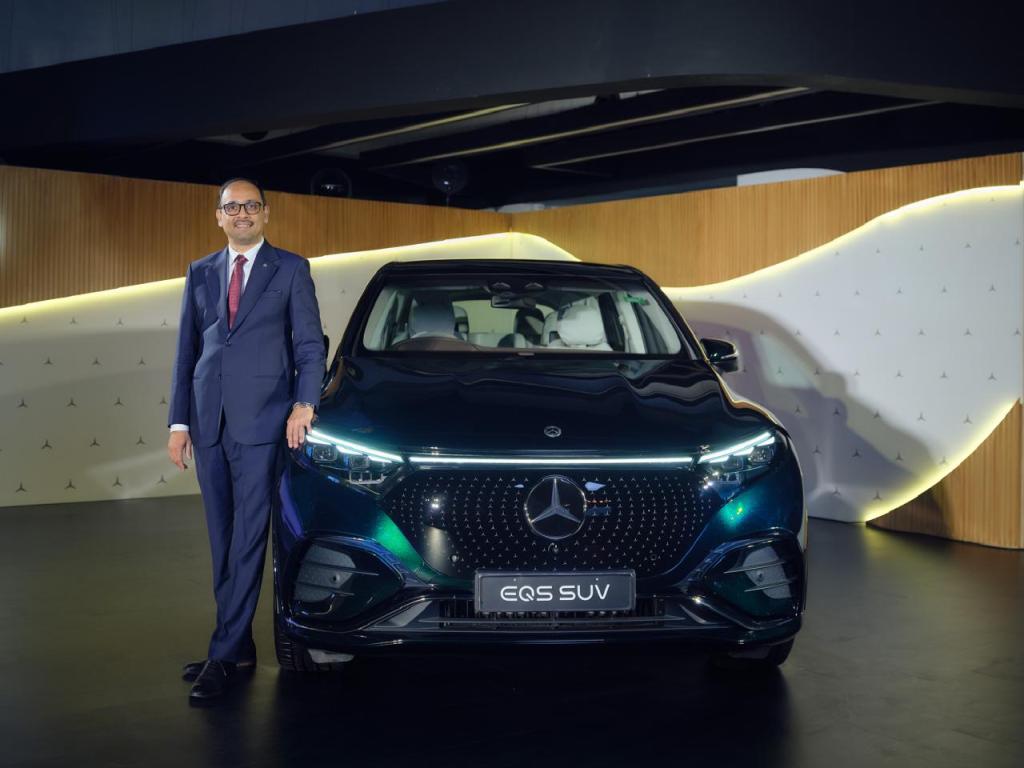
What stands out is the concentration of demand at the very top of the price pyramid. About 70% of all Mercedes-Benz BEVs sold in 2025 were top-end models, priced between ₹1.25 crore and ₹3.1 crore. Models such as the EQS SUV, EQS Sedan, Mercedes-Maybach EQS SUV and the G580 are driving this trend, with the EQS SUV emerging as the brand’s highest-selling luxury BEV in India.
This indicates that electric mobility in the luxury segment is being adopted first by customers who value technology, sustainability and exclusivity—rather than by price-conscious early adopters.
Sedans and SUVs: A Balanced Portfolio
Contrary to the global narrative of SUVs cannibalising sedans, Mercedes-Benz India continues to see strong demand across both body styles. The long wheelbase E-Class retained its position as India’s highest-selling luxury car, reinforcing customer loyalty in the chauffeur-driven segment. Demand for the C-Class, S-Class and Mercedes-Maybach S-Class limousines remained robust.
At the same time, the SUV portfolio- ranging from the GLA and GLC to the GLS, Mercedes-Maybach GLS and the iconic AMG G63- delivered a solid performance, reflecting India’s growing preference for luxury SUVs without compromising on brand heritage.
A Conscious Pullback from Entry Luxury
One of the more telling indicators of Mercedes-Benz’s strategic direction was the 20% decline in entry luxury sales, which reduced the segment’s share to 13% of overall volumes. Rather than chasing volumes through aggressive pricing, the company has chosen to protect brand equity and product substance. This deliberate move away from price competition suggests Mercedes-Benz is positioning itself as a luxury-first brand, even if that comes at the cost of short-term volume growth.
Aggressive Product Pipeline for 2026
Looking ahead, Mercedes-Benz plans to launch 12 new products in India in 2026, including new models, facelifts and vehicles with no direct predecessors. A significant portion of these launches will be Top-End Vehicles and new BEVs, reinforcing the brand’s premium and electric focus. A key highlight will be the debut of the CLA BEV, which will introduce the brand’s next-generation MB.OS operating system, signalling a deeper integration of software, digital experience and vehicle architecture.
Local Manufacturing as a Strategic Lever
In a major manufacturing milestone, Mercedes-Benz India announced the start of local production of the Mercedes-Maybach GLS at its Pune facility. India becomes the first market outside the US to locally produce this ultra-luxury SUV. The move underscores India’s growing importance for the brand, with the country now among the top five global markets for Mercedes-Maybach. Local manufacturing is expected to improve delivery timelines, enhance customer access and strengthen Mercedes-Benz’s ability to respond quickly to demand in the ultra-luxury space.
Building the EV Ecosystem: MB.CHARGE Public
Beyond vehicles, Mercedes-Benz is investing in the supporting ecosystem. The launch of MB.CHARGE Public provides customers access to a unified charging network through the Mercedes-Benz app and RFID authentication. With access to 9,000 plus DC charging points across India, partnerships with multiple charge point operators and seamless digital payments, the platform aims to reduce range anxiety and improve EV ownership experience- critical for driving wider adoption of luxury EVs.
Retail Expansion and Network Investment
To support its premium strategy, Mercedes-Benz plans to add 30 luxury touchpoints in 2026, entering three new markets and upgrading existing outlets. Franchise partners will invest over ₹450 crore, ensuring the retail experience matches the brand’s luxury positioning.




 Corpwhizz
Leave a comment