


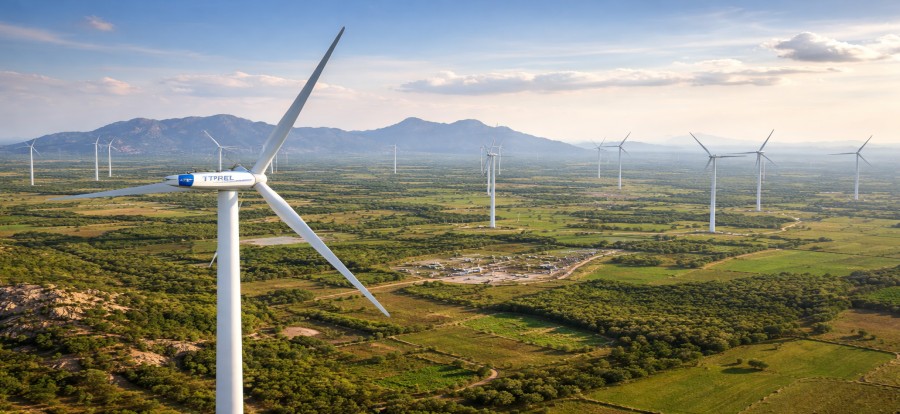
Tata Power Renewable Energy Ltd (TPREL) has commissioned a 198 MW group captive wind energy project for Tata Steel at Karur in Tamil Nadu, marking one of the largest wind projects executed under the group captive model in India. The project significantly strengthens Tata Steel’s decarbonisation roadmap while reinforcing TPREL’s leadership in large-scale renewable energy execution.
Project Scale and Clean Energy Impact
The Karur wind project comprises 55 wind turbine generators (WTGs) of 3.6 MW each, with an annual generation potential of 31 million units of clean electricity. The project is expected to offset 26,350 tonnes of CO₂ emissions annually, contributing meaningfully to industrial decarbonisation and India’s broader clean energy transition. By supplying renewable power through the group captive framework, the project enables Tata Steel to secure long-term, cost-effective green energy while reducing exposure to fossil fuel volatility and regulatory risks.
Self-EPC Model Underlines TPREL’s Execution Capabilities
A key differentiator of the project was TPREL’s self-EPC execution strategy. The scope was strategically unbundled into multiple packages and executed entirely in-house, covering balance of plant (BOP), civil works, engineering and construction, transmission lines, 33 kV systems, and system integration. This approach reduced dependency on OEM-led execution, optimised costs, enhanced quality control, and highlighted TPREL’s strong internal engineering and project management capabilities that are critical for delivering mega-scale wind projects efficiently.
Overcoming Complex Execution Challenges
The Karur project presented several logistical and geological challenges. These included transporting massive turbine components with minimal disruption to local communities and managing hard rock formations during foundation excavation.
TPREL deployed advanced direct-to-hole drilling machinery to address difficult terrain, while its ability to manage the seamless movement of over 516 cubic metres of concrete within a 12-hour window demonstrated high levels of coordination and operational excellence.
Record-Speed Project Delivery
Despite the complexities, the project achieved key milestones at record speed. Foundation works were completed in 126 days, while WTG installation was concluded in 167 days. These timelines show TPREL’s capability to deliver large renewable energy projects with speed, scale, and resilience, an increasingly critical factor as India accelerates capacity additions.
Strategic Alignment with India’s Renewable Energy Targets
The project further strengthens TPREL’s role in supporting India’s ambition of achieving 500 GW of renewable energy capacity by 2030. It also reflects the company’s focus on scaling wind-led clean energy solutions that are reliable, dispatchable, and economically viable for industrial consumers. TPREL’s wind energy portfolio currently exceeds 3.7 GW, with over 1.2 GW operational and the remaining capacity under development across key renewable hubs including Rajasthan, Gujarat, Maharashtra, Andhra Pradesh, Karnataka, and Tamil Nadu.
Expanding Renewable Portfolio and Long-Term Clean Energy Vision
This milestone aligns with Tata Power’s goal of achieving 100% clean energy by 2045. The group’s total renewable portfolio stands at 15.7 GW, of which 6.9 GW is sourced from clean energy. With the commissioning of the Karur project, TPREL’s renewable utility capacity has reached 11.6 GW, including 6.2 GW operational capacity, comprising 5 GW of solar and 1.2 GW of wind energy. An additional 5.8 GW is under various stages of implementation, split between 3 GW of solar and 2.8 GW of wind projects, expected to be completed in phases over the next 6 to 24 months.