

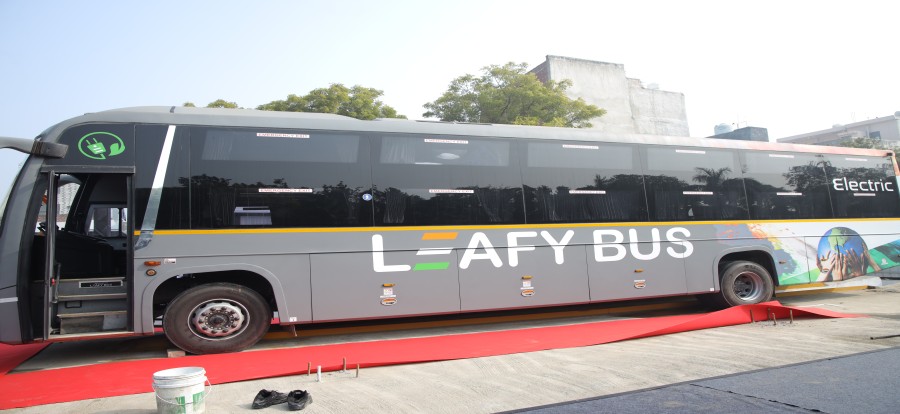
Intercity electric bus operator LeafyBus plans to expand its fleet from 10 to more than 100 buses over the next two years. As part of its roadmap, the company is exploring high-demand routes such as Agra, Lucknow, Chandigarh, Amritsar, and Patna to strengthen intercity EV travel.
LeafyBus recently secured $ 4.1 million funding from Enetra India, backed by Singapore’s Impact Capital Asia Management (ICAM), to support its expansion. The company is currently the only operator of long-distance electric buses in India and runs three daily trips on the Delhi–Dehradun corridor, covering 900 km per day, supported by India’s first 360 kW fast-charging station.
Recently LeafyBus officials met Uttar Pradesh transport minister Daya Shankar Singh to discuss a potential partnership for expanding electric bus services in various regions of Uttar Pradesh. The discussions focused on ways to increase the adoption of electric buses and improve intercity transport connectivity in the state. The UP government has been actively supporting the electric vehicle (EV) sector, providing incentives for EV operators, investing in charging infrastructure, and promoting policies that encourage cleaner transport solutions.
Rohan Dewan, co-founder of LeafyBus, said, “Our discussions with the UP Transport Ministry are an important step in expanding electric bus services across the state. Partnerships with governments are vital for scaling EV adoption and improving transport infrastructure. Electric buses are not just about replacing diesel vehicles but about building a new model of intercity travel that is cleaner, safer, and cost- efficient for passengers. The support of state governments like Uttar Pradesh is key to making this transition possible. Through these collaborations, we can build the charging network, operational systems, and policies needed to make intercity EV travel a mainstream option. Our focus is on creating solutions that work both for passengers and for the industry, and this partnership can be a strong example of how public and private efforts can come together to shape the future of mobility in India.”