


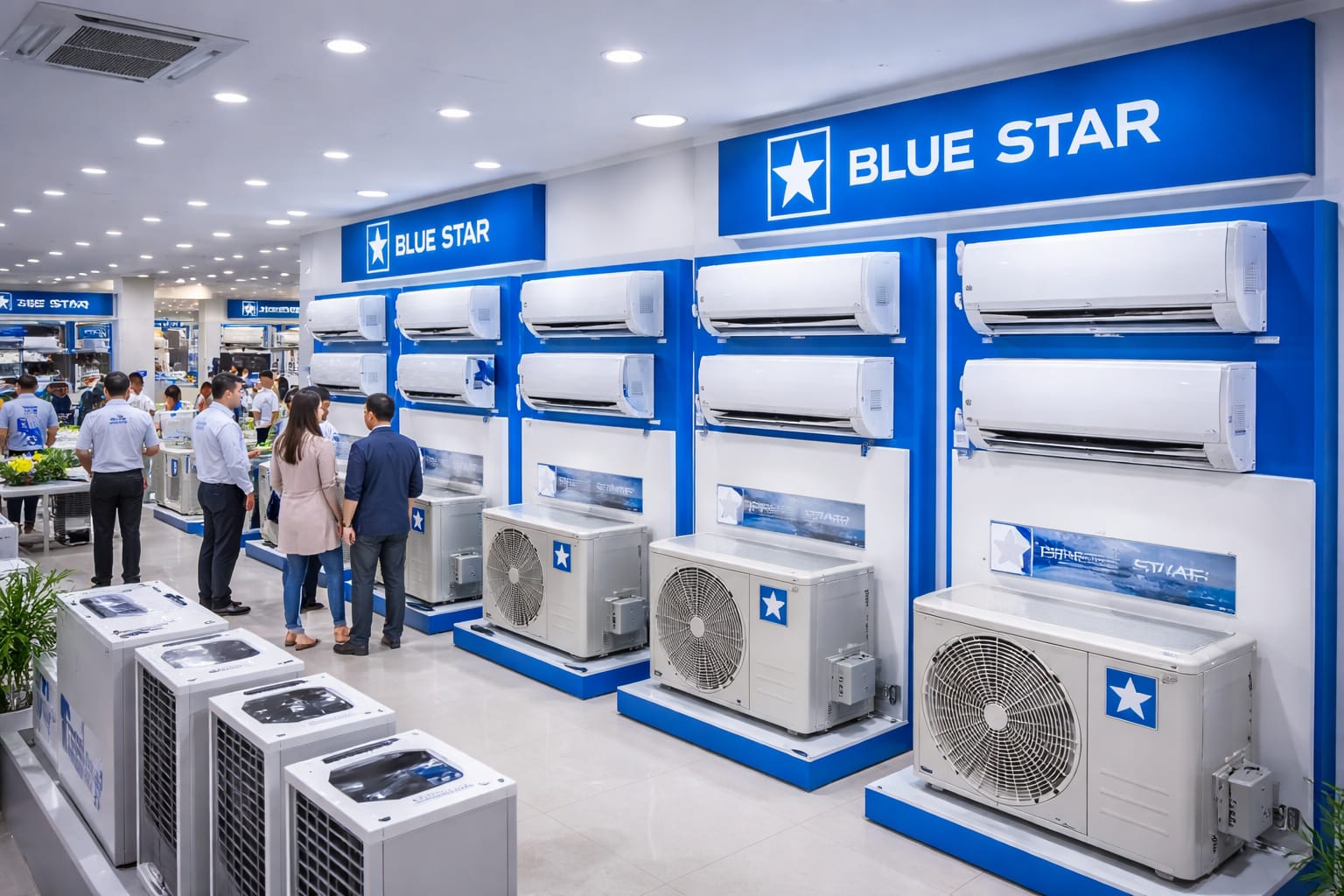
Blue Star is preparing the market for an unavoidable price hike of around 10%, as a convergence of higher commodity prices, adverse currency movement, tighter energy efficiency norms and rising structural costs more than offset the recent GST reduction, the company’s top management said during its post-earnings conference call.
Managing Director B. Thiagarajan made it clear that price increases are no longer a strategic choice but a necessity for the industry. While consumers may have expected air-conditioner prices to fall following the GST cut, the reality, he said, is the opposite. The change in energy labelling norms alone would have pushed prices up by 5 to 7%, even before factoring in elevated raw material costs and exchange rate volatility.
“When you put all of this together, energy label changes, commodity prices and the exchange rate, the net increase to consumers will be around 10%,” Thiagarajan said, adding that companies operating with margins of 8 to 8.5% simply do not have the ability to absorb such cost inflation.
Blue Star reiterated its long-standing pricing discipline: any cost increase has to be passed on to consumers to protect margins, just as the GST reduction was fully passed through earlier. According to management, the current cost headwinds are not transient. Wage Code-related expenses, though booked under exceptional items this quarter, represent a permanent structural burden that will raise conversion, service and warranty costs going forward.
Importantly, the company stressed that this is an industry-wide reality, not a Blue Star-specific issue. While timing of price hikes may differ across brands, the management expects overall market prices to move higher as players align pricing with cost structures.
With commodity prices and currency remaining highly volatile ahead of the peak summer season, Blue Star is entering Q4 and early FY27 with heightened caution. January typically sees liquidation of older inventory, but pricing behaviour from the second half of February onwards will be critical in determining how effectively cost increases are absorbed by the market.
Demand visibility, too, will hinge heavily on summer intensity, especially in the room air-conditioner segment, where consumption is seasonal and price sensitive.
The pricing challenges come against the backdrop of a muted FY26, marked by delayed order finalisations and tighter liquidity in certain commercial segments. Blue Star has consciously avoided aggressively chasing infrastructure projects, citing their low margins and long execution cycles, preferring capital discipline over market share.
Commercial air-conditioning demand linked to retail formats such as shops, showrooms and boutiques remained weak through FY26. However, management sees early signs of revival and expects FY27 growth to improve meaningfully.
“Our current view is a CAGR of 8–10%, which we will reassess after seeing how the first six months of the next fiscal pan out,” Thiagarajan said.
Group CFO Nikhil Sohoni noted that Blue Star delivered 4.2% revenue growth in Q3FY26 to ₹2,925 crore despite a challenging environment. However, profitability was hit, with net profit declining to ₹80.6 crore from ₹132.5 crore a year ago, reflecting margin compression from higher costs.
A key positive was the room air-conditioner business returning to modest growth for the first time this fiscal, driven by channel inventory build-up ahead of the January 2026 energy label change deadline.
Looking ahead, the company expects Q4FY26 to be strong across room ACs, commercial air-conditioning and refrigeration, while demand from factories and data centres remains healthy in the electro-mechanical projects business.
Blue Star’s message is unequivocal: price hikes are inevitable, industry-wide and margin-driven. As cost inflation proves structural rather than cyclical, the coming summer season will test both consumer sentiment and the industry’s pricing discipline, setting the tone for a potentially stronger, but costlier, FY27.