


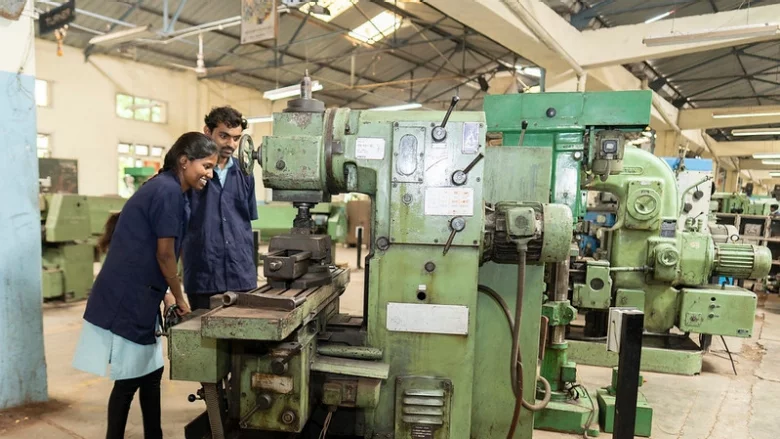
The World Bank’s board of executive directors has approved financing to revamp India’s network of skills training institutes to better align with labour market needs and open up more job opportunities for the millions of graduates entering the workforce.
Jobs are central to India’s growth trajectory, competitiveness and meeting its ambitions of becoming Viksit Bharat. India’s youth account for roughly 72% of the unemployed and there is a persistent skills mismatch, between what young people are trained for and what firms need, which continues to constrain productivity, firm growth and earnings.
While the country’s system of Industrial Training Institutes (ITI) play a significant role in skilling youth, the institutes face critical challenges, with many lacking proper facilities, qualified trainers, and the resources necessary to meet industry standards. This has led to a graduate job placement rate of less than 50 percent.
The Supporting Pradhan Mantri Skilling and Employability Transformation Through Upgraded ITIs (PM-SETU) Programme ($830 million loan) aims to revamp the network of ITIs to better align skills training with labour market needs, produce more than a million better-skilled workers each year, and bring more young graduates into the workforce.
The programme, which has been prepared jointly with the Asian Development Bank, will bring private sector investment into the ITI system by mobilizing at least $680 million in private capital.
World Bank India acting country director Paul Procee said: “With more than 12 million people entering the labour market every year, job creation is a national priority for India. Private sector-led job creation is at the heart of the World Bank Group’s new Country Partnership Framework for India.
By supporting India’s $4 billion investments to upgrade ITIs, this programme will embed industry-driven training across the system so that high placement rates become the norm, not the exception.”
Most of the trades offered in ITIs, such as electrician, mechanic, or welder, are traditionally male dominated. Over the next five years, the programme will update curricula and ensure that at least 25% of ITI students are women, helping them gain access to better-paid jobs.
Marguerite Clarke and Toby Linden, the task team leaders of the programme, said: “The programme will now help ITIs provide a more balanced mix of training, consultancy, and production functions so that they can generate their own revenues to expand and improve training. Through a hub-and-spoke model with extension centres, the institutes will become specialized and resource-efficient centres of excellence.”
The $830 million loan has a final maturity of 19.5 years, including a grace period of four years.