


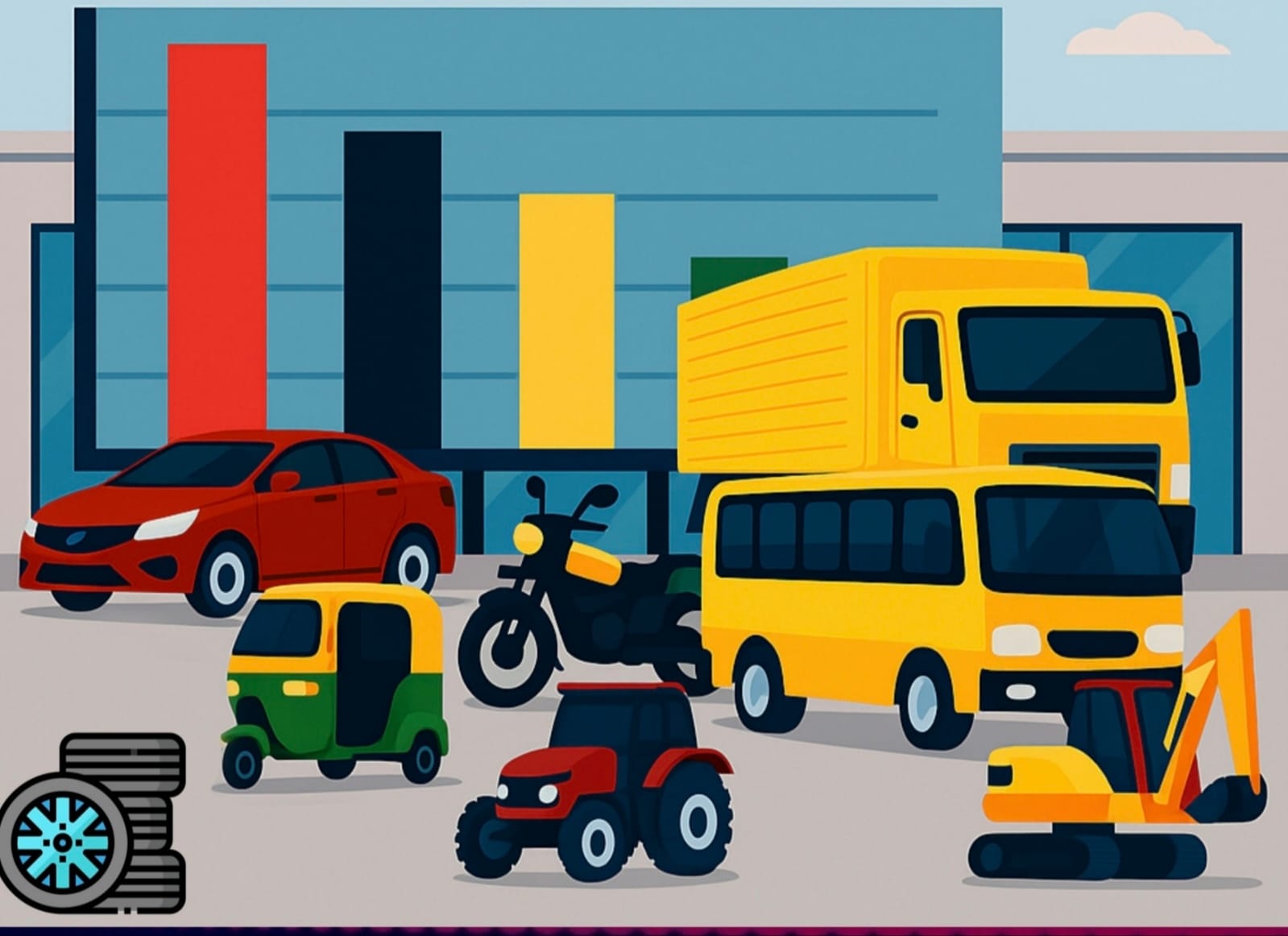
India’s automobile retail market has opened calendar year 2026 on a firm footing, with January delivering broad-based growth across most vehicle categories, underpinned by strong rural demand, improving freight sentiment and steady consumer confidence. According to vehicle retail data released by the Federation of Automobile Dealers Associations (FADA), overall retail volumes rose 17.61% year-on-year to 27.22 lakh units, marking one of the strongest January performances in recent years.
The growth momentum was visible across segments. Two-wheelers led the expansion with retail sales of 18.53 lakh units, up 20.82% year-on-year, followed by tractors at 22.89% growth, commercial vehicles (CVs) at 15.07%, three-wheelers at 18.80% and passenger vehicles (PVs) at a steady 7.22%. The performance reflects a confluence of post-GST demand normalisation, healthy rural cash flows supported by harvest income and wedding-related spending, and sustained mobility and freight requirements.
A defining feature of January’s performance was the resilience of rural markets. Two-wheelers, which remain a barometer of mass mobility demand, saw rural areas account for 56% of volumes. Rural two-wheeler sales grew nearly 20% year-on-year, aided by Pongal and Makar Sankranti festivities, marriage-season footfalls and improved affordability. Notably, urban demand also showed a strong revival, growing over 22%, indicating demand normalization beyond festive-only buying.
Passenger vehicles highlighted a similar structural shift. While PV volumes continue to be urban-led, with cities accounting for about 59% of sales, growth is increasingly coming from non-metro markets. Rural PV sales grew a robust 14.43% year-on-year, significantly outpacing urban growth of 2.75%. This trend points to a widening addressable market for OEMs, supported by rising SUV and compact SUV preference, improved product availability and targeted affordability schemes.
Commercial vehicle retail at 1.07 lakh units reflected improving freight sentiment and replacement-led demand. Growth was well-distributed across light and heavy CV segments, aligning with dealer feedback on stronger goods movement, infrastructure activity and renewed confidence among single-owner operators. Importantly, both rural and urban markets contributed to CV growth, suggesting that logistics-led demand is expanding beyond metro-centric corridors.
From a channel perspective, passenger vehicle inventory levels softened to around 32–34 days, a constructive indicator for the industry. Leaner inventory reflects improved production-retail alignment, healthier working-capital cycles for dealers and reduced discount-led stress. Dealer feedback also pointed to stronger enquiry pipelines, quicker digital follow-ups and a visible shift by consumers towards higher-value models, particularly in two-wheelers.
However, challenges remain. Selective model-wise supply constraints, aggressive competitive discounting and high base effects in certain segments continue to influence near-term retail strategies. Construction equipment, in particular, remained under pressure with a year-on-year decline, reflecting base effects and segment-specific recalibration.
Looking ahead to February 2026, dealer sentiment remains firmly constructive. Over 72% of dealers expect growth, supported by a growth-oriented Union Budget with a strong infrastructure and agriculture thrust, RBI rate stability following 2025’s easing cycle, and continued wedding and festival tailwinds. Improved affordability and financing comfort are expected to support conversion, though a shorter month, high base effects and localized disruptions such as elections could temper upside.
Segment-wise, two-wheelers are expected to remain positive, driven by rural liquidity, wedding-led purchases and rising EV acceptance, albeit capped by supply constraints in certain variants. Passenger vehicles should see steady traction on strong booking pipelines and new launches, though growth may remain measured due to allocation challenges. CVs are likely to retain momentum into the fourth quarter, supported by infrastructure spending, freight demand and year-end replacement buying.
Over the next three months, dealer confidence turns decisively optimistic, with nearly 80% of respondents expecting growth. A supportive macro environment, policy continuity post-GST 2.0, and sustained infrastructure and agri spending are improving purchase intent across categories. While election-related disruptions, seasonality and supply-side constraints remain watch-outs, the underlying demand environment suggests that the auto retail sector is entering 2026 with strong fundamentals and improving breadth of growth.
Overall, January’s performance signals a structurally healthier auto retail market—one where growth is increasingly broad-based, rural demand is a key pillar, and channel discipline is improving—setting a positive tone for the months ahead.