


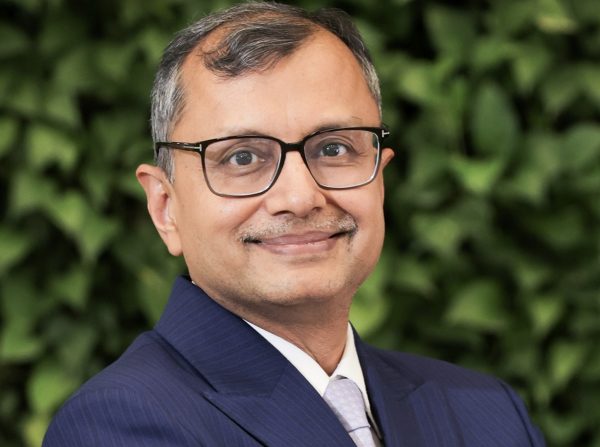
Korean auto major Hyundai is entering a conclusive phase of its India journey, marked by capacity expansion, clear focus towards SUVs and deeper localisation. Comments from Managing Director and CEO Tarun Garg during the latest earnings call underline a strategy that blends near-term operating agility with long-term structural transformation.
Hyundai India’s immediate priorities is the stabilisation of its newly operational Pune manufacturing plant. The facility is not just an incremental capacity addition but a strategic lever. In its next phase, the plant is expected to take Hyundai India’s total installed capacity to 1.1 million units, creating headroom for future model cycles and demand surges.
Garg emphasised that the challenge now is execution—ensuring operational stability, grooming employees for higher quality benchmarks, strengthening dealer readiness and elevating customer satisfaction. Importantly, learnings from Pune are expected to flow back into the Chennai plant, suggesting a cross-pollination approach aimed at lifting system-wide manufacturing excellence.
The timing of this capacity push aligns closely with Hyundai’s product offensive. The company is preparing for a series of model refreshes and launches, buoyed by the runaway response to the new Hyundai Venue. With nearly 80,000 bookings, the compact SUV has reaffirmed Hyundai’s resonance in a segment that continues to outperform the broader market. SUVs now account for 56.2% of Hyundai India’s sales between September and December 2025, up from 54% earlier in the year, clear evidence of structural demand shifting in favour of higher ground-clearance, feature-rich vehicles. Hyundai’s roadmap of 26 models, spanning segments, derivatives and powertrains, positions it well to monetise this trend over the medium term.
Hyundai is actively reshaping its business mix. Its entry into the commercial mobility space with the Prime Taxi range marks a strategic expansion into a fast-growing, fleet-led segment. Built around low cost of ownership and reliability, the Prime Taxi platform adds diversification while deepening utilisation of Hyundai’s manufacturing and service ecosystem.
Operationally, the December quarter reflected strong underlying momentum. Retail sales grew 16% year-on-year, significantly outpacing wholesales and enabling the company to streamline dealer inventory. This creates headroom for stronger wholesale volumes in Q4, aided by favourable GST tailwinds. Rural markets emerged as a standout driver, with their contribution to domestic sales crossing 24%—the highest ever for the company, highlighting the payoff from targeted rural penetration strategies.
Exports are emerging as a parallel growth engine. Hyundai India recorded robust volume growth of 30% in the Middle East & Africa and 13% in Latin America, reinforcing India’s role as a global manufacturing hub within Hyundai’s network. Management sees exports contributing not just to volumes, but increasingly to profitability.
Crucially, growth has not come at the expense of margins. Hyundai remains confident of closing FY26 within its guided EBITDA margin band of 11–14%, supported by operating efficiencies, disciplined cost management and aggressive localisation. Local content rose to 84% in the December quarter, with ongoing efforts to indigenise high-technology components, an important hedge against currency volatility and global supply disruptions.