


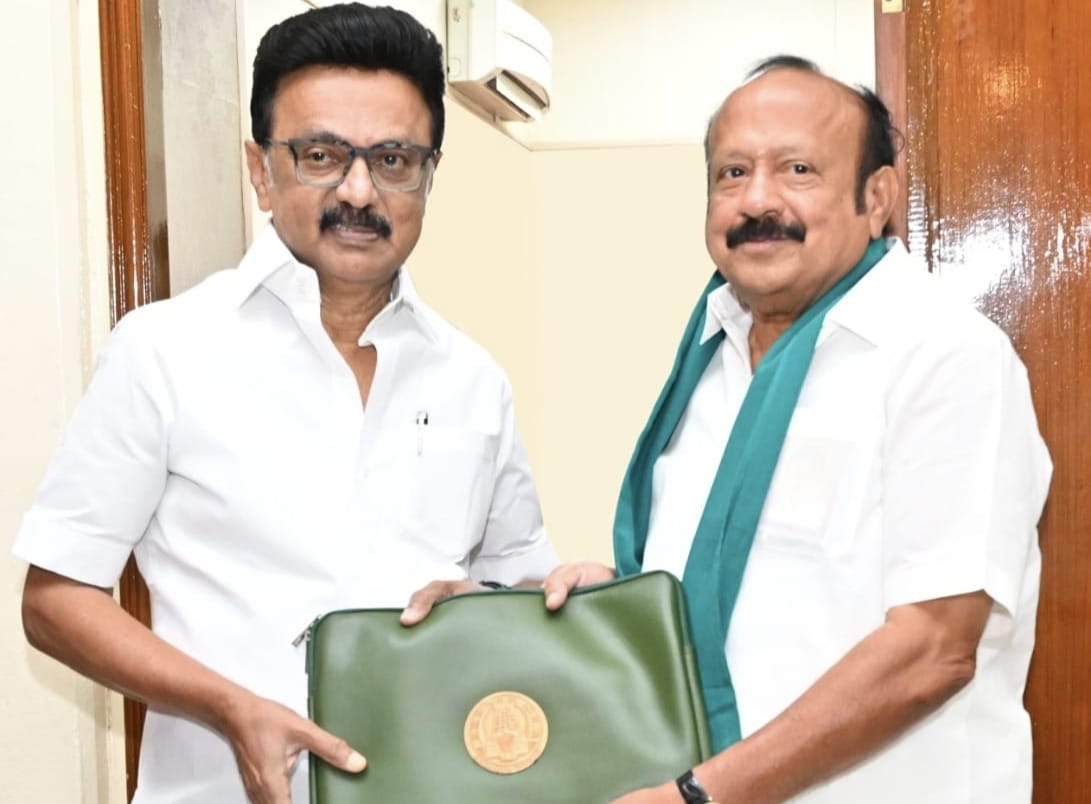
The Interim Budget Estimates for 2026–27, presented by Thangam Thenarasu, outline a balanced fiscal strategy aimed at consolidating public finances while sustaining growth-oriented expenditure. Despite pressures from welfare commitments and infrastructure expansion, the Tamil Nadu government has reaffirmed its commitment to fiscal discipline.
Fiscal Position: Deficit Compression on Track
A key highlight of the Budget is the steady reduction in fiscal deficit. For 2026–27, the fiscal deficit is pegged at 3.0% of GSDP, marking a return to the statutory ceiling after years of pandemic-induced stress. The government has laid out a medium-term glide path, projecting the fiscal deficit to decline further to 2.89% in 2027–28 and 2.80% in 2028–29, signalling a clear intent towards consolidation without curtailing capital spending.
While the revenue deficit remains elevated at ₹48,696 crore in 2026–27, it is projected to narrow over the next two years, falling to ₹42,965 crore in 2027–28 and ₹35,115 crore in 2028–29. This gradual correction is expected to create fiscal headroom for higher asset-creating expenditure.
Revenue Collections: Strong Growth Anchored by Own Taxes
Total revenue receipts, including central transfers, are estimated at ₹3.44 lakh crore in 2026–27, reflecting a robust year-on-year increase from ₹3.10 lakh crore in 2025–26 (RE). The medium-term outlook remains strong, with revenues projected to grow at over 12% annually, reaching ₹4.34 lakh crore by 2028–29.
State’s Own Tax Revenue (SOTR) continues to be the backbone of Tamil Nadu’s finances. SOTR is estimated at ₹2.30 lakh crore in 2026–27, supported by improved economic activity and administrative efficiency, even as GST rate rationalisation exerts some pressure. Over the next two years, SOTR is projected to grow at a healthy 14% CAGR, reaching nearly ₹3.0 lakh crore by 2028–29.
Non-tax revenue remains relatively modest but stable, rising from ₹27,704 crore in 2026–27 to ₹32,314 crore by 2028–29. Meanwhile, the state’s share in central taxes is expected to rise sharply, from ₹62,531 crore in 2026–27 to over ₹81,265 crore in 2028–29, assuming a sustained 14% growth.
Grants-in-aid from the Union government are estimated at ₹24,762 crore in 2026–27, reflecting anticipated releases under education schemes. However, grants are projected to taper in subsequent years due to changes in fund release mechanisms for centrally sponsored schemes.
Expenditure Profile: Capex-Led Growth Strategy
On the expenditure front, revenue expenditure is budgeted at ₹3.93 lakh crore in 2026–27, growing at a moderate 3.8%, indicating tighter control over committed spending. In contrast, capital expenditure sees a sharp boost of nearly 16%, rising to ₹59,562 crore in 2026–27. The capex momentum accelerates further in the outer years, crossing ₹93,000 crore by 2028–29, reflecting the state’s focus on infrastructure-led growth.
Net loans and advances are estimated at ₹13,708 crore in 2026–27 and are set to increase with the rollout of new metro and urban transport projects.
Debt and Financial Health: Elevated but Manageable
Tamil Nadu plans to borrow ₹1.80 lakh crore in 2026–27, with repayments of ₹60,413 crore, resulting in outstanding debt of ₹10.72 lakh crore by March 2027. This places the debt-to-GSDP ratio at 26.35%, a level higher than the pre-pandemic period but still within a manageable range for a large, diversified state economy.