


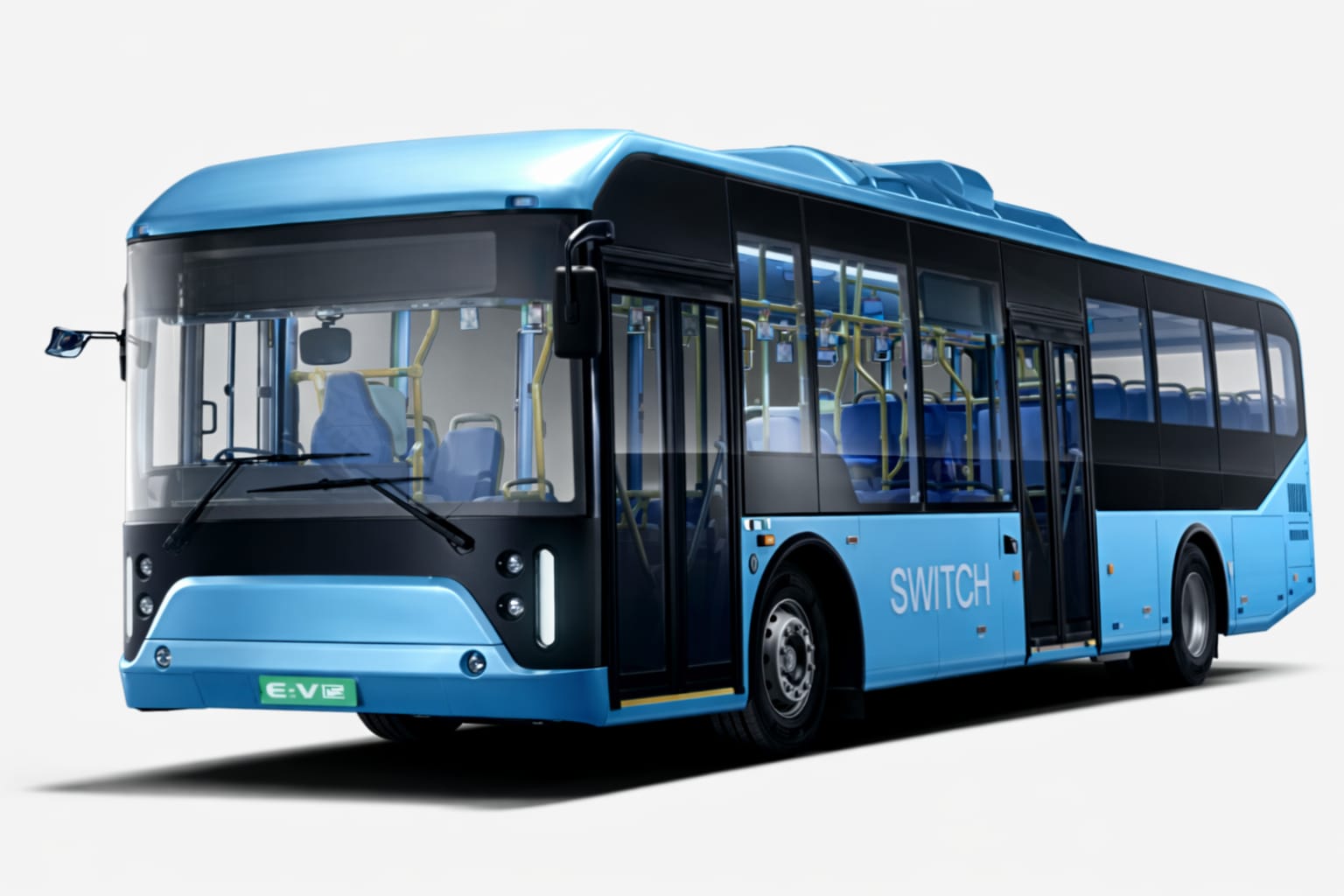
India’s electric bus transition is gathering pace, but the road to scale is proving more gradual than initially anticipated. According to a recent assessment by CareEdge Ratings, electric buses (e-buses) are now expected to account for 13% of annual bus sales by FY28, a realignment from earlier projections of 15% by FY27 due to execution delays at the state level.
Steady Momentum, Slower Execution
E-buses accounted for 4% of India’s total bus registrations in FY25, with 4,237 units registered during the year. In the first nine months of FY26 alone, registrations reached 3,903 units, reflecting a 31% year-on-year growth, albeit on a low base, following a 16% rise in FY25.
The broader bus industry is on track to surpass pre-COVID volumes by the end of FY26, providing a favourable backdrop for electrification. However, delays by State Transport Undertakings (STUs) in allocating depots and ensuring adequate charging infrastructure have slowed deliveries from existing order books, pushing the revised penetration target to FY28.
India currently has just 8 e-buses per million people, compared with a global average of 94 per million, reflecting the substantial headroom for growth.
Policy Push and Expanding Geography
Early adoption has been concentrated in large metro markets such as Delhi, Maharashtra and Karnataka. But the government’s push under schemes like PM e-Bus Sewa and Convergence Energy Services Ltd (CESL) is expected to extend deployment into Tier II and Tier III cities, broadening the adoption base over the medium term.
The recent finalisation of a 10,900 e-bus procurement by CESL, alongside the Union Budget 2026–27 announcement supporting the deployment of an additional 4,000 buses and a fresh CESL tender for 6,230 units, has strengthened visibility for manufacturers and operators.
Arti Roy, Associate Director at CareEdge Ratings, noted that while penetration remains low, steady momentum over the past three years reflects stronger policy support, improving cost economics and growing execution depth. Deployment is now expanding beyond metro cities, supported by incentives, charging infrastructure and the evolution of the gross cost contract (GCC) model.
GCC Model Strengthens Bankability
A structural shift is underway as STUs increasingly move from outright bus purchases to the GCC (OPEX) model, under which private operators procure, operate and maintain buses on a per-kilometre payment basis.
Standardised service-level agreements, tariff indexation, payment security mechanisms, escrowed cash flows and debt service reserve accounts are improving bankability. However, the timeliness of payments by STUs remains a key monitorable for lenders.
Importantly, the total cost of ownership for AC e-buses is estimated to be 15–20% lower than that of comparable diesel buses over a 12-year period, reinforcing long-term economic viability.
Market Leadership and Capacity Readiness
Market leadership is consolidating around Olectra, JBM, PMI and Switch Mobility, which together accounted for 47% of the market in FY25 and 76% in 9MFY26. These four OEMs have a combined installed manufacturing capacity of 32,000 e-buses annually and an aggregate order book of around 31,000 units, largely under STU and GCC contracts. Execution timelines of 12–24 months provide near-term revenue visibility.
Annual e-bus sales are projected to rise from around 5,550 units in FY26 (5% penetration) to 11,100 units in FY27 (8%), before scaling to nearly 20,000 units by FY28, representing roughly 13% of total bus sales.
With falling battery costs, expanding depot and charging infrastructure, and sustained government support, India’s electrification of public transport appears firmly underway, even if the pace of adoption ultimately hinges on timely infrastructure readiness and payment discipline