


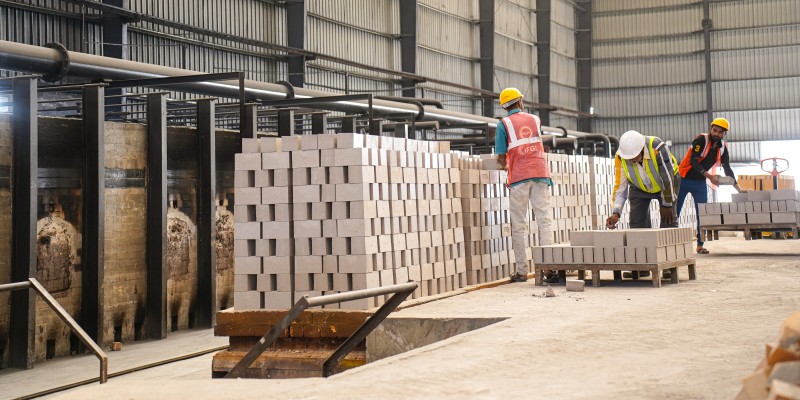
IFGL Refractories Ltd, a leading manufacturer of specialised refractory products serving the iron, steel and foundry industries, will see a change in leadership effective March 1.
The current Managing Director, James Leacock McIntosh, will step down on February 28 and will be succeeded by Mihir Prakash Bajoria for a three-year term beginning March 1.
The transition comes at a time when the company is navigating a volatile global operating environment. Citing the latest outlook of the World Steel Association, McIntosh said during an earnings call that global steel demand is expected to remain broadly flat before witnessing a modest recovery in 2026, even as trade tensions and geopolitical uncertainties persist.
Regionally, China’s steel demand is projected to decline by around 2% in 2025, with the pace of contraction moderating in 2026 as the housing sector stabilises. In contrast, the US market is expected to grow by approximately 1.8% in both 2025 and 2026, supported by infrastructure spending. Europe is also seen gradually recovering, with demand likely to expand between 1% and 3% over 2025–26, aided by infrastructure and defence outlays.
India, however, remains the key growth engine for IFGL. Steel demand in the country is projected to grow by around 9% in both 2025 and 2026, driven by broad-based expansion across steel-consuming sectors.
Against this backdrop, IFGL’s India-made and India-sold strategy has delivered strong results, with revenues from this segment rising 25% year-on-year to ₹648 crore during the nine-month period, helping the company gain market share.
In the US, revenues grew 37% year-on-year, aided by tariff-related developments, calibrated price adjustments and improved demand. Profitability in the region improved sequentially, with management expressing confidence in sustaining momentum into the fourth quarter, subject to stable market conditions.
Europe reported a 39% year-on-year revenue increase, though overall regional demand remains challenging. Structural changes, including a shift in focus from application equipment to core refractory products, have begun to show results at the revenue level. However, profitability continues to be under pressure due to higher operating costs.
McIntosh acknowledged that the UK operations remain a drag, particularly the Monocon business. While new product developments have entered the market, slower-than-expected uptake amid weak European conditions has affected performance. Management expects operational and structural adjustments to improve profitability over the coming quarters.
Hofmann Ceramics is seen as having stabilised, while Sheffield Refractories continues to perform steadily. Technology transfer from Sheffield to India is underway and is expected to be completed by March 2026.
Chief Financial Officer Amit Agarwal outlined two major capital expenditure plans: a ₹325-crore greenfield project at Khurda, Odisha, fully funded by IFGL, and a ₹300-crore joint venture project in Gujarat with Marvel, structured in a 51:49 ratio.
Around 60–70% of the Khurda’s planned outlay will be incurred this year, with the balance next year. The Khurda project is targeted for completion by FY28, while the Gujarat JV is expected to be operational by FY29, subject to regulatory approvals.
CEO Arasu Shanmugam said profitability during the quarter was impacted by higher employee expenses, lower export off-take and continued investments in business development. Cost rationalisation measures have been initiated. Domestic revenues grew 17% and exports 13%, reinforcing India’s role as the core growth driver as the company works towards gradual margin recovery and sustainable long-term growth.
Beyond these geographies, IFGL is also strengthening its presence in the Middle East and Australia, where it sees emerging opportunities and potential for incremental growth over the medium term.
“IFGL is positioned on a stable footing. Our focus remains on disciplined execution, improving cost structures, strengthening regional operations, and enhancing product mix.
With steady demand in India, improving traction in the US, and structural initiatives underway in Europe, we are working towards gradual margin recovery and sustainable growth. We remain committed to long-term value creation for all our stakeholders,” said McIntosh.