


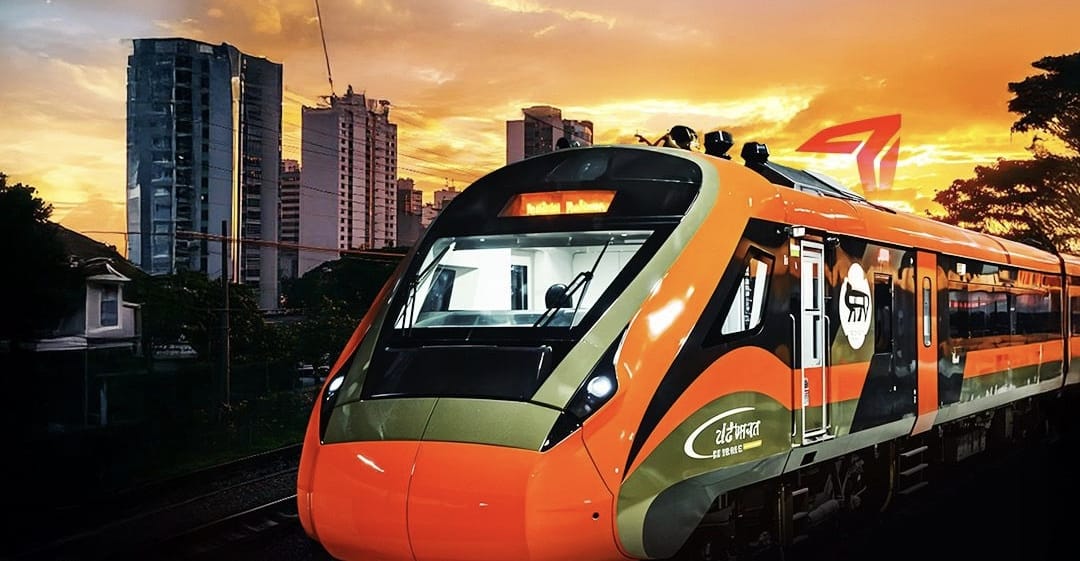
India’s metro and regional rail expansion is translating into a fresh investment cycle at BEML- the state-run engineering major- which is all se to tap a swelling pipeline of over 15,000 rail cars expected over the next five years.
With the PSU behemoth approving a ₹1,500-crore greenfield rolling stock facility in Bhopal, BEML is positioning the investment as a strategic bet to anchor the next phase of India’s rail manufacturing growth cycle.
Chairman and managing director Shantanu Roy said the company’s board has cleared the two-phase investment to sharply augment capacity in its Rail & Metro vertical, which already accounts for 68% of its ₹16,300-crore order book.
₹1,500-Crore Bhopal Plant to Boost Metro Rolling Stock Capacity
The Bhopal facility, to be developed in two phases- ₹900 crore in Phase I and ₹600 crore in Phase II (including GST- will be funded through long-term debt. Financial closure for the first phase is expected within the next two months, with civil works already underway. Boundary wall construction, initiated in October, is nearly 50% complete, and land acquisition has been finalised.
Phase I, targeted for completion within 18–24 months, will make the plant fully operational and add at least 300 cars per annum to BEML’s current capacity of 200–250 coaches annually. Once Phase II is executed, the facility will be capable of producing up to 800 cars per annum.
Designed as a modern, automated, and “lean and green” double-storied plant, the first floor will handle car body shell manufacturing, while the ground floor will manage furnishing, testing, painting and dispatch. The unit will cater to cape gauge, broad gauge and standard gauge rolling stock and will include a full-fledged test track, painting booths, stabling and furnishing facilities.
Strong Pipeline: Metro, RRTS, High-Speed and LHB Coaches
BEML’s current rolling stock order book stands at 1,400 cars, but the opportunity pipeline is far larger. Among key prospects include the Mumbai Railway Vikas Corporation (MRVC) AC EMU project for Mumbai, involving 2,856 cars, the Metro rolling stock opportunities of at least 2,500 cars over the next four to five years and an export metro order expected within two to three months.
Besides, seven proposed high-speed corridors, which could require around 600 trains (about 4,800 cars assuming eight cars per train) are on the horizon. New Regional Rapid Transit System (RRTS) corridors, including expansions around the Delhi hub, potentially translating into over 700 additional cars is a big opportunity for the company. There is also an ongoing production of 600 LHB broad-gauge coaches, with expectations of at least two additional tranches.
Taken together, Roy estimates the total addressable demand at over 15,000 cars in the next five years. Even at a conservative 50% success rate, BEML would need to deliver 7,000–7,500 cars, necessitating the sharp capacity ramp-up at Bhopal.
Expanding Beyond Rolling Stock
While rail and metro remain the dominant growth drivers, BEML is also diversifying into adjacent infrastructure segments. The company is developing a 6.5-metre diameter Tunnel Boring Machine (TBM) tailored for metro projects, with a pilot batch of four machines planned. India’s TBM requirement is estimated at $5 billion over the next decade, driven by metro, high-speed rail and road tunnel projects.
In addition, BEML is preparing a detailed project report to enter the maritime crane segment, covering ship-to-shore cranes, rubber-tyred gantry cranes, rail-mounted gantry cranes and Goliath cranes for shipbuilding. The proposed greenfield facility will require a 700–800 metre waterfront with 12–14 metre depth. At full potential, the segment could generate revenues of around ₹5,000 crore annually, according to management estimates.
Order Book Momentum
BEML’s current order book stands at ₹16,300 crore, with 68% from Rail & Metro, 25% from Defence & Aerospace, and 7% from Mining & Construction. The company expects to cross ₹20,000 crore in orders by the end of the current financial year while maintaining revenue growth in line with earlier guidance.