


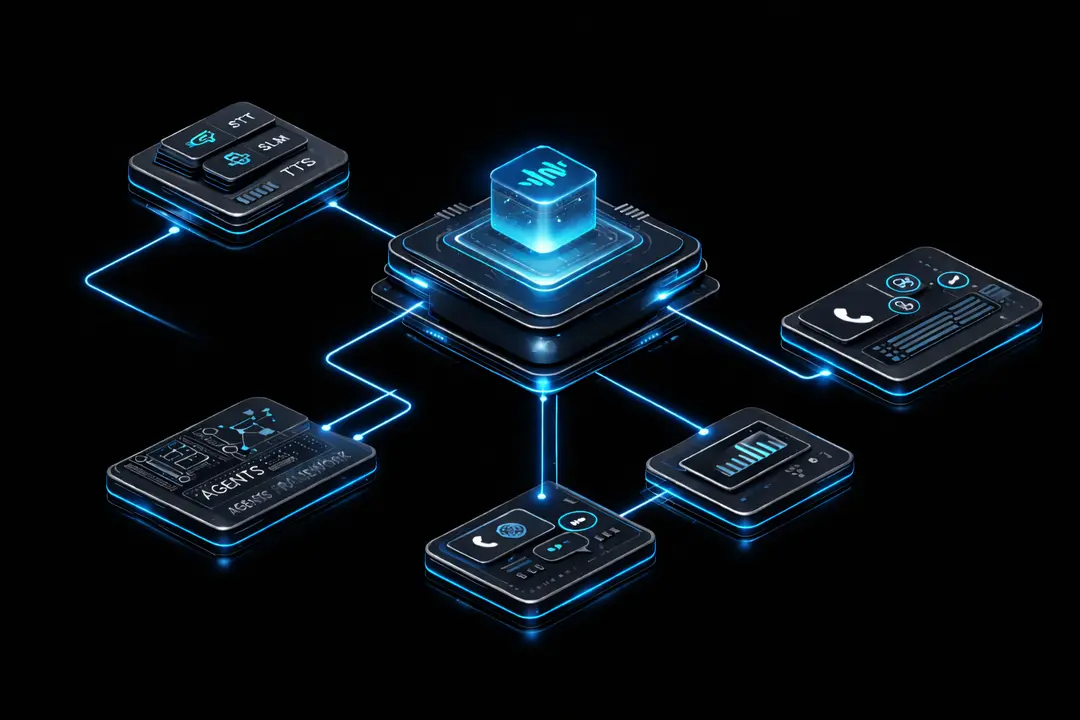
At a time when India’s artificial intelligence ambitions hinge on digital sovereignty and linguistic inclusion, Shunya Labs’ launch of Vāķ, a real-time, open-weight voice AI translation system spanning 2,970 language pairs across 55 Indian mother tongues, could mark a inflection point for both the country’s AI ecosystem and public service delivery.
Reducing Dependence on Foreign AI Infrastructure
Vāķ, built as an open-weight model deployable entirely on domestic infrastructure, attempts to alter that equation. By eliminating the need for external API calls and enabling on-premise deployment, it offers organisations a way to retain citizen voice data within India’s regulatory framework.
For government departments, courts, hospitals, and educational institutions, the economic implication is significant. Large-scale public-facing services such as grievance redressal systems, telemedicine helplines, agricultural advisory lines, and e-governance platforms can now potentially operate without per-call API costs. Over time, this could lower operating expenses and expand service coverage to smaller linguistic communities previously considered commercially unviable.
Shunya Labs founder & chief scientist Sourav Bandyopadhyay said, “India does not need to depend on foreign APIs to hear its own people. With Vāķ, we are releasing the world’s best-performing open-weight Voice AI across 55 distinct Indian tongues, that is, every language with over a million speakers. This is a self-funded innovation built within the Nasscom ecosystem.”
Unlocking Inclusion Beyond the Top 10 Languages
The deeper impact, however, may lie in linguistic equity. While Hindi, Tamil, Bengali, and a few other major languages receive consistent AI support, speech communities such as Bhojpuri, Rajasthani, Chhattisgarhi, and Magahi, each spoken by millions, have remained largely outside mainstream AI infrastructure. Many Indian languages are not mutually intelligible even within the same language family, making superficial multilingual support inadequate.
By covering every Indian language with over a million speakers and enabling real-time any-to-any translation with sub-1.5 second latency, Vāķ introduces the possibility of frictionless communication across administrative, commercial, and social contexts.
Industry Implications: Catalysing a Domestic Voice AI Ecosystem
For India’s AI startup ecosystem, the launch also signals a shift towards foundational model building rather than mere application-layer integration. As a participant in the Nasscom GenAI ecosystem, Shunya Labs reflects a broader policy push toward indigenous model development aligned with national priorities.
Strategic Alignment with India’s AI Sovereignty Push
By offering full-stack speech AI, speech recognition, real-time translation, and neural text-to-speech, as an open-weight system, Shunya Labs positions itself within that strategic narrative. The emphasis on domestic deployment aligns with regulatory and policy trends favouring data localisation and digital public infrastructure.
Nasscom head of AI Ankit Bose said, “Shunya Labs, as a Nasscom GenAI Cohort 1 startup, exemplifies the kind of globally competitive innovation emerging from India’s AI ecosystem. Building high-performance, open-weight models across Indian languages reflects both technical excellence and a commitment to sovereign, inclusive AI. The introduction of Vāķ reinforces the role of the Nasscom GenAI ecosystem in enabling startups to innovate at global standards while contributing meaningfully to India’s digital future.”