


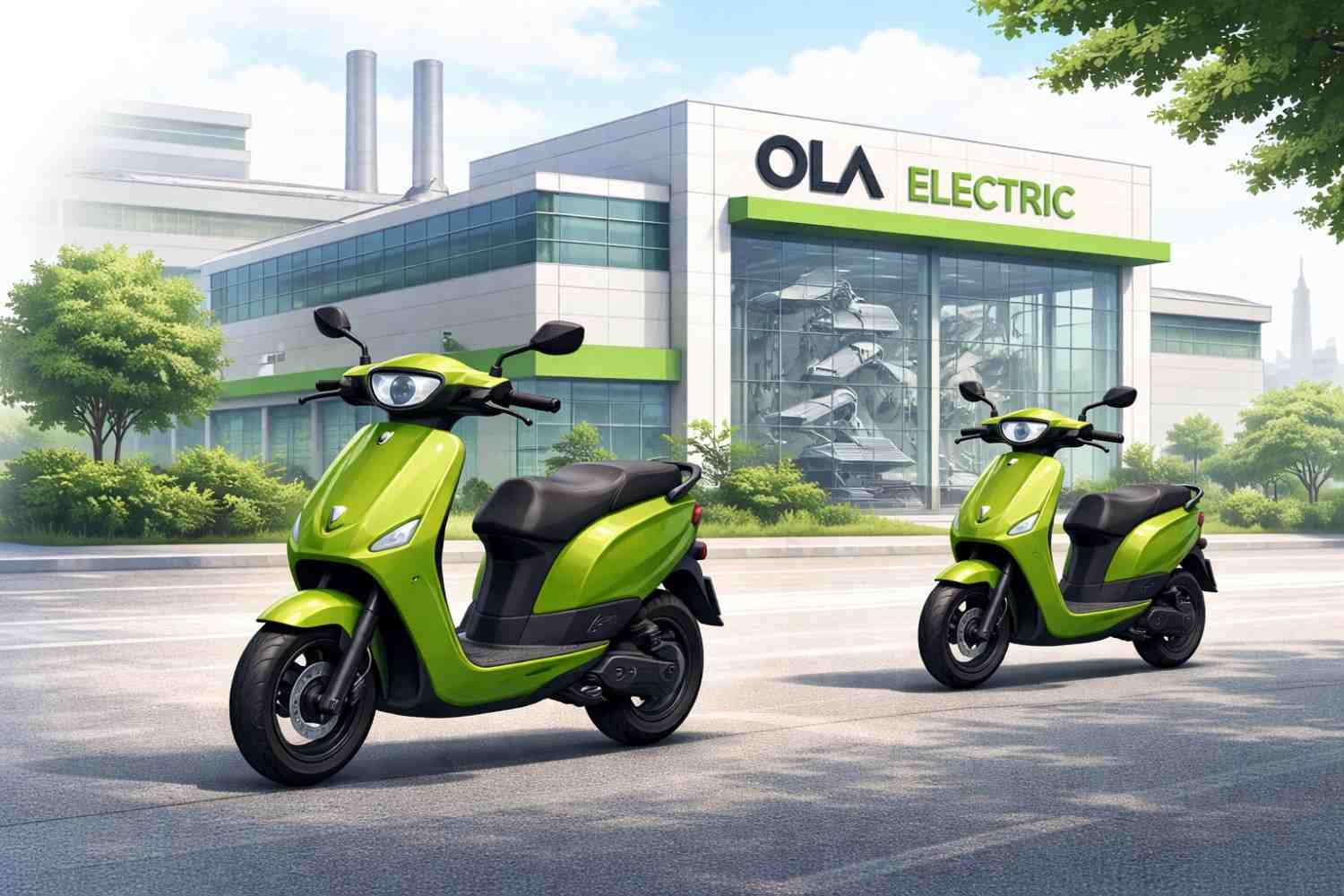
At a time when India’s electric vehicle narrative is evolving from hypergrowth to disciplined execution, Ola Electric is pressing reset, not on ambition, but on fundamentals.
In its latest earnings call, chairman and MD Bhavish Aggarwal addressed what he termed the company’s ‘headline issue’: service challenges that have dented brand trust and slowed sales over the past two quarters. The tone was candid, but confident.
“Yes, there’s a service challenge. We are fixing it. And it’s meaningfully improving,” he said, underlining that the company has chosen to confront operational gaps head-on rather than defend short-term market share.
A Structural Reset, Not a Tactical Patch
December marked what the leadership called a structural reset. As EV penetration growth moderated and service bottlenecks surfaced, the company deliberately realigned its retail footprint, cost structure, and operating model to a more sustainable steady state.
Chief financial officer Deepak Rastogi described the move as a conscious pivot away from chasing volumes toward strengthening the foundation. The outcome: a structurally lower breakeven point and significantly improved operating leverage.
Over the last few years, the company has invested approximately ₹5,300 crore across manufacturing, battery innovation, and R&D, building full vertical integration spanning motors, batteries, cells, electronics, and software. With manufacturing infrastructure now capable of supporting 1 million vehicles and 6 GWh of cell capacity, the heavy capex phase is largely behind it. The focus now shifts to sweating these assets.
Service: The Missing Link
Leadership was unequivocal: this is a service scale issue, not a product quality issue. Independent surveys indicate over 90% product satisfaction, and warranty provisions for the current financial year are projected at 2–3%, among the lowest in the Indian EV industry. Aggarwal has repeatedly pointed to warranty costs as an objective proxy for product quality.
Customer feedback, he shared, has been consistent: strong product appeal, but concerns around service accessibility and turnaround times.
The company’s “Hyper Service” initiative is aimed squarely at this gap. Measures include redesigned parts availability, expanded technician training, stronger governance, and AI-led automation. The results are beginning to show:
- Service backlogs reduced nearly 50%, from 14 days to 7–8 days
- 80% of service tickets now completed on the same day
- Institutionalisation of new service processes expected within the next quarter
The approach, according to Aggarwal, is foundational rather than cosmetic—fixing front-end operational challenges in a structural, institutional way.
Brand Trust and the Road to Profitability
There is no attempt to underplay the reputational impact. Brand trust, leadership admits, will take time to rebuild. But the company believes the underlying strengths, in manufacturing scale, R&D capability, and product engineering, remain intact and ahead of competition.
Importantly, the operational reset has created financial headroom. With a lower breakeven base, improvements in service and a recovery in sales could accelerate the path to profitability faster than previously anticipated.
“The roadmap to recovery is fixing service. That will let the product advantage shine,” Aggarwal said, signalling that the company is willing to trade short-term share for long-term structural strength.
In an industry where early movers are now being tested on execution rather than expansion, the coming quarters will determine whether operational discipline can restore confidence. For Ola Electric, the strategy is clear: rebuild trust, leverage integration, and scale into capacity, with profitability in sight once service stability is fully institutionalised.