


The Adani Group has been named an official partner for World Engineering Day for Sustainable Development 2026 (WED 2026), an international observance proclaimed by UNESCO and delivered by the World Federation of Engineering Organisations (WFEO).
The recognition highlights the group’s growing role in accelerating the clean energy transition and delivering reliable and affordable power at scale, while supporting India’s energy security and contributing to global sustainability goals, particularly Sustainable Development Goal 7.
Adani Green Energy Executive Director Sagar Adani said the group’s projects demonstrate that clean energy can be both large-scale and inclusive.
“We are demonstrating that clean energy can be large-scale yet affordable, powerful yet inclusive. This is India’s contribution to the world, a model where progress and sustainability move forward together,” he said.
The 2026 edition of World Engineering Day carries the theme “Smart engineering for a sustainable future through innovation and digitalization.”
The Adani Group’s initiatives across renewable energy, digital infrastructure, transport networks, and utility systems align closely with this vision by integrating technology-driven engineering solutions for sustainable development.
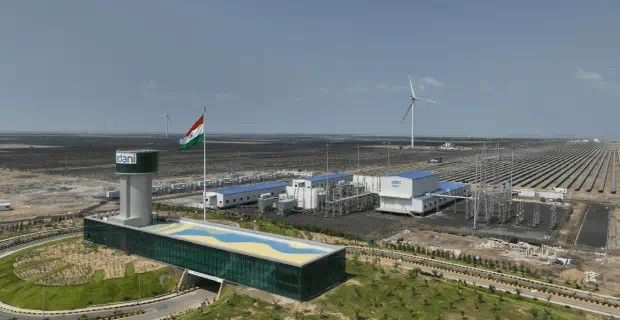
A key highlight of this collaboration is the Khavda Renewable Energy Park in Gujarat, which WFEO has identified as a flagship example of India’s green energy transition. The organisation has also featured a short film on the project as part of the WED 2026 programme.
AGEL is developing the project across about 538 sq km of barren land in the Kutch region. Once completed, the Khavda facility will be the world’s largest renewable energy plant with a planned capacity of 30 GW by 2029.
The company has already operationalised more than 7 GW of renewable capacity at the site. The project is expected to contribute significantly to India’s target of achieving 500 GW of non-fossil fuel capacity by 2030.
The plant will deploy advanced technologies including India’s largest onshore wind turbine generator of 5.2 MW, bifacial solar photovoltaic modules, and horizontal single-axis tracker systems.
Once fully operational, the project is expected to generate 87.4 billion units of clean electricity annually, power 17.4 million households, create more than 15,000 green jobs, and avoid around 63.6 million tonnes of carbon dioxide emissions.