


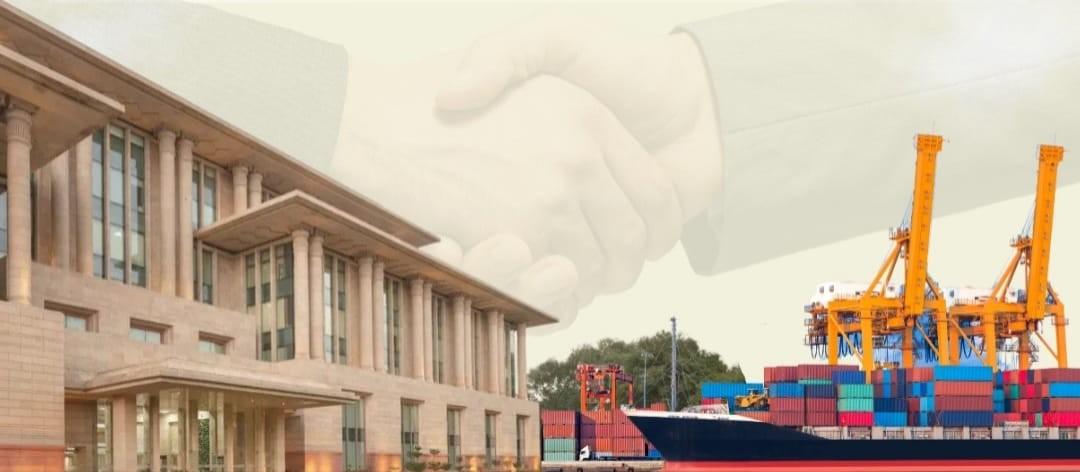
India has significantly strengthened its global trade presence over the past decade, emerging as a confident and decisive player in shaping modern, future-ready free trade frameworks. According to the government document, the country has steadily expanded its network of trade partnerships, reaching nine Free Trade Agreements (FTAs) covering 38 countries during the 2025–26 period.
The government said these agreements reflect India’s evolving trade strategy, aimed at enhancing market access, encouraging investment flows and creating opportunities for businesses, farmers and skilled professionals.
India’s recent FTA journey began with the agreement with Mauritius in 2021, followed by the Comprehensive Economic Partnership Agreement with United Arab Emirates in May 2022. This was followed by the Economic Cooperation and Trade Agreement with Australia implemented in December 2022.
Further strengthening its global trade ties, India signed the Trade and Economic Partnership Agreement with the European Free Trade Association in March 2024, which came into force in October 2025. During 2025, India also concluded the Comprehensive Economic and Trade Agreement with the United Kingdom in July and a Comprehensive Economic Partnership Agreement with Oman in December.
Momentum continued with the announcement of a Free Trade Agreement with New Zealand in December 2025, followed by a major trade pact with the European Union in January 2026. India also advanced trade cooperation with the United States by finalising the framework for an interim agreement in February 2026.
Government officials noted that each of these agreements reflects international confidence in India’s economic potential and the scale of its market of more than 1.4 billion people.
The FTAs are expected to open new opportunities for Indian farmers by enabling easier access to developed markets for agricultural produce. They are also designed to benefit entrepreneurs and women-led MSMEs exporting garments, leather products and handicrafts by improving competitiveness in global markets.
The agreements further support mobility opportunities for Indian professionals, students and skilled workers, including IT professionals, chefs and yoga instructors, through improved work pathways, post-study work visas and social security relief measures.
Officials highlighted that sectors such as organic products, traditional wellness systems under AYUSH, and digital services are also expected to gain from enhanced market access and collaboration opportunities, particularly as India strengthens its role in emerging technologies such as artificial intelligence.
The government emphasised that the negotiations were conducted with a balanced approach aligned with the vision of Atmanirbhar Bharat, ensuring protection of sensitive sectors including dairy, agriculture and domestic industry while expanding trade opportunities.
With these agreements, India aims to further strengthen its position in global trade and support the broader goal of achieving a developed nation status under the vision of Viksit Bharat @2047.