


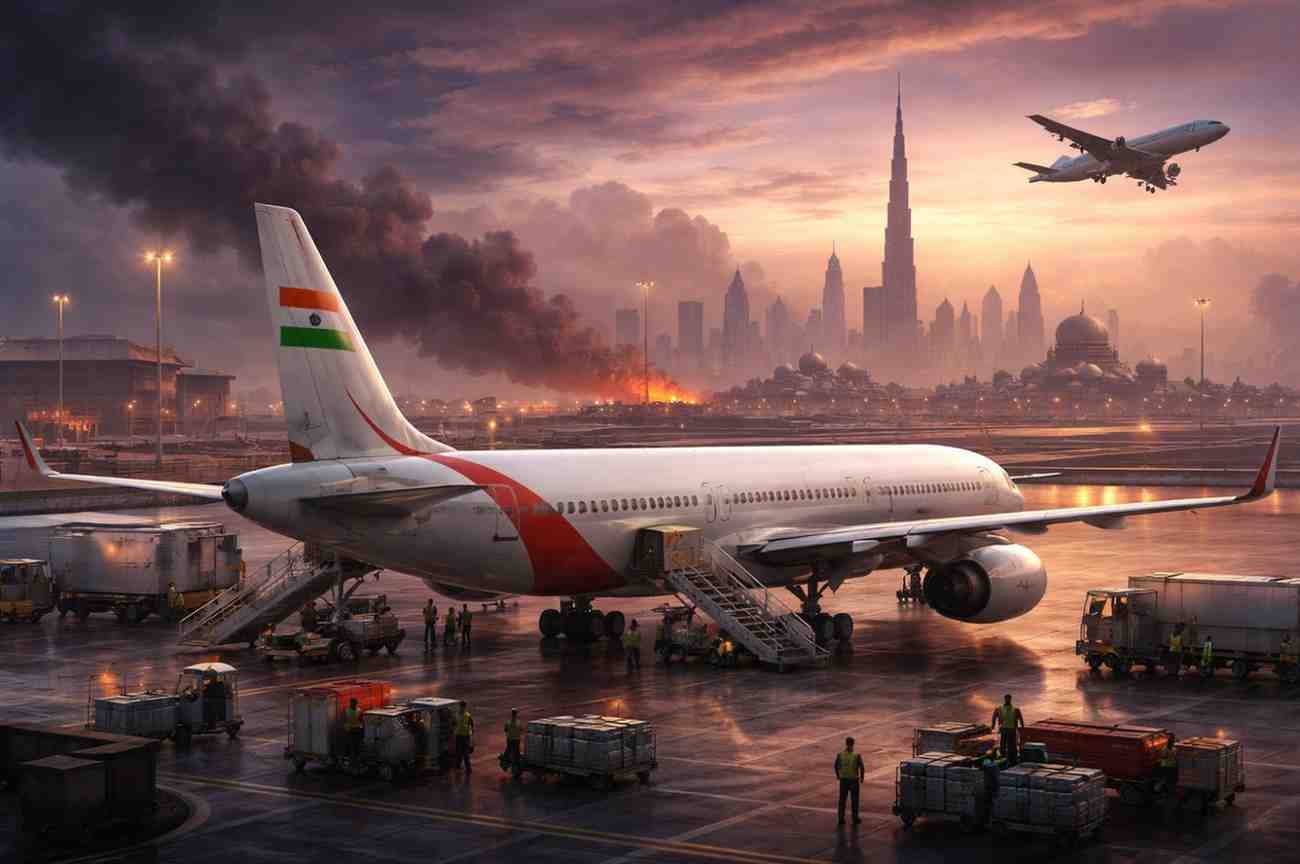
The evolving geopolitical tensions in West Asia has prompted the airlines and regulators in India to continuously monitor airspace conditions, recalibrate schedules and guard against a sudden spike in airfares.
Union ministry of civil aviation said it is tracking the rapidly changing airspace situation in the region and coordinating with airlines to ensure passenger safety and continuity of travel between India and key West Asian hubs.
According to official data, Indian carriers operated 51 inbound flights from West Asia on March 7, bringing 8,175 passengers back to India. Airlines scheduled 49 inbound flights for March 8 and have planned around 50 flights for March 9, subject to operational feasibility and prevailing conditions. The flights are being operated from major aviation hubs such as Dubai, Abu Dhabi, Muscat, Jeddah, Ras Al Khaimah and Fujairah.
Indian airlines operating these routes include Air India, Air India Express, IndiGo, SpiceJet and Akasa Air.
Strategic Air Corridor Under Pressure
The developments underline the strategic importance of the West Asia corridor for India’s aviation network. The region is one of the busiest international travel routes for Indian carriers, connecting millions of expatriate workers, tourists and business travelers every year.
Any disruption in the region’s airspace can force airlines to reroute flights, extend travel time and increase fuel consumption, all of which translate into higher operational costs.
Airlines across the world have historically faced such challenges during geopolitical tensions in the region, which sits along one of the world’s busiest aviation corridors linking Asia, Europe and Africa. For India, the stakes are particularly high. The Gulf region hosts more than eight million Indian expatriates and remains one of the country’s largest sources of remittances.
Impact On Airlines And Passengers
While flight operations have continued so far, the situation has placed airlines in a dynamic operational environment. Airlines are continuously assessing conditions across regional airports and may deploy additional flights if the situation stabilizes. However, sudden changes in airspace restrictions or security advisories could require rapid schedule adjustments.
The government has also begun monitoring ticket prices to prevent speculative fare increases during the period of uncertainty, a move aimed at protecting passengers amid potential disruptions.
The ministry of civil aviation said it is maintaining constant coordination with airlines and other aviation stakeholders to ensure orderly operations and to respond quickly to any emerging challenges.
A Test For India’s Aviation Management
The current developments highlight the growing complexity of managing international aviation networks in an era of geopolitical volatility. With Indian airlines rapidly expanding global connectivity, crises in key transit regions like West Asia can have cascading effects on schedules, costs and passenger mobility. India’s aviation authorities appear keen to ensure that flight connectivity remains stable while also safeguarding passengers from sudden fare surges or operational confusion.