


For most urban consumers, milk appears to follow a simple path, from the farm to the refrigerator. But in reality, the journey is far more complex, involving a tightly controlled chain of collection, testing, chilling and transportation before it even reaches a processing plant.
In a recent LinkedIn post, Shanjay Sathishkumar of Milky Mist Dairy explained how the movement of milk is less about transportation and more about managing time, temperature and precision.
The Tamil Nadu-based dairy company has built a sophisticated procurement and logistics system to ensure milk quality remains intact long before it becomes value-added products such as paneer, curd or cheese.
The Journey Begins At The Farm
Milk’s journey starts within hours of milking at dairy farms across villages. According to Sathishkumar, timing plays a critical role at this stage.
Fresh milk is collected quickly because bacterial growth can increase rapidly if the milk is left untreated for long periods. Even small delays can significantly affect quality and safety.
For dairy processors, this early stage determines whether the milk can ultimately be converted into high-quality dairy products.
Testing At Collection Centres
Once milk reaches local collection centres, every batch undergoes rigorous quality checks before it is accepted into the supply chain.
The milk is tested for parameters such as fat percentage, solids-not-fat (SNF), temperature and possible adulteration. Any batch that does not meet the prescribed standards is rejected.
This strict testing process ensures that volume never overrides quality, a principle that has become central to Milky Mist’s procurement system.
Rapid Chilling To Preserve Freshness
After quality checks, the milk must be cooled rapidly. The temperature is quickly brought down to around 4°C, a critical step that prevents bacterial growth and preserves the milk’s stability.
In dairy operations, temperature control directly affects shelf life, product consistency and safety, making rapid chilling one of the most crucial steps in the supply chain.
The Cold Chain Challenge
Maintaining low temperatures becomes even more challenging during transportation.
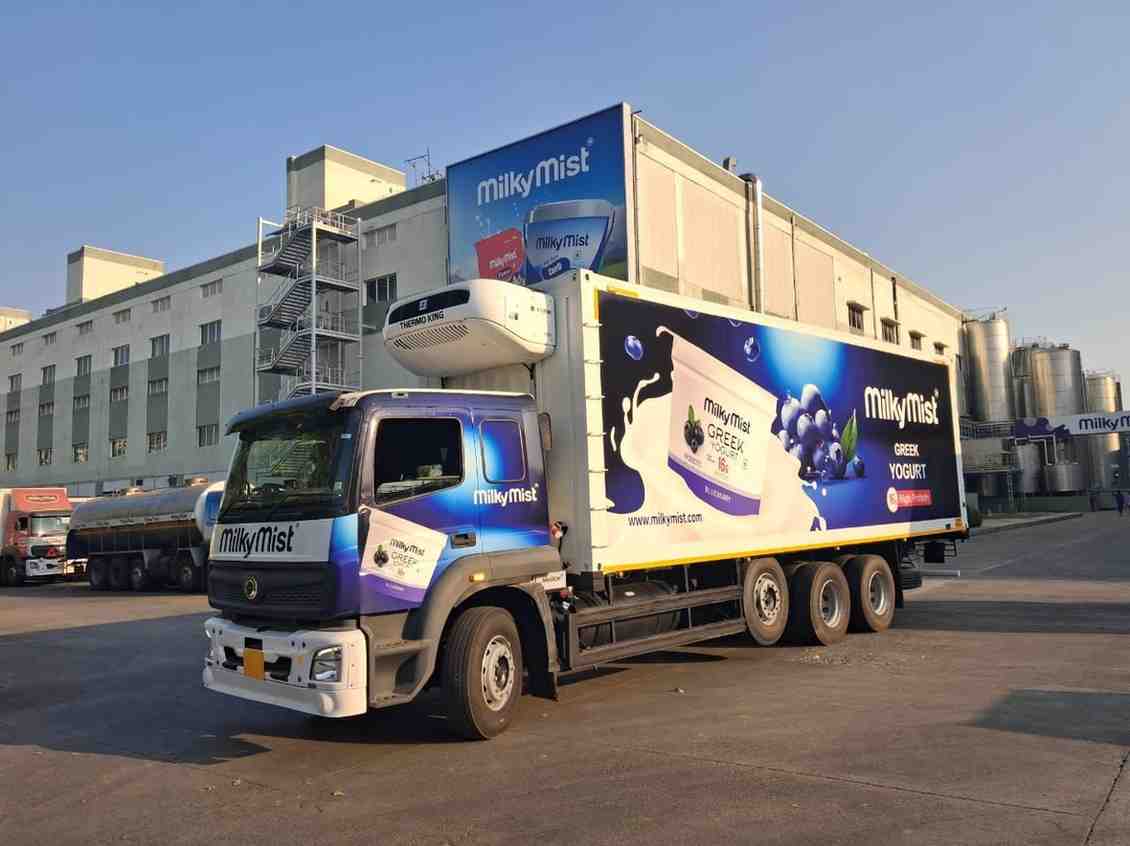
Milk is transported from collection centres to the processing plant through a refrigerated logistics network. In regions like Tamil Nadu, where daytime temperatures can soar and road conditions vary, even a slight break in the cold chain can compromise the product.
According to Sathishkumar, maintaining cold-chain integrity during transport is not simply an operational requirement, it determines how the milk will perform during processing later.
Multiple Checkpoints Before Processing
By the time the milk finally reaches the processing plant, it has already passed through several critical checkpoints within a tightly controlled time window.
Only after these stages, collection, testing, chilling and cold-chain transport, does the milk enter the production phase where it is converted into value-added dairy products.
At this stage, the focus shifts to producing items such as curd, paneer, cheese, butter and other dairy foods.