


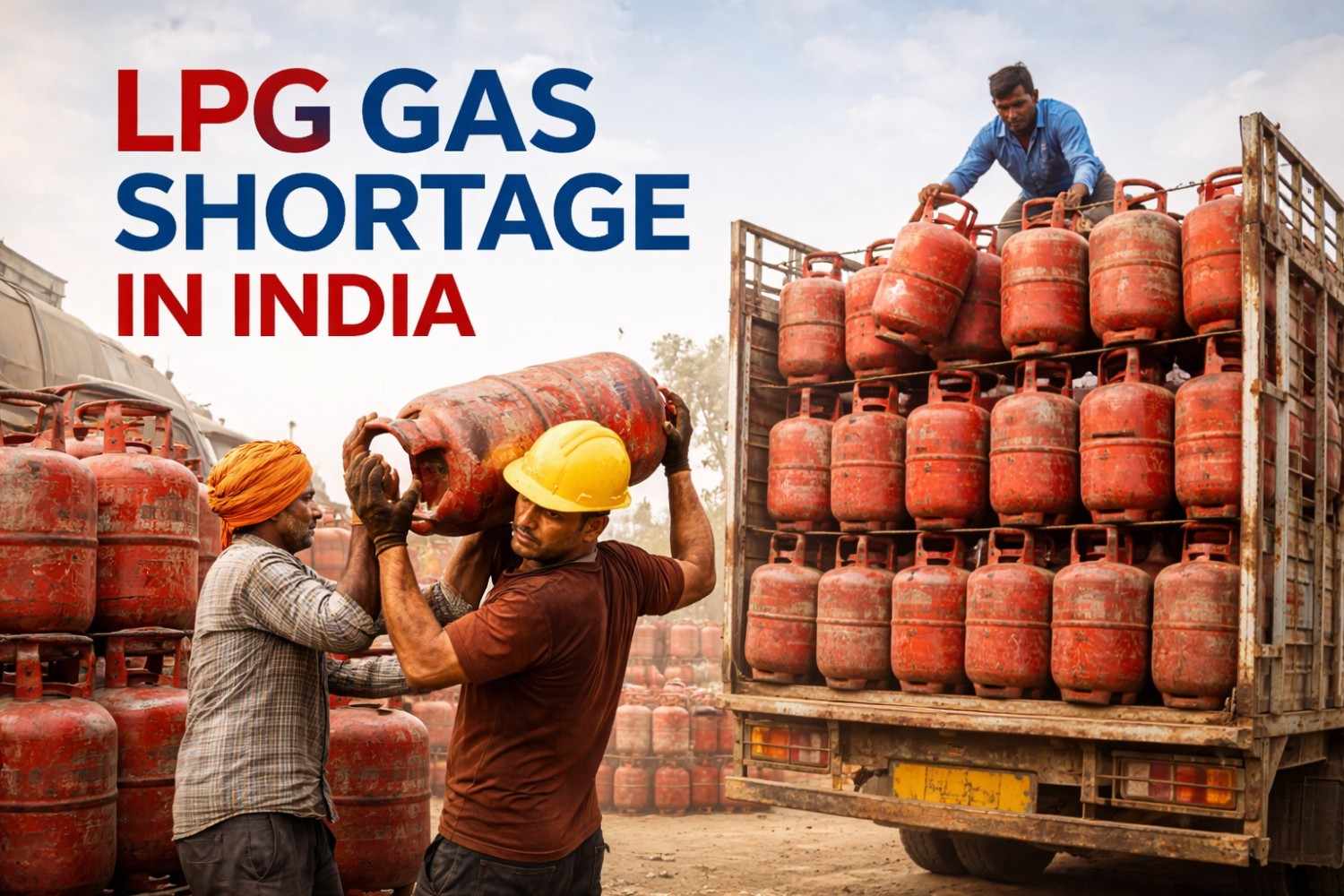
The escalating geopolitical tensions in West Asia, particularly the widening conflict involving Iran, Israel, and the United States, are beginning to ripple through India’s domestic economy. One of the most immediate impacts is being felt in kitchens and restaurants across the country, as disruptions in liquefied petroleum gas (LPG) supply threaten both households and the hospitality sector.
Industry bodies say LPG cylinder deliveries have become irregular in several cities including Mumbai, Bengaluru and Kolkata, triggering panic buying and long queues outside LPG distribution centres.
Strait of Hormuz Disruption Drives Energy Shock
The crisis stems from disruptions to maritime traffic through the Strait of Hormuz, one of the world’s most critical energy shipping routes. The ongoing conflict has halted or slowed tanker movements across the Gulf region, affecting energy exports from major producers such as Qatar and Saudi Arabia.
For India, which imports a significant portion of its LPG requirements, the disruption has created a cascading supply chain challenge. Higher freight costs, delayed shipments, and volatility in global LPG prices have strained the domestic supply network.
Hospitality Sector Faces Shutdown Risk
The hospitality industry has been among the first to feel the impact. According to the Mumbai Hotels and Restaurants Association, nearly 20% of hotels and restaurants in Mumbai have already temporarily shut operations due to the shortage of cooking gas.
Industry leaders warn that if the supply situation does not improve quickly, up to half of the city’s restaurants could be forced to close in the coming days. Similar stress signals are emerging from restaurants and catering businesses in Maharashtra and Karnataka, where operators say cylinder deliveries have become unpredictable, forcing them to cut operating hours or suspend services.
Households Begin Feeling the Pressure
The LPG crunch is also beginning to affect households in urban and semi-urban areas. Reports from multiple cities indicate consumers waiting in long queues outside LPG distribution agencies amid fears of prolonged shortages. Panic buying and hoarding are adding further pressure to an already strained supply chain, raising concerns about equitable distribution and price stability.
For millions of Indian households that rely on LPG for daily cooking, sustained supply disruptions could quickly turn into a major social and economic challenge.
Government Steps In with Emergency Measures
Recognising the urgency of the situation, the Indian government has directed oil marketing companies and refineries to ramp up LPG production to stabilise supplies. Authorities have also set up a review panel to examine industry requests and assess immediate supply interventions for the hospitality sector. Officials are closely monitoring shipping routes and energy imports while exploring temporary supply diversification to mitigate dependence on Gulf shipments.
Indian Oil Corporation said steps have been taken to enhance LPG production and prioritise its availability for domestic consumers and essential non-domestic sectors such as hospitals and educational institutions. Requests from other non-domestic sectors will be reviewed by a committee of executive directors from oil marketing companies and prioritised based on merit, necessity and product availability.
Union petroleum and natural gas minister Hardeep Singh Puri said the government has taken steps to ensure that 100% supply of CNG & PNG to domestic consumers is ensured and other industries continue to get 70-80% of their supplies, despite the war situation. “We are committed to ensuring uninterrupted supply of affordable energy to our domestic consumers. There is no shortage for domestic consumers and no reason to panic,” he said.
Energy Companies Ramp Up Domestic Production
India’s energy majors have also begun taking steps to cushion the impact. Reliance Industries said it is increasing LPG production from its massive refining and petrochemicals complex in Jamnagar, widely regarded as the world’s largest integrated refining hub. The company said its teams are working around the clock to optimise refinery operations and maximise LPG output to ensure domestic supplies remain stable.
In addition, natural gas production from the KG-D6 Basin will be diverted to priority sectors in line with government guidelines aimed at safeguarding India’s energy security. Reliance said ensuring uninterrupted access to essential fuels for Indian households remains a national priority, especially at a time when global energy markets are witnessing heightened volatility.
A Broader Energy Security Wake-Up Call
Energy analysts say the LPG shortage highlights India’s vulnerability to geopolitical shocks in critical maritime routes. Nearly 60% of India’s LPG imports transit through the Strait of Hormuz, making the country particularly sensitive to disruptions in the Gulf region. The crisis is expected to accelerate policy discussions on strategic LPG reserves, diversification of supply sources, and expansion of domestic production capacity.
The hospitality industry, meanwhile, is urging the government to prioritise LPG allocation for commercial kitchens to prevent large-scale shutdowns that could disrupt food supply chains and employment across the sector.
What Lies Ahead
If the West Asia conflict continues and shipping disruptions persist, India could face continued volatility in LPG availability and pricing over the coming weeks. For now, coordinated action by the government, refiners and energy companies will be crucial to ensuring that Indian kitchens, from homes to restaurants, continue to function despite the global turmoil.