


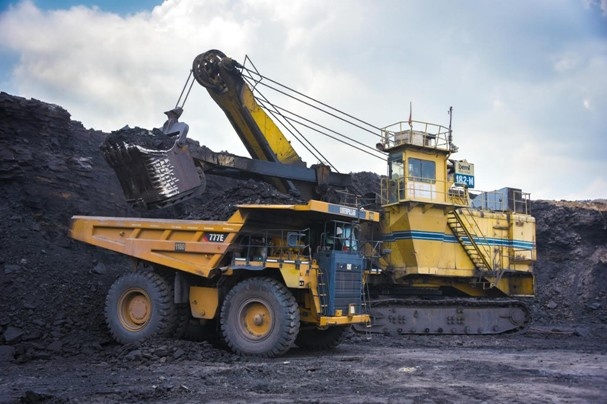
With summer approaching, India has put in place measures to ensure adequate coal availability for power generation across the country.
As of March 22, 2026, coal-based power plants hold a total stock of around 58.2 million tonnes (MT), sufficient to sustain operations for an average of 19 days at an 85% Plant Load Factor (PLF). This strong inventory position is expected to support rising seasonal power demand.
Thermal capacity expansion to meet future demand
Looking ahead, the projected requirement for thermal (coal and lignite-based) capacity is estimated at approximately 3,07,000 MW by 2034–35, compared to an installed capacity of 2,11,855 MW as of March 31, 2023.
To address this gap, the Ministry of Power has envisaged the addition of at least 97,000 MW of new coal- and lignite-based thermal capacity over the coming years.
NCL achieves production milestone
The Singrauli-based flagship arm of Coal India, Northern Coalfields Ltd (NCL), has achieved its annual coal production target of 140 million tonnes ahead of schedule for FY2025–26, reaching the milestone on March 30, 2026 (after the first shift).
Operating 10 highly mechanised opencast mines, NCL has consistently met its annual production targets for over a decade, underscoring its operational strength and reliability.
Key pillar of energy security
NCL has emerged as a critical pillar of India’s energy security. In the current energy landscape, domestically produced coal continues to serve as a dependable backbone of the power sector.
In this context, NCL’s sustained and enhanced production has played a vital role in ensuring uninterrupted coal supply to thermal power plants nationwide.
Long-term capacity planning under NEP
According to the National Electricity Plan (NEP), India’s installed power generation capacity is expected to reach 874 GW by 2031–32.
To ensure that generation capacity remains ahead of projected peak demand, all states, in consultation with the Central Electricity Authority (CEA), have prepared Resource Adequacy Plans (RAPs). These dynamic 10-year rolling plans cover both generation expansion and power procurement strategies.
States have also been advised to initiate the process of creating or contracting generation capacities from all sources in line with their respective RAPs.
Thermal capacity addition gains momentum
India’s thermal power capacity addition programme continues to progress steadily. Around 18,160 MW of thermal capacity has been commissioned between April 2023 and January 31, 2026.
In addition, 38,745 MW of thermal capacity, including 4,845 MW of stressed projects, is currently under construction. Contracts for another 22,920 MW have been awarded and are pending execution, while 24,020 MW of coal- and lignite-based capacity has been identified and is at various stages of planning.
Hydro and nuclear segments advance
In the hydro power segment, 12,723.50 MW of capacity is under construction as of January 31, 2026. A further 4,274 MW is under various stages of planning and is targeted for completion by 2031–32.
In the nuclear segment, 6,600 MW of capacity is under construction and is expected to be completed by 2029–30. Additionally, 7,000 MW is in different stages of planning and approval.
Renewable energy pipeline expands
India’s renewable energy capacity continues to scale up rapidly. As of January 31, 2026, a total of 1,54,830 MW of renewable capacity is under construction, including 64,670 MW of solar, 6,490 MW of wind, and 59,990 MW of hybrid projects.
Additionally, 47,920 MW of renewable capacity is under various stages of planning, comprising 35,440 MW of solar and 10,080 MW of hybrid projects, and is targeted for completion by 2029–30.
Energy storage infrastructure builds up
Energy storage systems are also witnessing significant expansion. As of January 31, 2026, pumped storage projects (PSPs) with a capacity of 13,120 MW / 78,720 MWh are under construction, while 9,580 MW / 57,480 MWh has been approved and is yet to be taken up for construction.
In the battery energy storage segment, 10,658.94 MW / 28,739.32 MWh of capacity is under construction, while 22,347.15 MW / 69,836.70 MWh is at the tendering stage.