


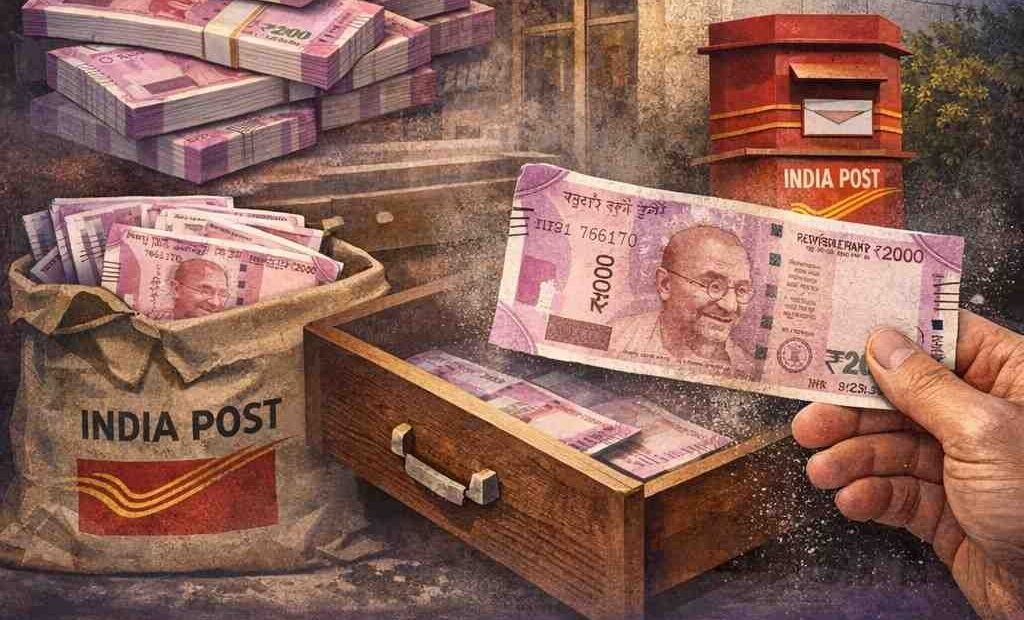
In the chaotic aftermath of India’s landmark 2016 demonetisation, when high-value ₹500 and ₹1,000 notes were abruptly scrapped, a new face of liquidity emerged, the ₹2,000 banknote.
The magenta-hued currency was a note born in crisis, but never meant to be permanent. It was, in many ways, a stopgap, designed to quickly remonetise an economy grappling with a severe cash crunch.
For a brief period, the ₹2,000 note symbolised financial restoration. ATMs recalibrated, wallets refilled, and the economy regained momentum. But almost as swiftly as it entered circulation, the high-value note began fading from everyday transactions.
From dominance to disappearance
Fast forward to May 19, 2023: the RBI announced the withdrawal of ₹2,000 denomination banknotes from circulation. While the move was orderly and not abrupt like demonetisation, it marked the beginning of the end for the note’s active life.
The numbers tell a compelling story. At the time of the announcement, ₹2,000 notes worth ₹3.56 lakh crore were in circulation. By February 28, 2026, that figure had plummeted to just ₹5,551 crore. In effect, a staggering 98.44% of these notes have been returned to the banking system.
This quiet but decisive decline underlines a broader shift in India’s cash economy, one that increasingly favours lower denominations and digital transactions.
The long goodbye: how the system absorbed the notes
The withdrawal process was structured to avoid disruption. Bank branches across the country facilitated deposits and exchanges until October 7, 2023. Beyond that, the RBI’s 19 Issue Offices continued to offer exchange and deposit facilities.
In a uniquely Indian adaptation, even India Post became a channel, allowing citizens to send ₹2,000 notes from remote locations to RBI offices for account credit. This hybrid model of physical and institutional infrastructure ensured that the phase-out was inclusive and efficient.
Why the ₹2,000 note lost relevance
The ₹2,000 note’s decline was not accidental, it was by design.
From the outset, policymakers signalled that the note was a temporary instrument. Over time, the RBI increased the supply of ₹500 and lower denomination notes, which are more practical for daily transactions. Simultaneously, India witnessed a digital payments revolution, reducing dependence on high-value cash.
The ₹2,000 note also faced a behavioural challenge: it was rarely used for routine purchases. Its high value made it inconvenient for everyday transactions and, at times, associated with hoarding rather than circulation.
Legal tender, but practically invisible
Despite its withdrawal from active circulation, the RBI has clarified that ₹2,000 notes continue to remain legal tender. This creates an unusual scenario, a currency that is technically valid but functionally absent from the economy.
Today, spotting a ₹2,000 note in circulation is increasingly rare. For most Indians, it has transitioned from a transactional tool to a collector’s item, or a forgotten relic tucked away in drawers.