


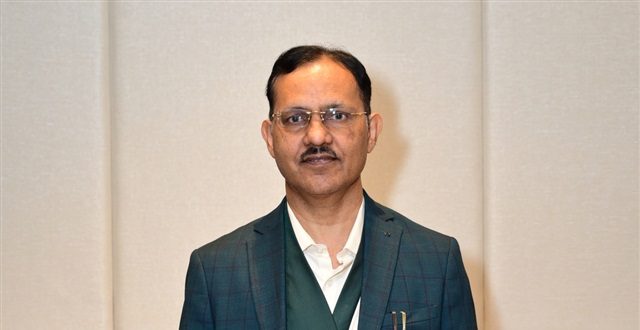
Ashok Chandak, president of India Electronics and Semiconductor Association (IESA), has emphasised the critical role of design competency and quality excellence in scaling India’s Electronics Components Manufacturing Scheme (ECMS) vision.
ECMS signals shift from policy intent to execution
Chandak noted that the success of the ECMS scheme marks a decisive shift in India’s electronics manufacturing journey, from policy intent to on-ground execution.
The approvals under the scheme span 16 product segments, including lithium-ion cells, flexible PCBs, connectors, and display modules. These projects are spread across eight states, with Karnataka and Maharashtra emerging as leaders in terms of project count.
The approved investments are expected to generate over 14,000 jobs and drive production worth ₹84,515 crore, reflecting the strong momentum building under the initiative.
Strong industry participation and investment momentum
The ECMS programme has witnessed robust industry participation, with 75 applications across 23 product categories from 12 states.
Against a targeted investment of ₹59,350 crore, approvals have already surpassed expectations at ₹61,671 crore, highlighting strong industry confidence in the policy framework.
The scheme is projected to enable production worth over ₹4,51,858 crore, nearing the overall target of ₹4,56,500 crore. Employment generation has also gained traction, crossing 65,000 jobs against a projected 91,600.
Fast-tracked approvals boost ecosystem development
IESA commended the proactive role of the Ministry of Electronics and Information Technology (MeitY) in accelerating approvals and enabling faster ecosystem development.
With these developments, India is increasingly being recognised as a credible and investible destination in the Electronics System Design and Manufacturing (ESDM) space.
Next phase: scaling, local sourcing and demand creation
Looking ahead, the focus must shift toward scaling operations, building strong design teams, enhancing local sourcing, and ensuring world-class quality standards.
Chandak stressed that OEMs and system companies must actively adopt “Designed and Made-in-India” components, as demand creation is as critical as supply creation. He also highlighted the role of distributors in integrating Indian products into global supply chains and bill of materials