


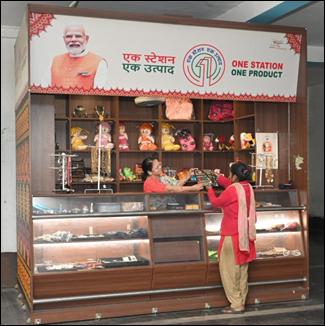
A quiet revolution is happening at railway stations across India, turning transit hubs into vibrant marketplaces for local craftsmanship. It is all about OSOP.
The One Station One Product (OSOP) initiative of Indian Railways, announced in the Union Budget 2022–23, is designed to promote indigenous products by providing dedicated retail spaces for artisans and Self-Help Groups (SHGs).
The initiative enhances market access, supports sustainable livelihoods, and showcases India’s regional diversity. As of 19 January 2026, more than 2,000 railway stations host over 2,326 OSOP outlets, benefiting upwards of 1.32 lakh individuals.
Expanding market access through scale
Launched on 25 March 2022, OSOP leverages the vast reach of Indian Railways to create accessible, high-footfall marketplaces. Following a successful 15-day pilot across 19 stations, the initiative was scaled through a structured rollout.
Stalls are allotted on a rotational basis at nominal fees, ensuring wider participation among local producers. Railway divisions work in coordination with state agencies, SHGs, and Micro, Small and Medium Enterprises (MSMEs) to ensure seamless implementation and inclusive growth.
Showcasing regional identity
OSOP outlets reflect the unique cultural and economic identity of each region. At Tenkasi Junction in Tamil Nadu, finely crafted cane products highlight indigenous craftsmanship. Patna Railway Station features the globally recognised Madhubani paintings, offering traditional artists a wider audience.
At Asansol Railway Station in West Bengal, an OSOP kiosk showcases handloom bags, handicrafts, and carpets, drawing steady interest from passengers. In Chennai’s Moore Market Complex Railway Station, cotton handloom products and traditional attar perfumes provide travellers with a sensory experience rooted in local heritage.
In Odisha, Balangir Railway Station hosts a stall displaying colourful handcrafted stuffed toys made by local artisans, particularly women from SHGs. The steady passenger flow ensures consistent demand, enabling sustainable incomes while preserving traditional skills.
Further west, Jaipur Junction Railway Station highlights Rajasthan’s Sanganeri print textiles, offering travellers a glimpse into the region’s rich artistic legacy. At Tatanagar Railway Station in Jharkhand, a diverse range of handcrafted products reflects the skill and creativity of local communities, expanding their reach beyond regional markets.
Driving inclusion and livelihoods
OSOP places strong emphasis on inclusion, prioritising artisans, weavers, farmers, and women-led SHGs with limited access to formal markets. Through institutional support and targeted outreach, the initiative connects grassroots producers with a national customer base, strengthening entrepreneurship at the local level.
Preserving traditional knowledge systems.
The expanding OSOP network demonstrates how public infrastructure can enable inclusive economic growth. By integrating local products into everyday transit spaces, the initiative not only boosts visibility for regional crafts but also preserves traditional knowledge systems.
More importantly, OSOP transforms routine travel into meaningful cultural engagement. For passengers, each purchase becomes a connection to local heritage; for artisans, it represents recognition and economic opportunity. As the initiative scales further, it stands as a compelling model of how India’s local talent can be amplified through national platforms.