


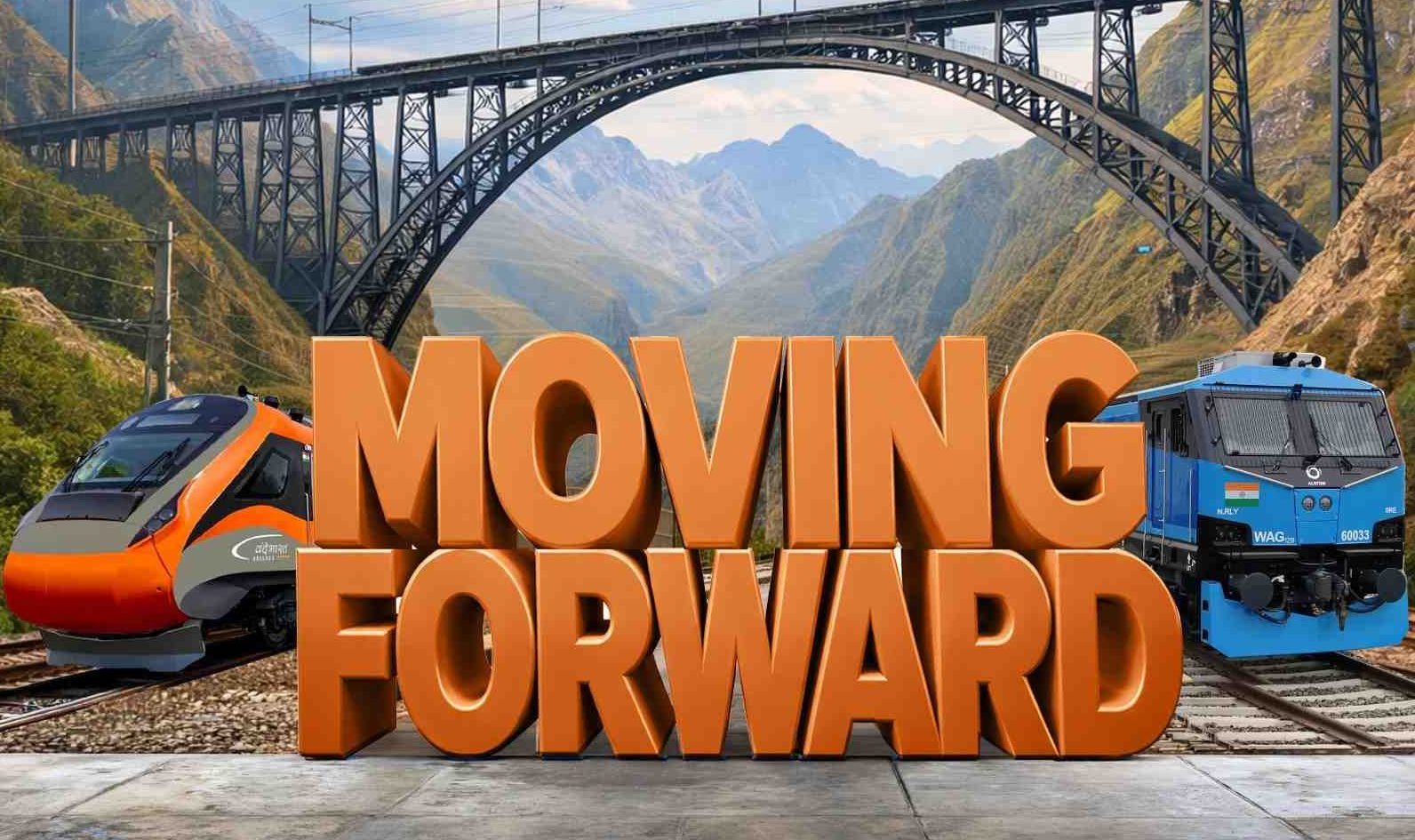
Indian Railways delivered a strong, broad-based performance in FY26, registering significant progress across freight, passenger services, infrastructure, safety and digital systems, while marking its stamp of self-reliance in technology and manufacturing.
The year’s gains underline its central role in powering economic activity, strengthening connectivity and enabling seamless mobility across India.
Policy push for better passenger experience
Union Minister for Railways Ashwini Vaishnaw highlighted the developmental strides made during the year. He pointed to record freight and passenger volumes, the expansion of Vande Bharat services, including sleeper variants, and sustained improvements in safety systems and station infrastructure, all contributing to a better passenger experience.
Operational scale remains robust
Rail operations maintained strong momentum, with nearly 25,000 trains running daily to support nationwide connectivity. The introduction of special trains during peak travel periods further enhanced capacity, ensuring improved accessibility and convenience for passengers.
Freight loading hits new highs
Freight performance reached a record 1,670 million tonnes in FY26, reflecting Indian Railways’ growing efficiency in transporting key commodities such as coal, cement, fertilisers and foodgrains. This scale-up continues to play a critical role in sustaining industrial and agricultural supply chains.
Manufacturing and ‘Make in India’ drive
The Railways strengthened its domestic manufacturing ecosystem, producing 1,674 locomotives during the year. Modernisation of passenger coaches also progressed, with 6,677 LHB coaches rolled out, enhancing both safety standards and travel comfort.
Next-gen passenger services expand
Passenger mobility witnessed a qualitative upgrade with the rollout of Vande Bharat Sleeper trains, complementing the existing Vande Bharat and Amrit Bharat services. These next-generation trains signal a shift towards faster, more efficient and passenger-centric long-distance travel.
Safety systems gain traction
Safety remained a key focus area, with accelerated deployment of the indigenous Kavach Automatic Train Protection System. The system is now operational across over 3,100 route kilometres, with implementation underway on an additional 24,400 kilometres, aimed at significantly reducing collision risks and improving operational safety.
Digital transformation deepens
Digital initiatives gathered pace with the launch of the RailOne App in July 2025, offering a unified platform for ticket booking, train enquiries and grievance redressal. In parallel, efforts to enhance transparency led to the removal of over 3.04 crore suspicious user accounts, ensuring fairer access to ticketing services.
Infrastructure build-out accelerates
Infrastructure development remained on a fast track, with 35 Gati Shakti Cargo Terminals commissioned to improve logistics efficiency and support multimodal integration. Additionally, 119 railway stations were redeveloped under the Amrit Bharat Station Scheme, significantly upgrading passenger amenities.
Strategic connectivity strengthened
Connectivity improvements extended to critical regions, with the Bairabi–Sairang rail line linking Aizawl to the national rail network, bolstering the Northeast. Simultaneously, major bridge infrastructure projects enhanced all-weather rail connectivity to Jammu & Kashmir, reinforcing national integration.