


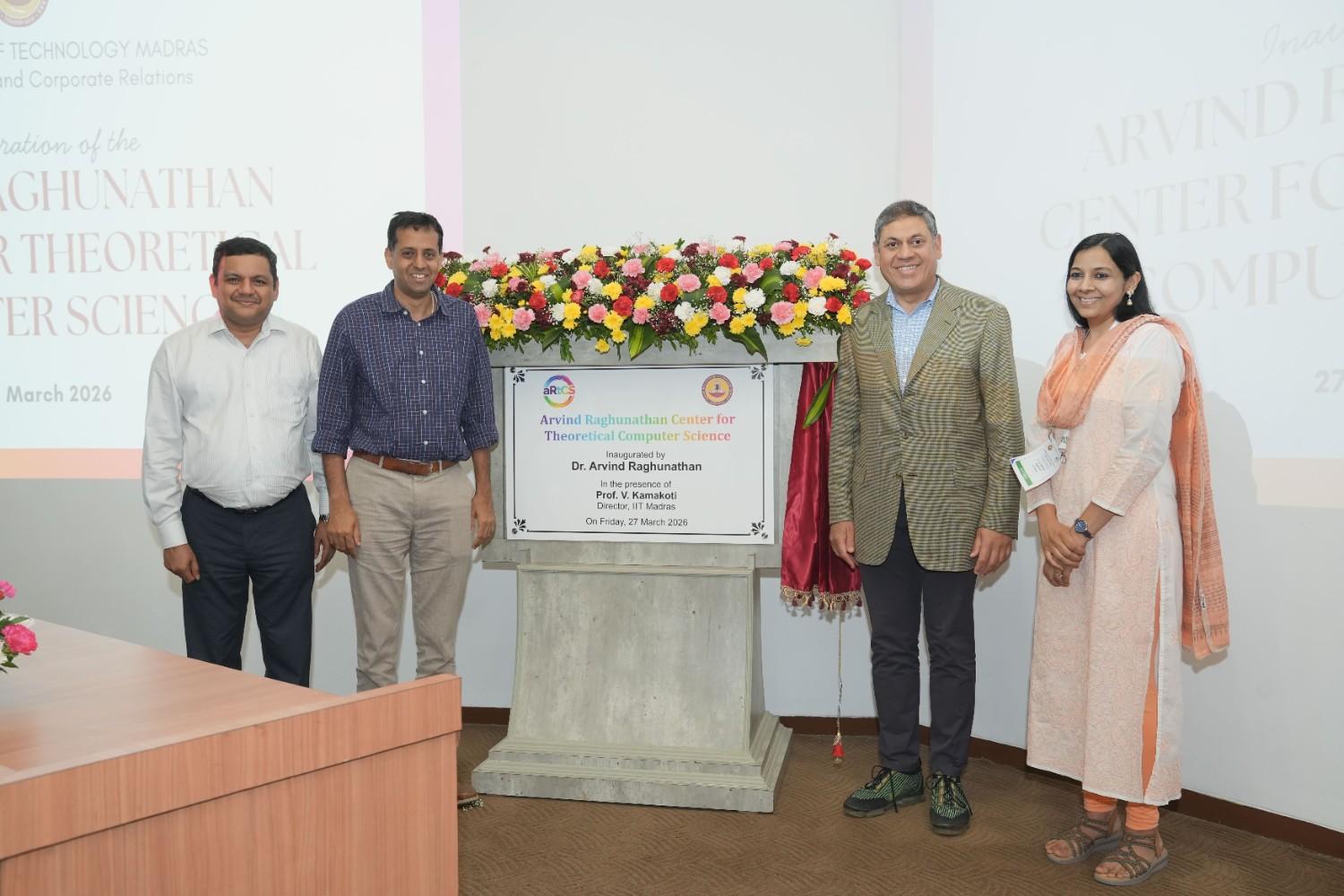
Indian Institute of Technology Madras (IIT Madras) is set to address fundamental challenges in computing through a new research initiative focused on cryptography, artificial intelligence (AI), and quantum technologies.
The programme aims to advance the mathematical foundations of computation while solving critical problems in data security, algorithms, computational complexity and AI privacy.
Backed by ₹23 crore endowment
The initiative will be led by the Arvind Raghunathan Centre for Theoretical Computer Science, established with a ₹23 crore endowment from alumnus Arvind Raghunathan.
According to Ashwin Mahalingam, Dean (Alumni and Corporate Relations), such alumni support enables the institute to drive cutting-edge research with both national and global impact.
Bridging theory and real-world applications
The centre will combine deep theoretical research with practical applications to enable breakthroughs in secure digital infrastructure, resilient systems, and trustworthy AI.
Key research areas include cryptographic systems, quantum computing, optimisation, and AI/ML theory, expanding beyond traditional cybersecurity into broader domains of theoretical computer science.
Enabling next-gen digital technologies
The research outcomes are expected to directly support emerging technologies such as secure AI systems, blockchain platforms, quantum-safe cryptography, and distributed systems that underpin digital trust.
This initiative positions IIT Madras as a potential global hub for foundational research in next-generation computing technologies.
Building a global research ecosystem
Shweta Agrawal, Coordinator of the centre, highlighted the goal of building a research community that addresses globally significant problems while nurturing India’s mathematical talent.
The initiative will foster interdisciplinary collaboration among academics, engineers, policymakers, and industry leaders, supported by international partnerships, workshops, and thematic programmes.
Defined roadmap for 2025–30
The centre has outlined clear milestones for the 2025–30 period, including publishing at least 10 research papers annually, mentoring 10 research scholars each year, producing up to 8 PhDs annually in later phases and hosting four major academic events every year.