


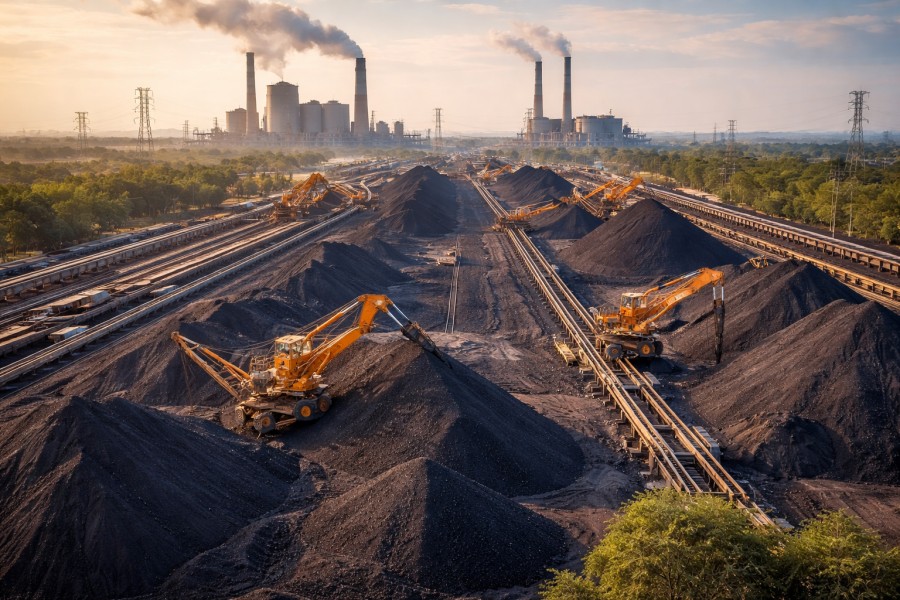
Coal India Ltd (CIL) is absorbing a sharp rise in input costs, including explosives and industrial diesel, to insulate coal consumers from a cascading increase in energy prices.
Rising input cost pressures
The state-owned miner has refrained from passing on the cost escalation, despite significant increases in key inputs.
The price of Ammonium Nitrate (AN), which accounts for around 60% of the composition used in manufacturing explosives, has risen 44% from pre-war levels of ₹50,500 per metric tonne to ₹72,750 per metric tonne as of April 1, 2026.
This has directly impacted blasting costs in opencast mines, where explosives are used extensively to remove overburden and access coal seams.
Explosives, diesel costs surge
The average cost of explosives increased by about 26%, from ₹39,588 per tonne in February 2026 to ₹49,783 per tonne by March-end. CIL’s subsidiaries consume nearly nine lakh tonnes of explosives annually.
Industrial diesel prices have also surged sharply, rising around 54% from ₹92 per litre in mid-March 2026 to ₹142 per litre as of April 1, 2026.
During FY26, diesel consumption stood at about 4.19 lakh kilolitres (KL), adding to the overall cost burden. The company is also compensating contractors operating in its mines for the higher diesel costs, as they procure fuel in bulk.
Measures to stabilise coal prices
To mitigate the impact of rising costs, some CIL subsidiaries have reduced reserve prices of coal under the Single Window Mode Agnostic e-auction.
CIL has also increased the frequency of auctions and the quantity of coal offered, ensuring adequate supply in the market.
Consumer-focused approach
By absorbing the cost pressures and maintaining supply discipline, CIL aims to keep coal prices affordable, thereby preventing a broader inflationary impact across sectors dependent on the dry fuel.
Outlook
The company’s approach underscores its role in ensuring energy security and price stability, even as global commodity markets remain volatile due to geopolitical developments.