


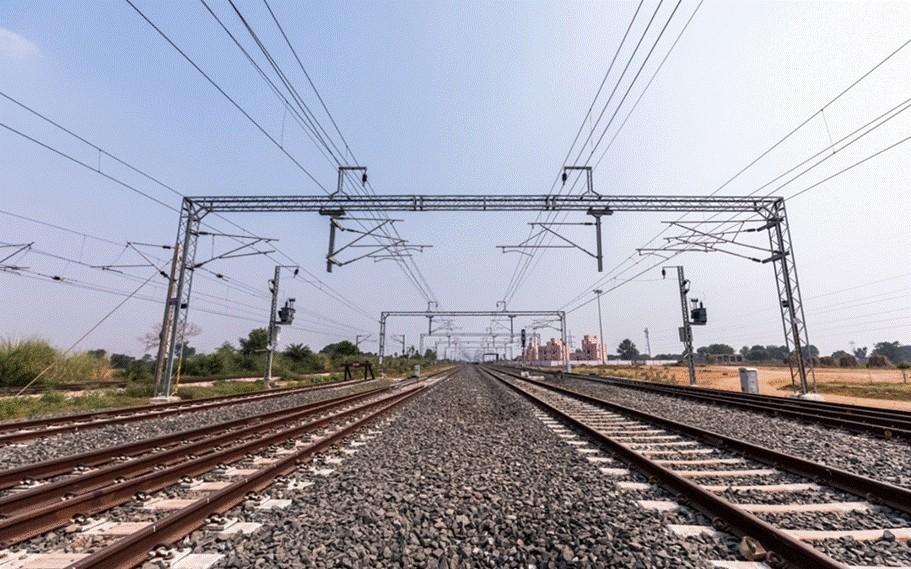
Indian Railways is undertaking a transformative expansion under the PM Gati Shakti National Master Plan, with a strong focus on last-mile connectivity and inclusive growth across underserved regions.
In FY26, the national transporter has sanctioned 100 railway projects spanning new lines, doubling, multitracking and related infrastructure, reinforcing its commitment to building a high-capacity, future-ready network.
Investment and scale surge
A total investment of ₹1.53 lakh crore has been committed across these projects, covering more than 6,000 km of railway network, marking a historic expansion milestone.
Compared to FY25, when 64 projects worth ₹72,869 crore covering over 2,800 km were sanctioned, project approvals have risen by 56%, route coverage by over 114% and financial commitment by more than 110%.
Focus on decongestion and efficiency
The sanctioned projects include new lines, doubling, multitracking, bypass lines, flyovers and chord lines, aimed at decongesting saturated routes and improving punctuality.
These initiatives are expected to enhance passenger experience, improve operational efficiency and reduce travel time across the network.
State-wise expansion
The projects are spread across most major States, ensuring balanced network expansion. Maharashtra leads with 17 projects, followed by Bihar (11), Jharkhand (10) and Madhya Pradesh (9).
These regions are critical to freight corridors, industrial connectivity and passenger demand, and are expected to see significant improvements in both freight and passenger movement.
Strengthening logistics backbone
The concentration of projects in key States will strengthen freight corridors, enhance industrial linkages and improve logistics efficiency across the country.
Improved connectivity in these regions is expected to deliver cascading economic benefits.
Inclusive growth focus
Aligned with the PM Gati Shakti framework, the expansion also targets social transformation by improving connectivity in tribal and remote regions.
Key projects such as the Rowghat–Jagdalpur line in Chhattisgarh and multiple corridors in Jharkhand and Odisha aim to improve access to markets, healthcare, education and employment.
High-value corridor projects
Over 35 projects exceed ₹1,000 crore, forming the backbone of corridor-level upgrades. Major projects include the Kasara–Manmad 3rd and 4th line (₹10,150 crore), Kharsia–Naya Raipur–Parmalkasa 5th & 6th line (₹8,740 crore), Itarsi–Nagpur 4th line (₹5,450 crore) and Secunderabad–Wadi 3rd and 4th line (₹5,000 crore).
Together, these projects account for over ₹28,000 crore, underscoring the focus on high-density trunk routes.
Aligning with cargo and energy goals
The projects are aligned with the Mission 3000 MT initiative to enhance cargo capacity, with a strong emphasis on energy corridors for faster movement of coal and minerals.
High Density Network projects aim to ease congestion, while the Rail Sagar Corridor is expected to improve port connectivity and coastal trade.
Economic impact
The large-scale investment is expected to generate employment, stimulate demand in sectors such as steel and cement, and reduce logistics costs.
As execution progresses, these projects are set to enhance railway capacity, improve service delivery and act as a catalyst for India’s next phase of economic growth.