


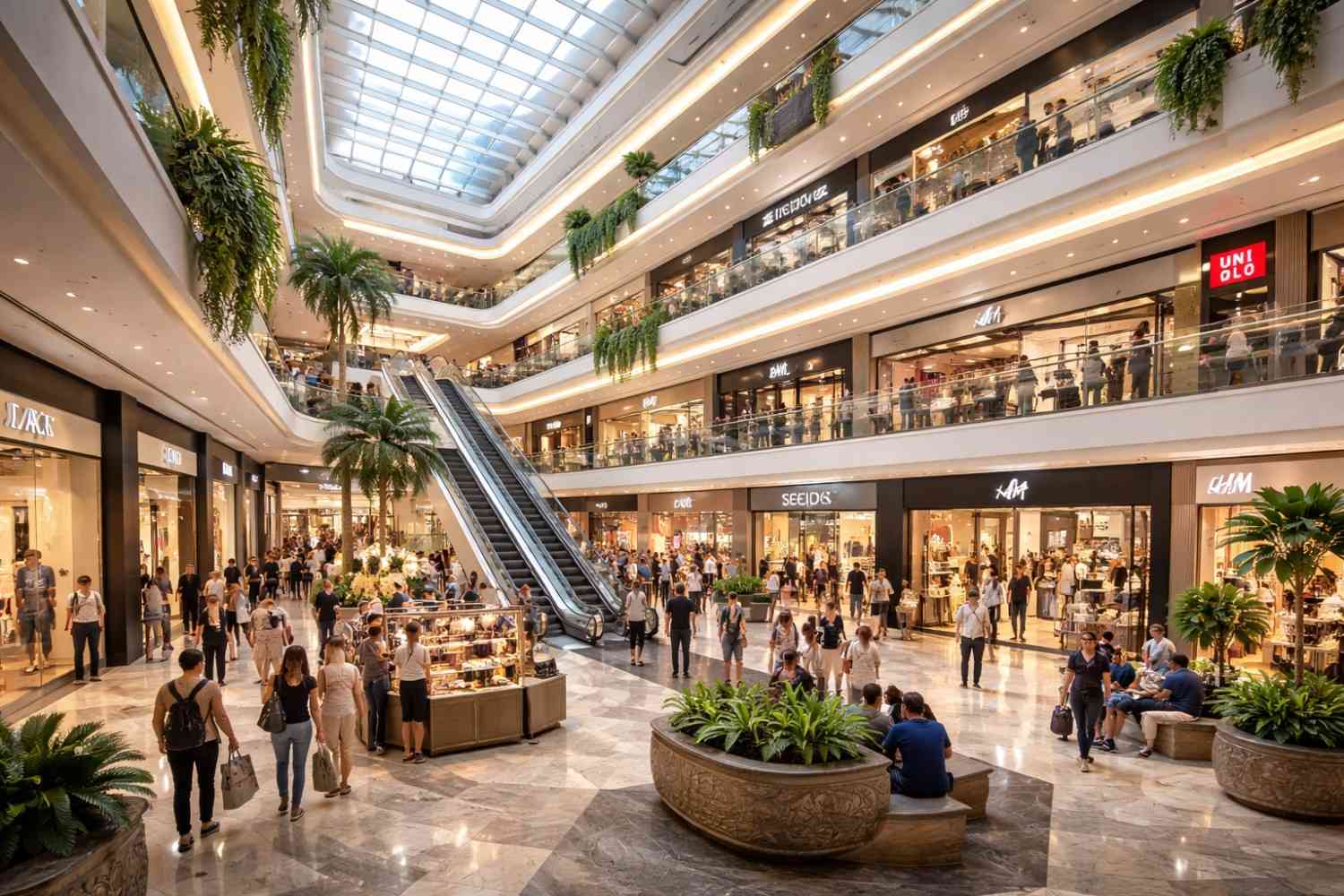
India’s retail real estate sector is undergoing a transformative structural shift, rewriting how brands, developers, and consumers interact with physical spaces.
According to Anarock Retail’s latest flagship report, RELEAP 2026, the era of purely transactional retail is giving way to an experience-led, engagement-driven paradigm that is fundamentally reshaping the country’s organised retail landscape.
Anarock Group CEO Retail & CEO – EMEA, Anuj Kejriwal, said: “India’s retail real estate story is entering its most exciting chapter yet. RELEAP 2026 captures a sector that has moved decisively beyond square footage and rental metrics, it is now about delivering experiences that consumers cannot find online.”
The report, which tracks retail real estate trends across India’s top seven cities, highlights a market that is not just growing, but also maturing, diversifying, and becoming increasingly sophisticated in its demand patterns.
Leasing momentum remains resilient
Total retail absorption across the top seven cities stood at approximately 4.3 million sq. ft. in H2 2025, reflecting resilient leasing momentum despite a dynamic macroeconomic backdrop.
This performance signals sustained retailer confidence in physical formats and long-term commitment to brick-and-mortar expansion strategies.
Demand was led by apparel, followed by entertainment, hypermarkets/supermarkets, and food & beverages, categories that collectively commanded a dominant share of leasing activity. The trend underscores a clear consumer preference for spaces that offer more than just products, focusing instead on engagement and experience.
Mid-sized store formats ranging from 1,000 to 5,000 sq. ft. continued to dominate transactions, highlighting the industry’s preference for scalable and efficient retail units that balance brand visibility with operational viability.
Strong supply pipeline led by NCR, Hyderabad
On the supply side, the development pipeline remains robust, with Delhi NCR and Hyderabad together accounting for nearly 70% of upcoming retail supply.
This concentration reflects strong developer confidence in these high-growth markets and their capacity to absorb institutional-grade retail inventory.
The pipeline also signals a broader shift towards destination-format malls and mixed-use developments, integrating retail, entertainment, dining, and wellness into cohesive consumer destinations.
City-wise demand patterns evolve
RELEAP 2026 highlights a diversified demand landscape across cities. NCR and MMR witnessed strong traction in apparel and entertainment-led leasing, driven by aspirational consumers and high-footfall mall ecosystems.
Hyderabad and Bengaluru saw increased participation from anchor-driven categories such as hypermarkets and family entertainment centres, reflecting the rise of community-oriented retail formats in these markets.
Chennai continued to show demand skewed towards discretionary categories such as apparel and jewellery, consistent with its established retail culture.
This divergence underlines that India’s retail market is not monolithic and requires strategies tailored to local consumer behaviour and demographic nuances.
High streets gain traction
High-street leasing continued to gain momentum during H2 2025, with key micro-markets across cities witnessing rental appreciation supported by strong absorption. However, this trend is also influenced by constrained vacancy levels in premium malls.
Several brands, particularly in fashion, luxury, and F&B, are increasingly leveraging high streets as an alternative expansion route to maintain growth momentum amid limited mall availability.
In contrast, mall rentals remained largely stable, with selective growth in high-performing Grade A assets. This divergence indicates that while premium malls continue to perform well, the broader mall ecosystem must differentiate through curation, experience design, and tenant mix.