


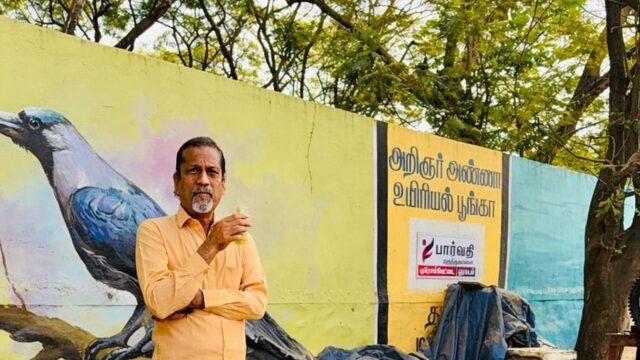
When Zoho founder Sridhar Vembu speaks, India’s tech ecosystem listens. But this time, his words didn’t just echo, they sparked a sharp, no-holds-barred response from entrepreneur Ashneer Grover, turning a philosophical appeal into a full-blown public face-off.
A call to return and rebuild
In an open letter that quickly gained traction on X, Vembu reached out to Indians living in the United States with a deeply personal and patriotic appeal. Drawing from his own journey, arriving in America decades ago with little but education and ambition, he acknowledged the opportunities the country provided, urging gratitude as a core Indian value.
But the heart of his message lay elsewhere
Vembu warned of a shifting global perception, where Indians abroad increasingly find themselves caught in ideological crossfires within American society. More importantly, he argued that true global respect for Indians hinges not on individual success overseas, but on India’s collective rise, powered by technological strength.
His solution? Reverse the flow of talent
A return to India, he said, isn’t just sentimental, it’s strategic. With a young population hungry for opportunity, the country needs experienced global professionals to fuel its next phase of growth. The pitch was clear: come back, build, and lead.
Grover’s reality check
If Vembu’s note carried the tone of a mission, Grover’s response was pure disruption.
Reacting bluntly, Grover dismissed the idea as impractical, even delusional. In a characteristically sharp post, he pointed to hard metrics, currency disparity and extreme weather, as symbols of the gap between idealism and on-ground reality.
His message was simple: decisions about migration should be data-driven, not emotional. The subtext? For many professionals, the trade-offs of returning, economic, infrastructural, and lifestyle-related, are far from trivial.
The bigger debate
This exchange goes beyond two high-profile entrepreneurs. It taps into a deeper, unresolved question: can India realistically attract back its global talent pool?
On one side is the vision of a self-reliant India, powered by returning expertise and driven by technological ambition. On the other is the lived reality of challenges that still push talent outward, be it income disparity, climate concerns, or quality of life.
The truth, as always, lies somewhere in between
India’s growth story is undeniable, but so are its gaps. For return migration to become more than a moral call, it must evolve into a compelling value proposition, where opportunity, infrastructure, and quality of life align.
Until then, the Vembu vs Grover debate is likely to remain what it is today: a powerful reflection of India’s ambition, and its contradictions.