


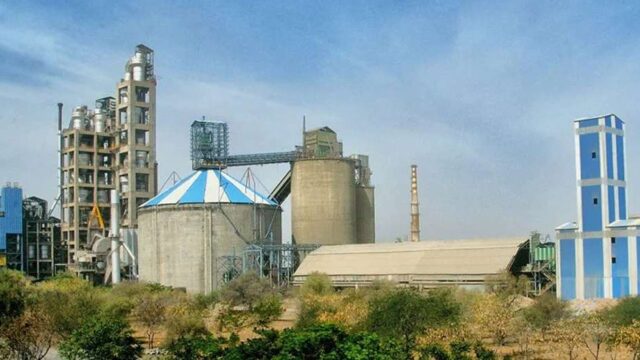
Ambuja Cements has outlined a sharper profitability-focused roadmap for the Adani Group cement major, signalling a strategic shift from aggressive expansion towards operational optimisation, premiumisation and disciplined capital allocation amid rising industry cost pressures.
Speaking during the company’s earnings call, Ambuja Cements CEO Vinod Bahety, said FY27 will be centred on streamlining operations, expanding margins and improving asset utilisation across recently integrated businesses, even as the broader cement sector grapples with inflationary pressures and uncertain demand conditions.
Premium cement takes centre stage
Ambuja Cements is increasingly leaning on premium products and trade sales to drive profitability rather than chasing sheer volume growth.
Bahety said premium cement already accounts for nearly 36 per cent of the company’s trade sales in the fourth quarter, underlining the company’s growing dominance in the high-value segment.
The strategy reflects a broader shift underway in India’s cement industry, where companies are increasingly focusing on product mix improvement and pricing power to offset volatile fuel, freight and raw material costs.
Ambuja Cements expects consolidated cement volumes to grow by around 8 per cent in FY27 to nearly 80 million tonnes, although the company indicated that growth will remain “moderate” as the focus stays firmly on value-accretive sales rather than aggressive market share gains.
Operational efficiency under spotlight
A major priority for FY27 will be improving the reliability and utilisation of the recently acquired Penna Cement and Sanghi Industries assets.
Together, the two businesses contribute nearly 19 million tonnes of cement capacity, and Ambuja is targeting a 5–10% increase in utilisation levels across these assets.
The company said portfolio integration efforts are progressing steadily. The amalgamation of Sanghi Industries and Penna Cement with Ambuja Cements has already been completed, while the integration process involving ACC and Orient Cement is currently underway.
Industry analysts view integration efficiencies as a key earnings lever for Ambuja over the next few years, especially as the Adani Group continues consolidating its cement operations into a more integrated nationwide platform.
Capex moderates after expansion surge
After a period of rapid capacity expansion, Ambuja is now recalibrating its capital expenditure strategy.
The company has guided for FY27 capex in the range of Rs 6,000 crore to Rs 6,500 crore, lower than the roughly Rs 7,500 crore spent in FY26.
Bahety said future capacity additions will be pursued more gradually, with the company first prioritising optimisation of existing assets and leveraging evolving railway policies around bulk cement terminals.
The calibrated expansion approach is aimed at ensuring disciplined capital allocation and improving returns on capital employed at a time when the industry is entering a more uncertain demand environment.
During FY26, Ambuja’s total cement capacity rose to 109 million tonnes following the commissioning of 10.7 million tonnes of grinding capacity across locations including Marwar, Farakka, Sankrail, Sindri and Krishnapatnam, along with 7 million tonnes of clinker capacity additions at Jodhpur and Bhatapara.
Rising costs trigger recalibration
The management acknowledged that global geopolitical developments and energy market volatility are beginning to exert pressure on the cost structure.
Bahety said the company witnessed a sharp rise in costs during the March quarter, with inflationary impact estimated at nearly Rs 25 per cement bag.
The escalation has been driven largely by higher fuel, diesel and energy costs, prompting the company to recalibrate its cost assumptions for the current financial year.
Ambuja had earlier targeted achieving a cost structure of nearly Rs 4,000 per tonne by the March 2026 exit period. While the company achieved an annual average cost of around Rs 4,400 per tonne during FY26, Bahety said March exit costs had already improved to nearly Rs 4,100 per tonne.
The company remains optimistic about achieving additional savings of Rs 150–200 per tonne through lower raw material costs, particularly fly ash, and increased green energy utilisation.
Demand outlook remains cautious
Despite remaining optimistic on India’s long-term infrastructure and construction growth story, Ambuja struck a cautious tone on near-term demand.
The company flagged inflationary pressures, weak monsoon expectations and softer cement demand as near-term risks for the sector.
Against this backdrop, Ambuja said it will continue focusing on disciplined execution, deeper brand penetration, trade sales expansion, premiumisation and strict cost control measures.
The commentary suggests the company is preparing for a more measured operating environment where profitability, operational efficiency and capital discipline may become more critical than aggressive expansion alone.