


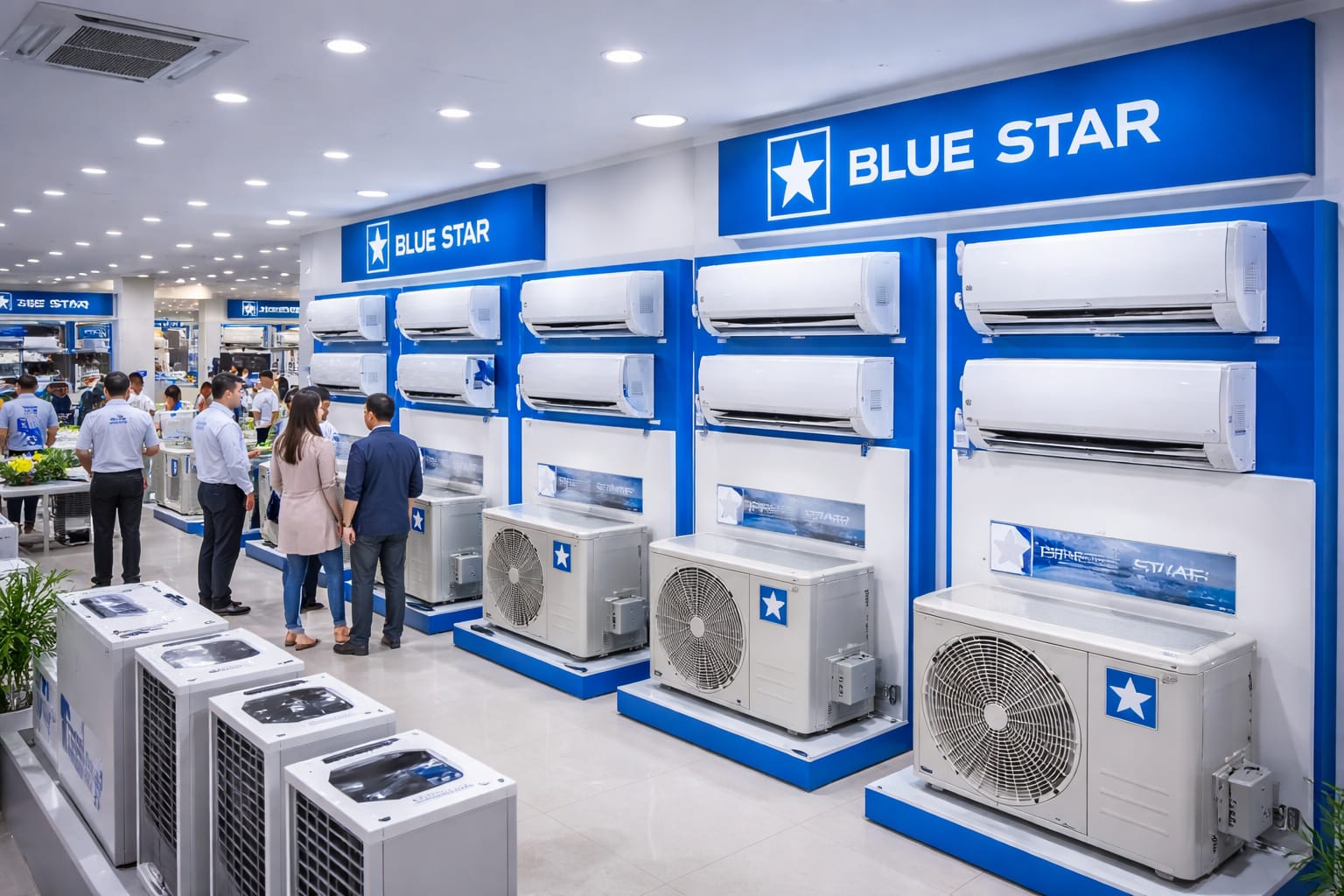
Air-conditioner major Blue Star expects retail prices of room air-conditioners to rise by as much as 13% this season as the company grapples with higher input costs and continuing global supply-chain uncertainties, even as it doubles down on high-growth opportunities in data centres, manufacturing and international OEM markets.
Speaking during the company’s earnings call, Managing Director B. Thiagarajan said the company has already implemented around 8% price hikes and expects the remaining increases to reflect in May and June billings.
“On an average, you can assume up to 13% price increase. Around 8% has already been realised and the balance will happen as May and June billings progress,” he said.
Thiagarajan noted that the latest round of hikes would help protect margin levels, but warned that additional pressure may emerge from rising petroleum-linked raw material costs such as styrene and polystyrene, especially in the aftermath of global geopolitical tensions and supply disruptions.
A year packed with headwinds
Describing FY26 as “a very challenging year,” Thiagarajan said the company faced multiple disruptions almost back-to-back.
The weak summer season was followed by a slowdown triggered by the GST rate reduction announcement between August 15 and September 22, which impacted secondary sales and dealer stocking patterns. This was followed by the transition to new energy-label norms, resulting in inventory liquidation pressures across the trade channel.
The company also faced continuing trade-war related supply-chain disruptions affecting both raw material availability and pricing.
“As we were building up towards the summer season, the war-related impact added another layer of uncertainty,” he said, adding that concerns extended beyond LPG prices to broader supply-chain disruptions and changing market sentiment.
Data centres emerging as major growth engine
Blue Star sees strong momentum in its commercial air-conditioning and electromechanical projects business, particularly from data centres and advanced manufacturing sectors.
Thiagarajan said the commercial air-conditioning business is expected to grow around 8% to 10%, with demand increasingly driven by manufacturing industries such as semiconductors, EV batteries and solar cells.
The company is also seeing significant traction in the data-centre cooling and MEP (mechanical, electrical and plumbing) segment, where it currently commands leadership.
“The data-centre MEP market is currently around ₹3,500 crore and we already do nearly ₹1,000 crore business there,” he said. “This market could more than double within three years, and our own MEP business in the segment has the potential to grow to nearly ₹3,000 crore.”
According to Thiagarajan, nearly 15% of Blue Star’s revenue could eventually come from the data-centre MEP business alone.
He added that infrastructure projects such as airports and metro rail systems continue to offer attractive opportunities because of strong financing visibility and fast execution timelines.
International business focused on OEM manufacturing
On the international front, Thiagarajan acknowledged that global HVAC demand remains uncertain amid evolving trade agreements and economic slowdowns in the US and Europe.
The company, however, continues to secure approvals and customer acceptance for air-to-water and air-to-air heat pumps across several overseas OEM customers.
Blue Star is pursuing an asset-light global strategy focused entirely on contract manufacturing rather than building its own brand overseas.
“Blue Star is not entering with its own brand, not acquiring brands and not setting up joint ventures. We are making products for others as a CDM manufacturer,” he said.
While Europe remains slow, the company expects heat-pump adoption to accelerate as countries push consumers towards energy-efficient alternatives to traditional boilers.
Thiagarajan said the international business may not contribute significantly to revenue immediately, but could emerge as an important growth driver over the next three years depending on the global economic environment.
Summer sales outlook remains strong
Despite industry uncertainties, Blue Star remains optimistic about the ongoing summer season. Thiagarajan said that with average price increases of nearly 10% over last year, a “good performance” would translate into 25% to 30% growth in primary sales compared to last year.
The company expects annual capital expenditure to remain in the range of ₹250 crore to ₹350 crore as it expands capacity and strengthens its manufacturing capabilities.