


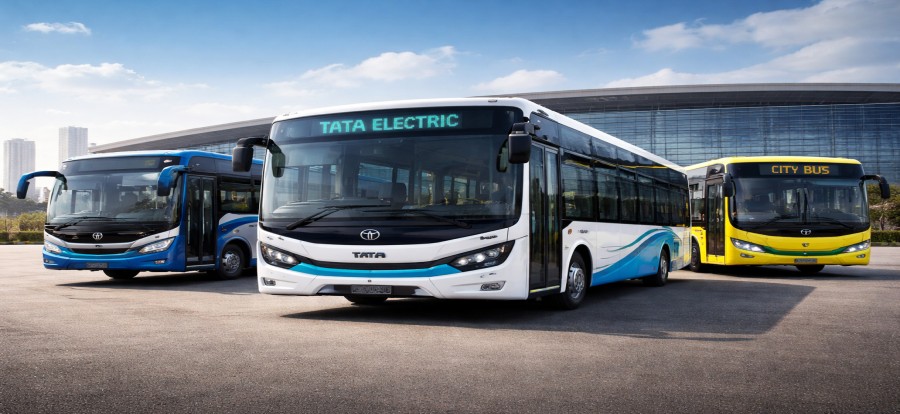
India’s bus industry is entering a significant phase of structural transformation, driven by accelerating electric vehicle (EV) adoption, infrastructure development, sustainability commitments and government-led clean mobility initiatives, according to KPMG.
In its latest report titled Electrifying India’s Bus Industry – The Decade of Transformation, the firm noted that the country’s electric bus ecosystem is rapidly evolving across both public and private transport segments, supported by policy measures, financing innovation, charging infrastructure expansion and supply chain readiness.
Market transition
According to the report, India’s bus market, which has historically remained stable at 35,000–50,000 units annually, is now witnessing a transition fuelled by electrification, government procurement programmes and infrastructure investments.
The report highlighted that buses account for nearly 57 per cent of passenger-kilometres travelled in India, making electrification of the segment crucial for the country’s clean mobility and decarbonisation goals.
Opportunity for broader mobility ecosystem
“India’s electric bus transition is moving beyond a policy-led initiative to becoming a structural transformation opportunity for the broader mobility ecosystem,” said KPMG in India Partner, Automotive & Lead, Electric Mobility, Rohan Rao.
He added that public transport electrification has already gained strong momentum due to government procurement programmes, improving cost economics and rising infrastructure investments. Going forward, the focus is expected to shift towards building a scalable ecosystem combining domestic manufacturing, financing innovation, charging infrastructure and operational efficiency.
Growth drivers
“India’s e-bus ecosystem is entering a critical phase where scale, localization, and execution capabilities will become key differentiators,” said KPMG in India Partner, Deal Advisory, Raghavan Viswanathan.
He said future growth is likely to come from private intercity mobility, airport transport, platform-based mobility solutions and corporate fleets, in addition to public transport undertakings that currently dominate adoption.
Key findings
The report stated that electric buses can deliver up to 70 per cent higher energy efficiency and significantly lower lifetime emissions compared to diesel buses.
It added that PM-eBus Sewa tenders for around 6,600 buses could potentially save 1–2 million tonnes of carbon dioxide emissions and reduce oil imports by $2–3 billion over the concession period.
According to the report, nearly 62,000 e-bus tenders have been issued in India so far, with approximately 46,000 buses awarded under different government schemes.
Deployment status
As of March 2026, around 16,300 electric buses were operational on Indian roads, reflecting both strong adoption momentum and ongoing deployment challenges.
More than 90 per cent of current e-bus deployments in India have been driven by government-led tenders and public transport undertakings, the report said.
It further noted that electric buses operating in public intracity transport have already achieved Total Cost of Ownership (TCO) parity with diesel and CNG buses under high-utilisation conditions.
Future projections
The report projected that India could tender nearly 40,000 additional electric buses by FY30 through central and state government initiatives.
Electric bus penetration in annual bus sales is expected to rise from around 7 per cent currently to 35–40 per cent by FY35, while EV penetration in public transport is projected to exceed 85 per cent during the same period.
Sustainable mobility push
According to the report, India’s electric bus market is now entering a critical scale-up phase where coordinated action among governments, OEMs, financiers, infrastructure providers and fleet operators will play a decisive role in shaping the country’s sustainable mobility future.