


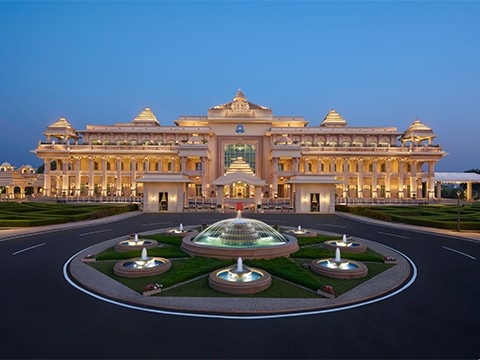
ITC Hotels Ltd is pursuing an asset-right strategy to expand its portfolio to 250 operational hotels with more than 22,000 keys by 2031, amid rising domestic and global demand for hospitality services.
The hospitality major said it would continue partnering with asset owners to strengthen its footprint across Tier II and Tier III cities, supported by increasing demand for premium hospitality offerings. At present, the company has 155 properties with 14,294 keys. During the last financial year, ITC Hotels recorded its highest-ever signings with the addition of 33 hotels comprising over 3,300 keys.
Expansion through acquisitions and new projects
On Friday, the company announced the acquisition of The Zuri Kumarakom, a five-star luxury resort in Kerala, for an enterprise value of ₹205 crore. The company also announced two new hotel projects at Visakhapatnam and New Delhi.
The proposed hotel at Visakhapatnam is expected to cater to growing demand arising from IT and data centres, industrial activity and port-led business travel, while strengthening the company’s presence on the eastern coast.
The property planned at the Yashobhoomi Complex in New Delhi will feature contemporary banqueting infrastructure and signature cuisine offerings, leveraging Yashobhoomi’s emergence as a hub for conventions, exhibitions and large-scale events.
Ongoing projects and sector outlook
Construction is also progressing on the company’s projects at Puri and the new hotel and banqueting block at Welcomhotel Bhubaneswar.
Describing FY26 as a year marked by disruptions including geopolitical tensions, excessive monsoon, capacity constraints and spillover effects from West Asia, ITC Hotels management said the Indian hospitality industry nevertheless demonstrated resilience with steady growth in average room rates (ARR). The management added that the structural imbalance between demand and supply is expected to continue over the next three years.
Domestic travel to support growth
The company said the outlook for the Indian hospitality sector remains positive, driven by sustained growth in domestic travel, improving infrastructure and increasing travel demand beyond the top 10 cities, which is expected to broaden the industry’s demand base across the country.
However, the company identified the West Asia conflict, inflation, rupee depreciation and the normalisation of air traffic and inbound travel as key monitorable factors for the industry.