


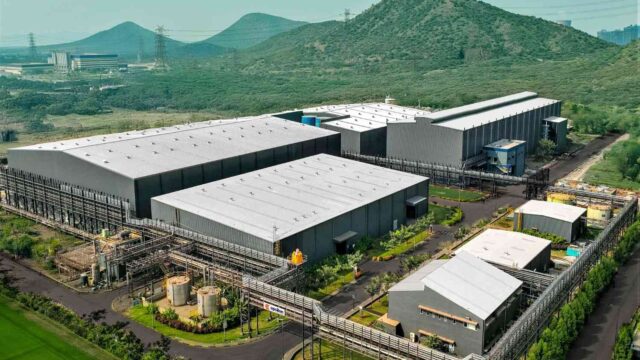
Epsilon Advanced Materials Pvt Ltd has announced the launch of its hard carbon anode material, specifically engineered for Sodium-Ion (Na-ion) batteries targeting grid-scale energy storage systems (ESS).
Developed entirely through in-house research and development, the new material is positioned as a low-cost, graphite-free and sustainable anode solution at a time when sodium-ion battery technology is witnessing rapid global commercial adoption.
Sodium-ion gains momentum
Sodium-ion batteries are increasingly emerging as a preferred chemistry for grid-scale energy storage due to the geographic abundance of sodium and its comparatively lower ESG footprint versus lithium-ion batteries.
Unlike lithium extraction, which involves energy-intensive mining, high water consumption and geopolitically concentrated supply chains, sodium-based chemistries offer a more sustainable and scalable alternative for long-duration storage applications.
The growing industry shift is further reflected in commitments from major global battery manufacturers, including CATL, which has significantly expanded its sodium-ion cell production roadmap. Cell manufacturers across Asia and India are also actively evaluating anode materials that can deliver high ESS performance at competitive costs.
Designed for grid-scale applications
Epsilon said the Hard Carbon material’s disordered microstructure, enlarged interlayer spacing and closed nanopore architecture make it highly suited for sodium-ion storage.
The anode material delivers high reversibility, robust cycle life and fast charge-discharge capability, factors considered critical for grid applications that demand stable performance across thousands of charge cycles. Paired with sodium-ion chemistry, the company believes the material can emerge as one of the most cost-effective and durable anode options for large-scale ESS deployments.
Affordable materials
Epsilon Group Managing Director Vikram Handa said, “The clean energy transition needs materials that are affordable, available, and easy to scale, faster. Sodium-Ion is the right chemistry for energy storage and hard carbon is the right anode for it. The feedstock is something India has in abundance, the process is cleaner than anything that came before it, and the performance is where it needs to be for real-world grid applications. We are building for what energy storage will look like ten years from now.”
Coconut shell waste as feedstock
A key differentiator for EAMPL’s Hard Carbon Anode material is its feedstock strategy. The company’s primary development pathway uses coconut shell waste — abundantly available across India, as the carbon precursor.
Through controlled pyrolysis and high-temperature carbonisation, the agricultural byproduct is converted into a disordered carbon structure engineered specifically for sodium-ion storage requirements.
According to the company, this bio-based production route completely eliminates graphite dependency while generating up to 50% lower CO₂ emissions compared to conventional graphite anode manufacturing, primarily due to significantly lower processing temperatures.
ESG and supply chain advantage
The company believes the technology could offer both cell manufacturers and policymakers a structurally differentiated solution as the industry seeks stronger supply-chain resilience and tighter ESG compliance standards.
With global energy storage demand accelerating alongside renewable energy expansion, sodium-ion chemistry is increasingly being viewed as a viable alternative for scalable and sustainable grid infrastructure.