


TVS Motor Company is preparing for what could become one of its most aggressive expansion phases in recent years, with the company earmarking around ₹3,500 crore in capital expenditure for FY27.
The proposed investment is not merely about adding production lines. It reflects a broader strategy focused on expanding manufacturing capacity, accelerating electric vehicle growth, strengthening research and development, and preparing for future global opportunities including premium motorcycles and exports.
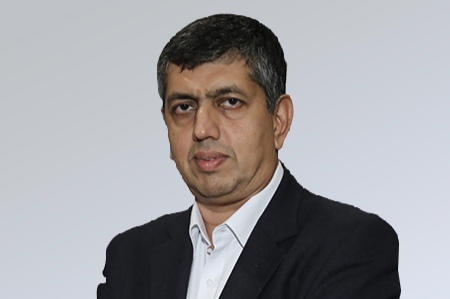
TVS Motor Company Chief Executive Officer K.N. Radhakrishnan, while speaking during the company’s earnings call, indicated that the company is positioning itself to grow ahead of the industry across multiple segments.
Capacity expansion reflects demand confidence
A significant portion of the planned capex will go towards manufacturing expansion. TVS Motor plans to add another 1.5 million units of production capacity, taking its overall annual manufacturing capacity to around 8.3 million units.
The timing of the expansion is notable. Two-wheeler demand in India has remained resilient despite inflationary pressures and commodity volatility, while exports and electric vehicles are opening additional growth avenues.
Radhakrishnan said the company has already begun work on the expansion and is continuously reviewing future requirements for FY28 and FY29 as well. The management’s message is clear, TVS does not want capacity limitations to slow down growth momentum.
Product development gets the largest share
Out of the ₹ 3,500 crore capex plan, nearly ₹2,000 crore is expected to be allocated towards product development and new product programmes.
This underlines TVS Motor’s increasing focus on innovation-led growth, especially at a time when competition in both internal combustion engine (ICE) and EV categories is intensifying.
The company is also increasing investments in R&D, testing and technology capabilities. Analysts believe this is crucial as the industry moves towards connected mobility, electrification and premiumisation.
EV strategy moving into the next phase
TVS Motor’s electric mobility business is rapidly scaling up, led by the strong market acceptance of the TVS iQube.
The company has already increased EV production from around 30,000-32,000 units per month last year to nearly 40,000 units and aims to scale this to 50,000 units monthly in the near term.
What is significant is that TVS is not only increasing production but also broadening the product portfolio. The recently launched TVS iQube S with a 4.7 kWh battery pack and 175 km range is aimed at strengthening its family EV positioning.
With over 900,000 customers already using the iQube platform, TVS appears to be moving from an early EV adoption phase into scale-driven expansion.
EV penetration trends favour TVS
Industry data shared by the company also points to a favourable long-term EV opportunity.
Electric two-wheeler penetration rose to 7.8% during Q4 from 7.1% earlier, while annual penetration increased from 6.2% to 6.6%.
TVS management believes this momentum will continue as consumers increasingly shift towards electric mobility, helped by improving charging infrastructure, lower running costs and expanding product choices.
Three-wheelers and Hyundai partnership add another layer
Beyond electric scooters, TVS is also strengthening its EV three-wheeler business in both passenger and cargo segments.
Its recent partnership with Hyundai Motor Company to jointly develop an electric three-wheeler platform is strategically important because it combines Hyundai’s technology expertise with TVS Motor’s local manufacturing and mobility understanding.
The partnership could help TVS strengthen its position in the rapidly evolving commercial EV mobility segment.
Exports remain a strong growth lever
International business continues to remain a major opportunity for TVS Motor, especially in Africa and other emerging markets where its HLX motorcycle range has seen strong acceptance.
According to Radhakrishnan, demand for HLX 100, 125 and 150 motorcycles currently exceeds supply in several export markets.
However, the company continues to face logistics-related disruptions, including container shortages and longer delivery timelines, which are affecting distributors and inventory planning globally.
India to play bigger role in Norton strategy
TVS Motor also appears ready to deepen India’s role in the future of Norton Motorcycles.
While one high-end Norton model will continue to be produced at Solihull in the UK, most upcoming Norton motorcycles are expected to be manufactured in India, particularly at the Hosur facility.
This highlights how India is increasingly becoming a global manufacturing and engineering base even for premium international motorcycle brands.