


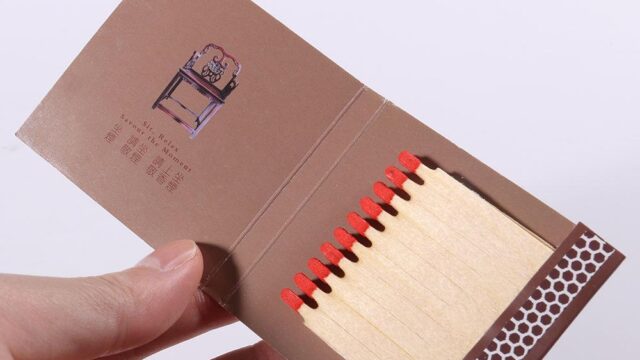
Indian manufacturers of commodity matchbooks will continue to face antidumping and countervailing duties in the United States after the US International Trade Commission (USITC) ruled that removing the existing trade measures would likely result in material injury to the domestic US industry.
The decision means the current duties on imports of commodity matchbooks from India will remain in force, preventing Indian exporters from gaining duty-free access to the American market. Commodity matchbook is a small booklet containing matches, typically given away or sold in large quantities with little product differentiation.
USITC rules against revoking duties
The USITC concluded that revoking the antidumping and countervailing duty orders would likely lead to the continuation or recurrence of material injury to US producers within a reasonably foreseeable period.
Chair Amy A Karpel and Commissioners David S Johanson and Jason E Kearns voted in favour of maintaining the measures.
The ruling was issued as part of the mandatory five-year ‘sunset review’ process under the Uruguay Round Agreements Act, which requires US authorities to periodically assess whether existing trade remedies should remain in place.
What the decision means for Indian exporters
The immediate impact of the ruling is that Indian matchbook manufacturers exporting to the US will continue to face additional duties, making their products relatively more expensive compared with domestically produced alternatives.
Had the duties been revoked, Indian exporters could have benefited from improved price competitiveness, potentially increasing shipments to the US market.
Instead, the continuation of the trade measures is likely to preserve existing cost disadvantages for exporters and may limit opportunities for market share expansion in the United States.
The decision also reduces regulatory certainty for companies that may have been planning to expand exports based on expectations of duty relief.
Protection for US manufacturers
The US antidumping and countervailing duty framework is designed to protect domestic industries from imports that are either sold at unfairly low prices or benefit from government subsidies.
By maintaining the orders, US authorities have effectively determined that Indian imports could again exert pricing pressure on domestic producers if the duties were removed.
The decision therefore provides continued protection to US matchbook manufacturers against potentially lower-priced imports.
Review conducted under sunset provisions
The sunset reviews concerning commodity matchbooks from India were initiated on October 1, 2025. In March 2026, the Commission decided to conduct expedited reviews after determining that participation from domestic US stakeholders was adequate while responses from respondent parties were insufficient.
As a result, the Commission relied on available evidence, previous determinations, submissions from interested parties and information provided by the US Department of Commerce rather than conducting a full-scale review process.
Limited impact on broader India-US trade
While the ruling is significant for companies operating in the matchbook segment, its impact on overall India-US trade is expected to be limited given the relatively small size of the product category.
However, the decision serves as a reminder that Indian exporters in niche manufacturing sectors continue to face trade remedy measures in key international markets.
For affected manufacturers, the continuation of duties means competitiveness will increasingly depend on operational efficiency, product differentiation and diversification into alternative export markets rather than relying on potential tariff relief in the United States.