


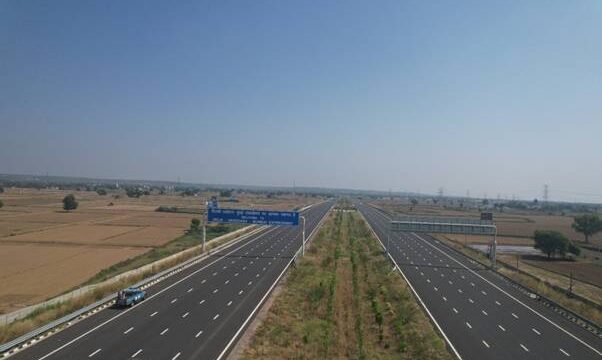
India’s road infrastructure has undergone a dramatic transformation over the past 12 years, driven by rapid expansion of the National Highway network, record construction speeds and the development of large-scale expressways that are reshaping connectivity, logistics and economic growth across the country.
Bharatmala emerges as backbone of connectivity push
At the centre of this transformation is the Bharatmala Pariyojana, the Government’s flagship highway development programme aimed at improving freight and passenger movement through integrated corridor development.
Approved in 2017 with an outlay of ₹5.35 lakh crore, the programme targets the development of 34,800 km of National Highway corridors, including Economic Corridors, Inter-Corridors, Border Roads, Coastal Roads, Port Connectivity Roads and Expressways.
As of March 2026, projects covering 26,425 km had been awarded, while 22,590 km had already been constructed. The programme has strengthened connectivity to remote and strategic regions while supporting economic development and national integration.
National Highway network expands by 61%
India’s National Highway network has expanded from about 91,287 km in 2014 to more than 1,46,572 km in FY26, marking a nearly 61% increase over the past decade.
The country has also significantly accelerated highway construction. The average pace has risen from around 11.6 km per day in 2013-14 to nearly 34 km per day in 2025, reflecting faster project execution, policy support, streamlined approvals and greater use of technology.
According to a study by the Indian Institute of Management Bangalore (IIMB), improved highway infrastructure has also reduced logistics costs by enhancing accessibility and lowering transportation expenses between factories, suppliers and customers.
Expressways redefine long-distance travel
The 1,386-km Delhi–Mumbai Expressway, being developed at an estimated cost of around ₹1 lakh crore, is set to become India’s longest access-controlled expressway. The corridor connects Delhi, Haryana, Rajasthan, Madhya Pradesh, Gujarat and Maharashtra.
Several sections have already been opened, including the Delhi–Dausa–Lalsot stretch in Rajasthan, the Vadodara–Bharuch section and the recently inaugurated Kim–Ena and Gandeva–Ena stretches in Gujarat. The project is expected to improve logistics efficiency and support industrial growth along the corridor.
The Delhi–Meerut Expressway, developed at a cost of about ₹8,346 crore, has significantly improved connectivity within the National Capital Region by reducing travel time and easing congestion between Delhi and Meerut.
Similarly, the 29-km Dwarka Expressway, built at a cost of nearly ₹9,000 crore, has enhanced connectivity between Delhi and Gurugram through advanced engineering, multi-level interchanges and modern traffic management systems.
Southern India gains from Bengaluru–Mysuru Expressway
The Bengaluru–Mysuru Expressway, developed at a cost of approximately ₹8,480 crore, has emerged as a major infrastructure milestone in southern India.
The 118-km corridor has reduced travel time between Bengaluru and Mysuru from nearly three hours to about 75 minutes, boosting mobility, tourism, commercial activity and regional economic development.
Delhi–Dehradun corridor combines speed with sustainability
One of the latest additions to India’s highway network is the 213-km Delhi–Dehradun Economic Corridor, inaugurated in April 2026 at a cost of ₹12,000 crore.
The six-lane access-controlled corridor has reduced travel time between Delhi and Dehradun from over six hours to around two-and-a-half hours while shortening the travel distance.
A key highlight of the project is its focus on environmental sustainability. The corridor includes a 12-km elevated wildlife corridor—among the longest in Asia—and a 370-metre tunnel near the Daat-Kali temple to minimise ecological impact in the sensitive Rajaji National Park and Shivalik Reserve Forest region.
Infrastructure driving economic growth
The expansion of highways and expressways is strengthening logistics efficiency, improving regional connectivity and creating new opportunities for investment, tourism and employment. Together, these projects are laying the foundation for a faster, more connected and economically integrated India.