


Southern Railway (SR) has reported a major expansion of passenger services during the financial year 2025-26, introducing new trains, extending existing routes, increasing service frequencies and adding stoppages across more than 150 stations as part of a broad effort to improve connectivity and passenger convenience.
New trains strengthen regional and national links
Southern Railway introduced several new train services during the year, including 23 services linked to Tamil Nadu, 14 serving Kerala and five connected to Karnataka. Among the key additions were the New Jalpaiguri–Nagercoil, New Jalpaiguri–Tiruchirappalli and Podanur–Dhanbad Amrit Bharat Express trains, aimed at improving long-distance connectivity between southern India and eastern and northern regions.
The zone also launched the KSR Bengaluru–Ernakulam Vande Bharat Express, enhancing high-speed inter-city travel between Karnataka and Kerala. The Tambaram–Thiruvananthapuram Amrit Bharat Express was introduced to provide affordable connectivity between major urban centres in the region.
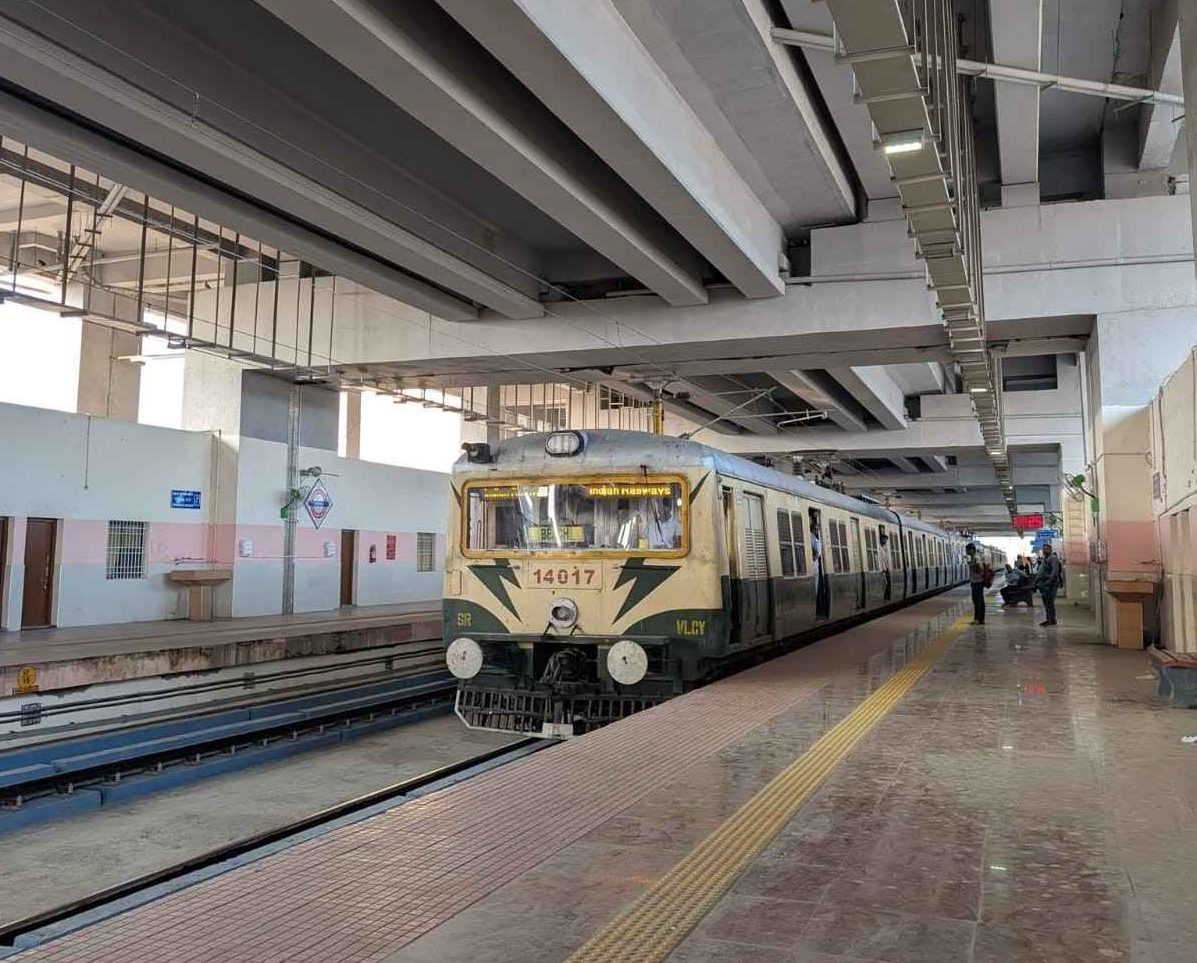
For daily commuters, Southern Railway rolled out new MEMU services including Salem–Erode, Palakkad–Pollachi and Kollam–Ernakulam routes, strengthening short-distance mobility across key corridors.
Network expansion through route extensions
Several existing train services were extended to improve access to underserved destinations. The Thiruvananthapuram–Madurai Amrita Express was extended up to Rameswaram, while the Mangaluru Central–Kozhikode Express was extended to Palakkad.
The KSR Bengaluru–Kannur Express was also extended to Kozhikode, creating a direct rail link between Bengaluru and the Malabar region.
Higher frequencies meet growing demand
Southern Railway increased the frequency of several services to cater to rising passenger demand. The Tirupati–Rameswaram Express was upgraded from a tri-weekly service to four trips a week.
Passenger services between Tiruchirappalli and Karaikudi, as well as Karaikudi and Virudhunagar, were converted into daily operations, providing greater flexibility for regular travellers.
More than 150 stations receive new stoppages
The railway zone added new train stoppages at over 150 stations across Tamil Nadu and Kerala during the year. The initiative is expected to improve accessibility for passengers in smaller towns and semi-urban areas by providing direct access to long-distance and regional train services.
Several stations, including Vadakara in Kerala, received stoppages for multiple trains, expanding travel options for local residents.
Faster trains reduce travel time
Southern Railway undertook timetable rationalisation and operational improvements that enabled faster journeys on more than 80 express and passenger services.
The Kollam–Tambaram Express saw its journey time reduced by 85 minutes, while the Secunderabad–Thiruvananthapuram Express became faster by 110 minutes. The improvements were supported by upgrades in track infrastructure, signalling systems and operational planning.
Additional coaches boost passenger capacity
To accommodate growing passenger traffic, Southern Railway augmented 41 pairs of trains and seven single services during FY26. A total of 95 additional coaches were deployed using 43 rakes across the network.
The Mangaluru–Thiruvananthapuram Vande Bharat Express was expanded to a 16-coach formation, while the Chennai–Nagercoil Vande Bharat was upgraded from 16 to 20 coaches.
The additional capacity included LHB coaches for long-distance trains and expanded MEMU formations in Kerala. Tamil Nadu received 65 additional coaches, Kerala 47, Karnataka 34 and Andhra Pradesh 22.
Focus on passenger-centric growth
Southern Railway said the initiatives undertaken during FY26 reflect its focus on strengthening passenger connectivity, reducing travel times and improving travel comfort across southern India. The zone noted that the expansion programme required coordinated planning across divisions and railway zones to support growing mobility needs across the region.