


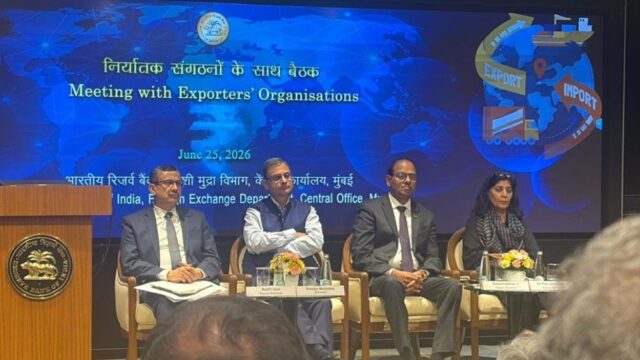
The Gem & Jewellery Export Promotion Council (GJEPC), the apex trade body for the gem and jewellery industry, has urged the Reserve Bank of India (RBI) to introduce a series of banking and regulatory reforms to improve the competitiveness of India’s gem and jewellery exports.
The recommendations focus on improving exporters’ access to working capital, reducing compliance bottlenecks, streamlining banking procedures and creating a more facilitative regulatory framework for the sector.
Meeting with RBI
The proposals were presented during an interaction between GJEPC Executive Director Sabyasachi Ray and RBI Governor Sanjay Malhotra, Deputy Governor Rohit Jain and senior RBI officials.
GJEPC sought a calibrated relaxation permitting advance remittances of up to $500,000 for gold imports from OECD- and LBMA-approved suppliers by recognised exporters, SEZ units and export-oriented manufacturers.
It also requested RBI to allow advance payments for importing jewellery findings, mountings and other manufacturing components.
Reducing compliance burden
The Council urged RBI to direct banks to levy reasonable service charges on MSME exporters, stating that high banking charges increase transaction costs and erode global competitiveness.
It also highlighted persistent operational issues in the Import Data Processing and Monitoring System (IDPMS) and Export Data Processing and Monitoring System (EDPMS), particularly legacy entries affecting regulatory compliance and exporters’ access to bank credit.
In addition, GJEPC called for uniform implementation of the revised Foreign Exchange Management (Export and Import of Goods and Services) Regulations across authorised dealer banks.
Support for exports
The Council sought clear operational guidelines for e-commerce jewellery exports involving returned goods, reflecting the rapid growth of online exports.
It also recommended restoring the export proceeds realisation period for SEZ units from the current nine months to 12 months, citing the industry’s longer credit cycles and consignment-based business model.
Further, GJEPC proposed a separate regulatory framework for export-linked Gold Metal Loans to distinguish them from gold mobilised for domestic consumption and facilitate export manufacturing.