


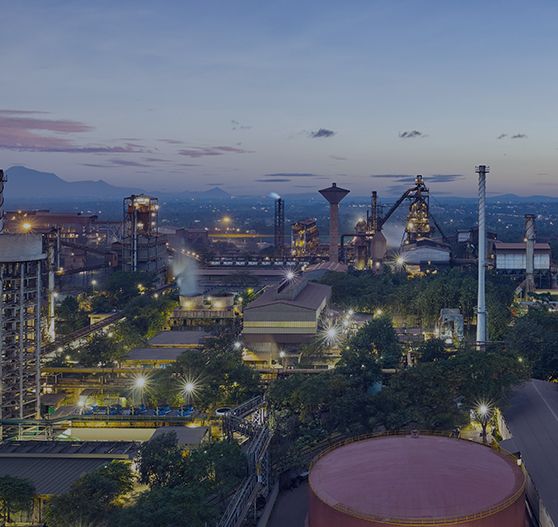
JSW Steel Ltd has raised its India steelmaking capacity target to 62 million tonnes per annum (MTPA) by FY2031-32 from its earlier goal of 50 MTPA by FY2030-31, as the company prepares to meet rising domestic steel demand.
Including its strategic joint ventures with Japan’s JFE Steel Corporation and South Korea’s POSCO Group, the company’s total steelmaking capacity in India is expected to reach 78 MTPA. Taking into account its US operations, the combined global capacity will approach 80 MTPA, Chairman and Managing Director Sajjan Jindal said in his message to shareholders in the company’s Annual Report 2026.
The company also plans to expand its Vijayanagar facility by another 5 MTPA, taking the plant’s total capacity to around 25 MTPA. The expansion is expected to make it the world’s largest single-location steel plant.
Strategic partnerships
JSW Steel said its partnership with JFE Steel marks a significant milestone in its long-term growth strategy.
The joint venture, announced in December 2025 for the steel business of Bhushan Power & Steel Ltd (BPSL), combines JSW Steel’s market leadership in India with JFE’s advanced technology to strengthen its portfolio of value-added steel products.
Jindal said, “Global steel players have shown a keen interest in India’s structural growth story, and JSW Steel has continued to be a preferred partner. This joint venture brings together JSW Steel’s market leadership and operational expertise in India with JFE’s advanced technological capabilities, creating a platform to expand the business and develop a differentiated portfolio of value-added steel products.”
The transaction is also expected to strengthen the company’s balance sheet through deleveraging of approximately ₹37,000 crore, of which around ₹30,000 crore had already been completed by the end of March 2026. The remaining deleveraging will be completed after JFE’s second tranche of equity investment.
The company also announced a joint venture with POSCO Group in April 2026 to establish a 6 MTPA greenfield integrated steel plant in Odisha, formalised during the India-South Korea Summit in New Delhi.
Value-added steel focus
He said value-added and special products accounted for more than 60% of its sales in FY26, compared with just 25% in FY14, reflecting a significant shift towards higher-margin products.
Following the acquisition of ThyssenKrupp’s CRGO facility in Nashik, the company plans to expand its cold rolled grain-oriented (CRGO) electrical steel capacity to 350,000 tonnes by FY2030, supporting India’s energy transition and electric vehicle ecosystem.
The company has also approved multiple value-added capacity expansions across its Vijayanagar, Khopoli, Raigarh, Rajpura and Salem facilities covering galvanising, automotive steel, coated products and structural steel.
Raw material security
JSW Steel said strengthening raw material security remains a key strategic priority. The company currently operates 13 of its 25 captive iron ore mines and expects captive production to meet around 50% of its iron ore requirement by FY31, up from approximately 33% currently.
To strengthen coking coal security, the company completed the acquisition of Minas de Revuboè in Mozambique during March 2026. The mine has estimated resources of around 850 million tonnes and is expected to produce about 250 million tonnes of saleable prime hard coking coal over its life.
The first phase of the project is targeted for completion by mid-2028 with production of around 5 MTPA of usable coking coal.
The company has also increased its effective stake in Australia’s Illawarra prime hard coking coal mines from 20% to 30% and expects captive coking coal supplies to meet around 50% of its requirements by FY31.
Decarbonisation roadmap
He said JSW Steel remains committed to reducing its carbon footprint through renewable energy, green hydrogen and process innovation.
The company targets around 42% reduction in carbon dioxide emissions by 2030 and aims to achieve net-zero carbon emissions by 2050.
During FY26, it commissioned around 1 GW of renewable energy capacity, while the board approved a total of 2.5 GW of renewable energy projects along with 320 MWh of battery storage.
The company also commenced the use of green hydrogen at its Vijayanagar plant, launched biomass-based initiatives and deployed India’s first electric locomotive for captive logistics as part of its lower-carbon investment strategy.