


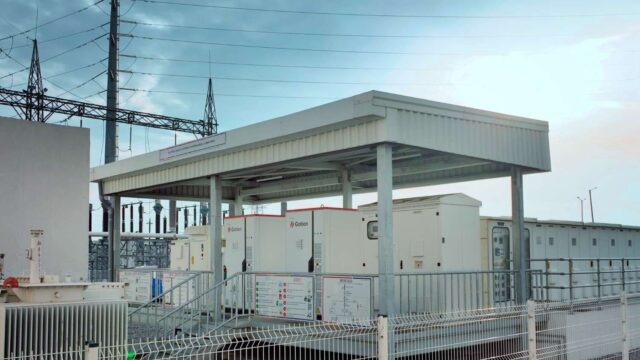
Maruti Suzuki India has commissioned a 1 MWh Battery Energy Storage System (BESS) at its Kharkhoda manufacturing facility, marking another step in the company’s transition towards cleaner energy and lower carbon emissions.
The BESS installation complements the 20 MWp solar power plant commissioned at the Kharkhoda facility earlier this year. The energy storage system will capture excess solar power generated during periods of low electricity demand, such as plant holidays, and store it for use during production hours, improving renewable energy utilisation and reducing dependence on conventional power sources.
Enhancing renewable energy utilisation
The company said that while the solar power plant continues to generate electricity even during facility shutdowns, the absence of demand results in unused energy. The newly commissioned BESS addresses this challenge by storing surplus electricity and supplying it when required.
Besides optimising renewable energy consumption, the battery storage system is also expected to enhance the stability of the facility’s internal power distribution network. The project has been deployed as a pilot initiative at the Kharkhoda plant.
Supporting decarbonisation goals
Maruti Suzuki India Managing Director & CEO Hisashi Takeuchi said the company remains aligned with India’s efforts to build self-reliant and sustainable energy ecosystems.
“The introduction of the Battery Energy Storage System (BESS) at our Kharkhoda facility is part of these continued efforts. With a lifecycle of about 15 years, BESS will help reduce nearly 54 tonnes of CO₂ emissions annually,” he said.
Takeuchi added that even as the company’s production volumes expand, Maruti Suzuki remains committed to lowering Scope 1 and Scope 2 emissions, both in terms of carbon intensity and absolute emissions from manufacturing operations.
The company’s sustainability roadmap is aligned with the environmental vision of its parent, Suzuki Motor Corporation, which has set an intermediate target of reducing Scope 1 and Scope 2 CO₂ emissions by 42% by FY2030-31 compared with FY2022-23.
Building a greener manufacturing ecosystem
The battery energy storage project forms part of Maruti Suzuki’s broader strategy to expand renewable energy usage across its manufacturing facilities while supporting India’s clean energy transition. As the company scales up production capacity, energy storage solutions are expected to play an increasingly important role in integrating renewable power into industrial operations.