


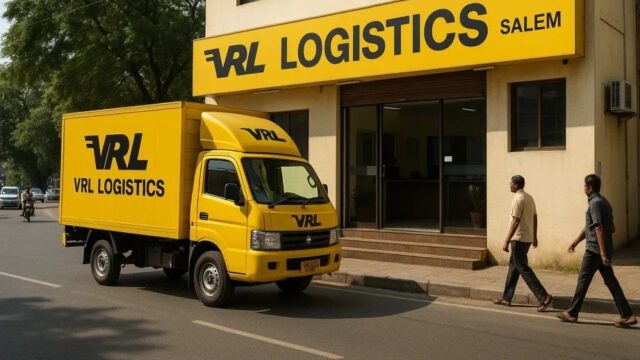
VRL Logistics Ltd has focused on its core goods transportation business after exiting non-core operations, a move that has strengthened profitability and positioned the company for long-term growth despite a challenging operating environment.
In his message to shareholders in the company’s Annual Report 2025-26, Chairman & Managing Director Vijay Sankeshwar said the company has completed a strategic transformation by hiving off businesses such as wind power, bus operations and passenger air transport, enabling it to focus exclusively on less-than-truckload (LTL) and general parcel transportation.
Core business takes centre stage
Sankeshwar said the company’s sharper focus on its core competency has insulated it from volatility in peripheral businesses while allowing management to concentrate on improving operational efficiency.
He noted that FY26 was marked by intense competition and pressure on freight pricing across the logistics sector. Instead of chasing volumes, VRL chose to prioritise profitability by restructuring select corporate contracts and exiting low-margin, unremunerative businesses over the past two years.
Although the strategy temporarily moderated shipment volumes, it helped improve operational yields while preserving healthy EBITDA margins.
“Our structural cost advantages, supported by economies of scale and our in-house information technology capabilities, remained intact,” Sankeshwar said.
Green investments and compliance
The company is also accelerating its transition towards cleaner energy and sustainable logistics operations through increased deployment of green equipment and initiatives aimed at reducing its carbon footprint.
As part of its compliance and sustainability strategy, VRL is investing in a state-of-the-art vehicle scrappage facility at its central hub in Varur near Hubballi, Karnataka.
According to Sankeshwar, the facility will not only process the company’s ageing fleet but will also cater to external commercial vehicles, creating a new revenue stream while complying with evolving regulatory requirements.
Property ownership strategy
Highlighting another strategic shift, Sankeshwar said VRL is increasingly investing in owning logistics properties instead of operating from leased premises.
He said redirecting cash flows towards acquiring strategically located assets would reduce recurring rental and GST expenses, generate long-term value appreciation and protect the company from rising lease costs.
The move is expected to strengthen the company’s balance sheet while enhancing financial resilience over the long term.
Confident outlook
Looking ahead, Sankeshwar expressed confidence in the company’s growth prospects, citing its strong balance sheet, optimised branch network and largely debt-free fleet profile.
He said tighter e-invoicing norms and increasing formalisation of India’s logistics sector are expected to accelerate the shift of freight business from unorganised transport operators to organised players such as VRL Logistics.
“We are fully prepared to capture this growth,” Sankeshwar said.
He also expressed confidence in the company’s leadership team, stating that the next generation of management is well equipped to steer VRL Logistics into its next phase of growth.