


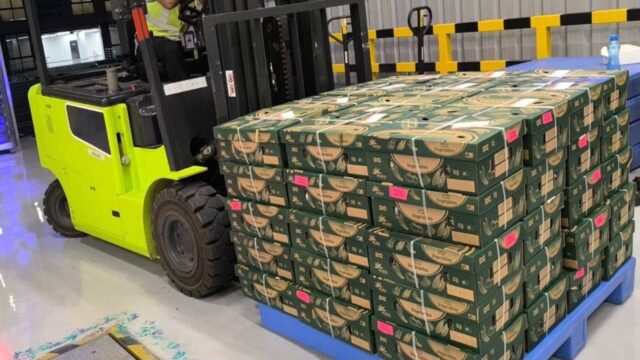
When Air India Express flight IX207 took off from the newly inaugurated Navi Mumbai International Airport to Abu Dhabi on July 15, it carried more than passengers.
In its belly hold were 1.79 tonnes of fresh guavas from Maharashtra’s Konkan region and Drumstick Moringa, marking the airport’s first international export cargo shipment and signalling the opening of a new trade gateway for western India’s agricultural exporters.
The inaugural consignment may have been modest in size, but its economic significance is far greater. It demonstrates how expanding aviation infrastructure is becoming a critical enabler of India’s agricultural exports by connecting farmers directly to high-value overseas markets.
New export corridor for western India
The Navi Mumbai-Abu Dhabi route, operated by a Boeing 737-8, offers around 2.5 tonnes of belly-hold cargo capacity on each flight. With Air India Express operating the service three times a week, Air India Cargo expects to transport nearly 25 tonnes of export cargo every month, creating a dedicated channel for fresh produce and other time-sensitive shipments to the UAE and the wider Gulf region.
For exporters in Maharashtra and neighbouring states, the new service reduces dependence on Mumbai’s existing cargo infrastructure while providing quicker access to one of India’s largest agricultural export destinations.
“The first export shipment from Navi Mumbai connects growers, traders and businesses in western India directly with one of the region’s most important international markets,” said Air India Head of Cargo Ramesh Mamidala.
Rising demand for premium Indian produce
The shipment reflects changing consumption patterns across the Gulf, where demand for premium fresh fruits, vegetables and health-focused products continues to rise.
Konkan guavas, known for their flavour and quality, have long enjoyed strong demand, while Drumstick Moringa has emerged as a high-value export due to its growing popularity among health-conscious consumers worldwide.
For Indian farmers, access to international buyers often translates into significantly better price realisation than domestic markets, making reliable air cargo capacity a key driver of export growth.
Cold chain becomes the competitive advantage
The success of fresh produce exports depends as much on logistics as on cultivation.
From refrigerated trucks and temperature-controlled airport warehouses to specialised cargo containers, cool dollies and thermal blankets, every stage of the supply chain is designed to preserve freshness until the shipment reaches overseas retailers.
Air India Cargo’s facilities are GDP-certified, ensuring globally accepted standards for handling temperature-sensitive cargo such as fruits, vegetables and pharmaceuticals.
“Speed alone is not enough. Maintaining the integrity of the shipment from origin to destination is equally important,” Mamidala said, highlighting the airline’s investments in cold-chain infrastructure.
More than an airport milestone
The first international cargo movement from Navi Mumbai is also a glimpse into India’s evolving export ecosystem.
As new airports become integrated with modern logistics networks, they are expected to reduce supply chain bottlenecks, improve export competitiveness and create fresh opportunities for farmers, freight operators and agribusinesses.
With demand for Indian fresh produce continuing to grow across the West Asia, the Navi Mumbai-Abu Dhabi corridor could become an important gateway for western India’s agricultural exports.
For India’s farm economy, the inaugural shipment represents more than the movement of 1.79 tonnes of produce, it marks the beginning of a new trade corridor linking farms in Maharashtra with consumers across global markets.