


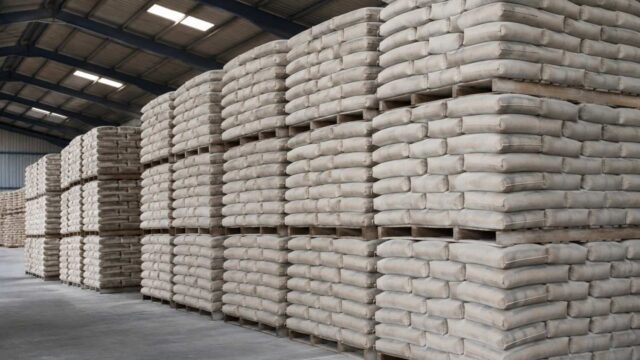
Rising input costs triggered by the ongoing West Asia conflict are expected to reduce the operating margins of Indian cement manufacturers by ₹50-75 per tonne this fiscal, even as steady domestic demand and healthy cash flows keep the sector’s credit profile stable, according to Crisil Ratings.
A Crisil analysis of 18 cement companies, representing nearly 90% of India’s installed cement capacity, said operating margins are likely to decline to ₹925-950 per tonne this fiscal from around ₹1,000 per tonne in fiscal 2026.
Higher fuel and freight costs to hurt profitability
The ratings agency said the deterioration in profitability will largely be driven by rising power, fuel and freight costs amid geopolitical tensions in West Asia.
Crisil Ratings Director Anand Kulkarni said higher prices of petroleum coke (petcoke) and imported coal, coupled with elevated diesel prices, will weigh on manufacturers’ cost structures.
“The West Asia conflict is expected to shave ₹50-75 per tonne off cement makers’ profitability this fiscal. This will be driven mainly by higher power and fuel costs, which account for about 30% of total costs, as petcoke and imported coal prices have surged amid geopolitical uncertainties. Freight costs, accounting for about a quarter of total costs, are also likely to remain elevated because of higher diesel prices. The hit will be harder in the first half, before easing commodity prices help moderate cost pressures later in the year,” he said.
Despite the cost pressures, cement prices are expected to remain firm. Crisil estimates that, after adjusting for the reduction in Goods and Services Tax (GST) rates, cement prices could rise 1-3% during the current fiscal.
Green energy to cushion impact
The increasing use of renewable energy is expected to partially offset rising input costs.
According to Crisil, green energy now accounts for 35-40% of the sector’s total electricity consumption, helping manufacturers reduce their dependence on conventional fuels and moderate the impact of volatile energy prices.
Infrastructure spending to support demand
Crisil expects domestic cement demand to grow 6-7% this fiscal, supported primarily by government-led infrastructure development.
Crisil Intelligence Director Sehul Bhatt said higher capital expenditure by the government would underpin demand despite weakness in some segments.
“Despite softening profitability, operating cash flows of cement makers should remain resilient on the back of steady 6-7% demand growth this fiscal. Infrastructure will be the key driver, aided by nearly 18% higher budgetary allocation for core ministries. Infrastructure accounts for about one-third of total cement consumption, and higher government spending should support project execution and cement demand,” he said.
Bhatt added that stronger infrastructure demand is expected to offset weaker rural housing demand, which may be affected by pressure on farm incomes due to the likelihood of a below-average monsoon.
Urban housing to improve
Urban housing demand is expected to strengthen during the fiscal, supported by lower home loan interest rates and the ongoing execution of projects under the Pradhan Mantri Awas Yojana (Urban).
Demand from industrial and commercial construction is also projected to remain healthy, providing additional support to cement consumption.
Credit outlook remains stable
Although cement companies are expected to continue investing in capacity expansion to meet rising demand, Crisil believes their balance sheets will remain strong.
Leverage, measured as net debt to EBITDA, is projected to increase modestly to 1.2-1.4 times this fiscal from around 1.0 time in fiscal 2026, but will remain at comfortable levels.
As a result, robust operating cash flows and healthy balance sheets are expected to support stable credit profiles across the sector.
However, Crisil cautioned that delays in infrastructure project execution or prolonged geopolitical tensions leading to sustained high commodity and energy prices could adversely impact cement demand and profitability.