


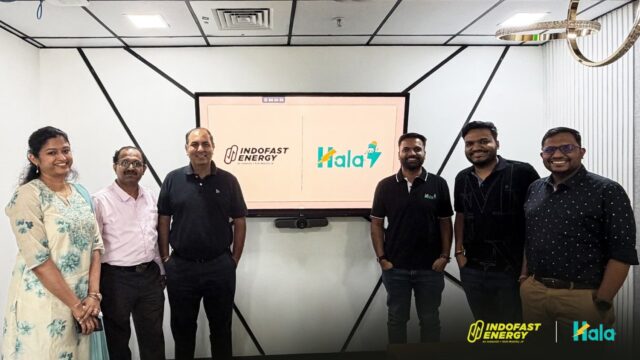
Indofast Energy, India’s battery-swapping solutions provider, has partnered with EV-as-a-service platform Hala Mobility to accelerate electric mobility adoption in the country’s last-mile logistics sector, with plans to expand their fleet to 40,000 vehicles by March 2027 and one lakh vehicles by 2028.
The companies said the partnership has already scaled rapidly, deploying 15,000 battery-swapping electric vehicles in less than a year across Hyderabad, Bengaluru, Delhi-NCR and Mumbai.
Rapid fleet expansion
The collaboration combines Indofast Energy’s battery-swapping infrastructure with Hala Mobility’s fleet operations to provide uninterrupted mobility solutions for delivery riders, fleet operators and gig economy workers.
The companies said the swappable battery model has demonstrated its operational viability for commercial fleets that typically cover 80-100 km daily, where quick battery replacement significantly improves vehicle utilisation.
The battery-swapping process takes around two minutes, helping riders avoid charging downtime while reducing operational costs by up to 40% compared with petrol-powered vehicles.
Focus on last-mile logistics
The partnership is aimed at addressing two major challenges facing commercial EV adoption—range anxiety and charging delays.
By integrating battery-swapping technology into Hala Mobility’s fleet, the companies expect to improve fleet uptime, rider productivity and overall operational efficiency for last-mile delivery businesses.
The partners also plan to expand deployments in existing markets while entering Pune, Chennai and Jaipur.
Scaling commercial EV ecosystem
Indofast Energy Chief Business Officer Rajat Malhan said the rapid deployment of 15,000 vehicles demonstrates that battery swapping has become the preferred energy solution for fleet operators focused on uptime and operational economics.
He said the company aims to scale the partnership to 40,000 vehicles by March 2027 and one lakh vehicles by 2028 while building an integrated ecosystem that supports India’s commercial EV transition.
Hala Mobility Founder Srikanth Reddy said the collaboration enables the company to offer delivery partners reliable battery-swapping infrastructure, eliminating downtime and helping riders maximise daily earnings.
He added that the successful rollout validates the model’s ability to build a more efficient, sustainable and inclusive electric mobility ecosystem for India’s logistics sector.
Expanding battery-swapping network
Indofast Energy currently operates a network of 1,900 battery swap stations across 24 cities, supporting more than 120,000 electric vehicles.
According to the company, its network has facilitated over 2 billion kilometres of clean mobility while helping avoid more than 97,000 tonnes of carbon dioxide emissions.
The two companies said they will continue working together to make last-mile logistics more affordable and sustainable by expanding battery-swapping infrastructure and accelerating electric vehicle adoption across India.