


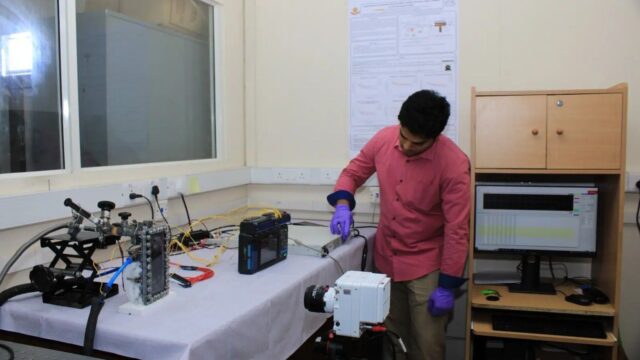
Researchers at the Indian Institute of Technology Madras (IIT Madras) have developed and experimentally validated a next-generation cooling technology that could significantly improve thermal management in compact electronic devices, potentially benefiting applications ranging from smartphones and laptops to data centres, defence electronics and electric vehicles.
The research introduces a novel Flat Plate Pulsating Heat Pipe (FPPHP) configuration designed to address one of the biggest engineering challenges in modern electronics, efficiently dissipating heat as devices become smaller, more powerful and increasingly energy intensive.
Addressing a growing challenge
As electronic devices continue to shrink while delivering higher computing power, managing the heat generated by processors and electronic components has become critical.
Excess heat can degrade performance, reduce component lifespan and affect the reliability of consumer electronics, enterprise servers and mission-critical defence systems.
The IIT Madras research offers a compact and efficient cooling solution capable of overcoming these limitations.
A smarter cooling architecture
The study was led by Prof. Arvind Pattamatta and Dr. Pallab Sinha Mahapatra from the Department of Mechanical Engineering, IIT Madras, in collaboration with researchers from IIT Madras, Sri Sivasubramaniya Nadar College of Engineering, Chennai, and the Instruments Research & Development Establishment (IRDE), Dehradun.
Unlike conventional flat plate pulsating heat pipe designs, where the heat-absorbing and heat-releasing sections are located on the same side of the plate, the IIT Madras team developed a unique antiparallel configuration, placing the evaporator and condenser on opposite faces.
The design makes the cooling system particularly suitable for compact electronic enclosures where space is severely constrained.
How it works
The Flat Plate Pulsating Heat Pipe functions like a miniature, self-contained cooling system. It consists of tiny channels machined into a flat plate and partially filled with a working fluid.
As heat is generated, the liquid evaporates at the hot end, travels to the cooler end where it condenses, and then naturally returns, creating a continuous cooling cycle without requiring mechanical pumps.
Prof. Arvind Pattamatta said: “Think of it like a small, sealed tube that contains a liquid which sloshes back and forth. When one end gets hot, the liquid evaporates, moves to the cooler end, condenses and returns, creating a natural cooling cycle.”
Better performance with O-ring design
The researchers evaluated two sealing configurations, one using silicon gaskets and another using O-rings.
Although the gasket configuration retained more working fluid, the O-ring design delivered superior thermal performance because it allowed stronger fluid pulsation inside the cooling channels.
At a heat input of 100 watts, the best-performing O-ring configuration reduced the evaporator temperature to around 69°C, compared with 75°C for the gasket version.
It also achieved an overall thermal resistance of 0.44 K/W, representing a 16% improvement over the gasket-based design.
According to IIT Madras Research Scholar Davis T. Vempany, “We noticed that while the gasket design holds more fluid initially, the O-ring version allows that fluid to pulsate much more freely. Think of it like blood circulation, better pulsation means better transport. That’s exactly what we’re achieving here.”
Aluminium outperforms copper
One of the study’s most significant findings was that aluminium performed better than copper in the new cooling configuration.
The aluminium-based FPPHP demonstrated nearly 20% lower thermal resistance than its copper counterpart while also offering lower weight and reduced manufacturing costs.
“Aluminium is lighter and more practical for commercial FPPHP production. Finding that it also outperforms copper in our tests is a strong signal for commercial viability,” said Dr. Pallab Sinha Mahapatra.
Surface engineering enhances cooling
The research team also explored advanced surface treatments inside the cooling channels. By making the channel walls superhydrophilic, allowing the liquid to spread more efficiently, thermal resistance was reduced by an additional 16% compared with untreated surfaces.
The enhanced wetting improves thin-film evaporation, enabling faster and more efficient heat transfer.
Wide-ranging industrial applications
The technology has the potential to find applications across multiple industries.
In consumer electronics, it could enable laptops, smartphones and compact devices to operate at lower temperatures while maintaining higher performance.
For data centres, improved thermal management could help address cooling constraints associated with increasingly powerful servers, although system-level energy savings would require further validation.
The technology also has strong relevance for defence and aerospace, where reliable thermal control is essential for radar systems, avionics and other high-power electronics. The project received support from the Research and Innovation Centre-DRDO at IIT Madras Research Park, highlighting its strategic importance.
In the electric vehicle segment, the cooling solution could potentially improve thermal management of battery packs and power electronics, contributing to enhanced safety and longer component life.
IIT Madras Research Scholar Hemanth Dileep said: “Our antiparallel FPPHP layout offers a practical, space-efficient answer to a problem that keeps growing as electronics shrink. We believe this can enhance reliability across a wide spectrum of systems—from handheld devices to heavy-duty industrial gear.”