


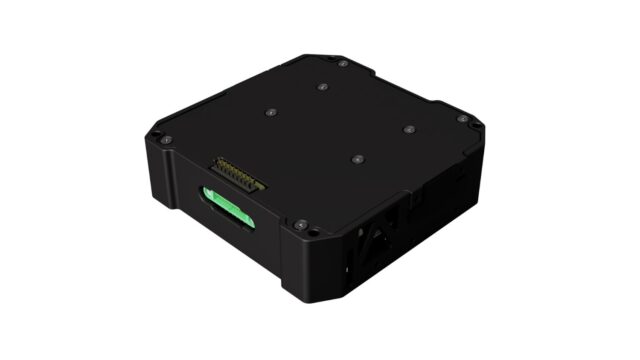
Indian space technology startup TakeMe2Space has announced that its PowerBank-50 satellite battery pack has officially become “space proven” after successfully completing its maiden mission aboard Skyroot Aerospace’s Vikram-1 rocket, marking a significant milestone for India’s growing private space ecosystem.
The battery pack powered Cosmoserve Space’s experimental payload on the Orbital Adjustment Module (OAM) during Mission ‘Aagaman’, which was launched from the Satish Dhawan Space Centre, Sriharikota, on July 18. The system operated successfully at an altitude of 450 km, enduring launch vibrations and the harsh conditions of space, including vacuum, radiation and extreme temperature fluctuations.
The mission was historic for India as Vikram-1 became the first privately developed Indian rocket to reach orbit, placing India among the few nations where a private company has independently demonstrated orbital launch capability.
Flight heritage opens commercial opportunities
For satellite component manufacturers, flight heritage is one of the most critical qualifications, as satellite operators and insurers typically avoid untested hardware due to the high costs associated with mission failures.
By successfully completing its first orbital mission, PowerBank-50 has crossed a major commercial hurdle, positioning itself as a flight-proven, made-in-India alternative to imported satellite battery systems.
“Batteries are among the most safety-critical components on any launch vehicle and satellite. Flying successfully on India’s first private orbital launch validates our technology in the most demanding environment possible,” said TakeMe2Space Founder and CEO Ronak Kumar Samantray.
Reducing dependence on imports
The company said the achievement could help India’s rapidly expanding small satellite industry reduce reliance on imported battery packs, which are often expensive and involve long procurement cycles.
PowerBank-50 integrates high-energy-density lithium-ion cells, an intelligent battery management system, onboard cell heaters and an aluminium flight enclosure. The battery has now advanced from ground qualification to the highest technology readiness level by proving itself in orbit.
The company believes locally manufactured, flight-proven power systems will lower entry barriers for Indian startups, universities and research institutions building satellites for applications such as weather forecasting, disaster management, agriculture, communications and Earth observation.
Compact design with competitive pricing
PowerBank-50 offers more than 50 Wh of energy storage in a package weighing 380 grams, roughly the size of a paperback book. It is designed for CubeSats and microsatellites, supports mission durations of up to five years in low-Earth orbit and can be stacked for higher power requirements.
TakeMe2Space has priced the battery pack at ₹1,04,900, positioning it as a significantly lower-cost alternative to comparable imported products.