


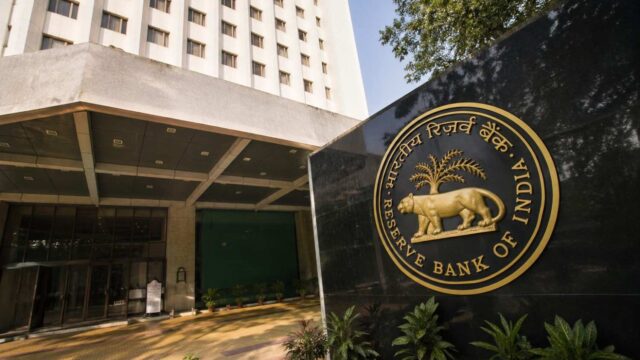
The Reserve Bank of India (RBI) on Wednesday left the benchmark repo rate unchanged at 5.25% for the second consecutive policy review, opting to balance inflation risks against a resilient domestic economy amid an increasingly uncertain global environment.
The six-member monetary policy committee (MPC), chaired by RBI Governor Sanjay Malhotra, unanimously voted to maintain the policy repo rate under the Liquidity Adjustment Facility (LAF) at 5.25%.
The central bank also retained its neutral monetary policy stance, signalling that future policy actions will remain data-dependent.
Consequently, the Standing Deposit Facility (SDF) rate remains at 5.00%, while the Marginal Standing Facility (MSF) rate and the Bank Rate continue at 5.50%.
The MPC held its 62nd meeting from August 3 to 5. Besides the Governor, the meeting was attended by members Nagesh Kumar, Saugata Bhattacharya, Ram Singh, Poonam Gupta, and Indranil Bhattacharyya.
Growth outlook remains robust
The RBI projected India’s real GDP growth at 6.7% for FY27, underpinned by resilient domestic demand, continued infrastructure spending, healthy bank credit growth and strong services exports.
Quarter-wise, the central bank expects GDP growth at: Q1 FY27: 7% , Q2 FY27: 6.4% , Q3 FY27: 6.5% and Q4 FY27: 6.8%.
Growth for the first quarter of FY28 has been projected at 7.3%.
The RBI said private consumption remains robust, while investment activity continues to be supported by high capacity utilisation, healthy credit flow and the government’s infrastructure push. Merchandise exports are also expected to benefit from recent trade agreements alongside continued strength in services exports.
Inflation remains a concern
While inflation has remained broadly under control, the central bank flagged renewed pressure from food and fuel prices.
Headline Consumer Price Index (CPI) inflation rose to 4.4% in June 2026, ending a 16-month period during which inflation remained below the RBI’s target level. The increase was largely driven by higher food inflation across multiple categories and rising fuel prices following an increase in global crude oil prices.
Core inflation, excluding food and fuel, remained steady at 3.9%, indicating that underlying demand-side inflationary pressures continue to be contained.
The RBI has projected CPI inflation at 5.0% for FY27, with quarterly estimates of: Q2 FY27: 4.7%, Q3 FY27: 5.9% and Q4 FY27: 5.5%.
Inflation for Q1 FY28 is projected at 5.3%, while core inflation is estimated at 4.3% during FY27.
Global uncertainties cloud outlook
The RBI cautioned that the global economic environment remains volatile, citing geopolitical tensions in West Asia, fluctuating crude oil prices, persistent inflation across advanced economies and uncertainty surrounding global monetary policy.
The central bank also highlighted risks from an uneven southwest monsoon under El Niño conditions, which could affect agricultural output and rural demand. However, it believes government initiatives on climate-resilient agriculture, crop diversification and water conservation will help mitigate these risks.
Neutral stance signals policy flexibility
By retaining the neutral stance, the RBI has kept its policy options open amid competing risks to growth and inflation. While India’s economic fundamentals remain strong, policymakers appear cautious about global uncertainties, weather-related disruptions and commodity price volatility before considering any further change in interest rates.