


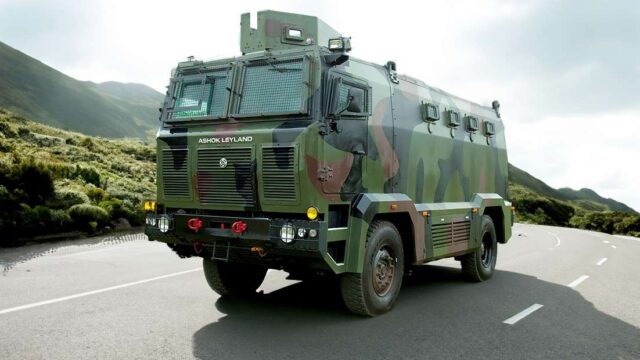
India’s defence industry is expected to expand from ₹1.78 lakh crore in FY26 to ₹3 lakh crore by FY29, registering a compound annual growth rate (CAGR) of around 19%, while maintaining PBILDT margins of 20–22%, according to CareEdge Ratings.
The growth is expected to strengthen domestic defence capabilities, reduce import dependence and enhance India’s position in the global defence ecosystem.
CareEdge Ratings said the sector is witnessing sustained growth momentum amid heightened geopolitical tensions, evolving warfare dynamics and rapid technological advancements.
₹7.85 lakh crore defence allocation
The Union Budget for FY27 allocated ₹7.85 lakh crore to the Ministry of Defence, representing an increase of around 15% over the FY26 Budget Estimate.
The higher allocation, along with policy initiatives including foreign direct investment (FDI) liberalisation, positive indigenisation lists, defence export promotion and greater emphasis on research and development, is driving a structural transformation in the sector.
FDI of up to 74% is permitted under the automatic route in the defence sector.
These measures are aimed at reducing India’s dependence on imported defence equipment while strengthening domestic manufacturing capabilities and export competitiveness.
“India’s defence sector is witnessing a structural transformation driven by rising indigenisation, higher capital outlay, and increasing private sector participation. With defence production targeted to reach ₹3 lakh crore by FY29 and a strong focus on domestic procurement, the sector is expected to maintain healthy growth momentum over the medium term,” said CareEdge Ratings Associate Director, Pritesh Rathi.
“Improving execution capabilities, expanding manufacturing capacity, and sustained policy support are likely to strengthen India’s position in the global defence ecosystem,” he added.
Import dependence declines
India has substantially reduced its dependence on imported defence equipment through increased domestic manufacturing, reflecting the government’s focus on defence indigenisation.
However, imports continue to remain important for advanced platforms and high-technology systems.
Russia remains a key defence supplier to India, although its share of India’s arms imports declined to around 40% during 2021–25 from approximately 70% during 2011–15.
India has increasingly diversified its procurement towards France and Israel, seeking to reduce single-supplier risks while gaining access to advanced technologies.
India remained the world’s second-largest arms importer during 2021–25, accounting for around 8.2% of global arms imports.
Although arms imports declined by around 4% compared with 2016–20, ongoing procurement of advanced fighter aircraft, submarines and other high-technology defence systems indicates that foreign suppliers will continue to play a role alongside the country’s indigenisation drive.
Defence exports hit record ₹38,424 crore
India’s defence exports are emerging as a major growth driver for the industry.
Defence exports reached an all-time high of ₹38,424 crore in FY26, registering a 62.66% increase over FY25, according to CareEdge Ratings.
Both public- and private-sector companies contributed to the export growth. Defence Public Sector Undertakings (DPSUs) accounted for 54.84% of exports, while the private sector contributed 45.16%.
The number of defence exporters increased to 145 in FY26 from 128 in FY25, indicating deeper participation across the industry.
India currently exports defence equipment to more than 80 countries. Myanmar, the Philippines and Armenia were the top three markets during 2021–25.
The growth in exports reflects increasing global acceptance of Indian defence products, greater integration with international supply chains and higher defence procurement amid geopolitical conflicts and security uncertainties.
India targets ₹50,000 crore exports by FY29
Policy support through ease-of-doing-business measures, streamlined export procedures and the push towards indigenous manufacturing has further accelerated defence exports.
India aims to increase defence exports to ₹50,000 crore by FY29 and ₹2.8 lakh crore by 2047 under the Viksit Bharat vision.
“India’s defence exports have also scaled new highs, reaching ₹38,424 crore in FY26, supported by growing global acceptance of indigenous defence products and increasing integration into international supply chains,” said CareEdge Ratings Director, Pulkit Agarwal.
“Backed by favourable policy initiatives, rising geopolitical uncertainties, and continued investments towards technology and R&D, the sector is well positioned to enhance export competitiveness and support India’s long-term self-reliance objectives,” he added.
DPSUs remain key growth drivers
CareEdge Ratings’ analysis of old DPSUs, new DPSUs and other public sector undertakings and joint ventures, which collectively account for around 85–90% of their aggregate defence production, indicates a steady growth trajectory in total operating income.
Profitability is also expected to remain robust, with PBILDT margins projected at around 22% in FY27.
DPSUs are expected to continue playing a critical role in reducing import dependence and supporting defence exports, while the growing participation of private-sector companies is likely to broaden India’s manufacturing and technology capabilities.
With higher government spending, rising indigenisation, expanding private-sector participation and record defence exports, India’s defence industry is increasingly shifting from an import-dependent model towards a manufacturing and export-oriented ecosystem.