


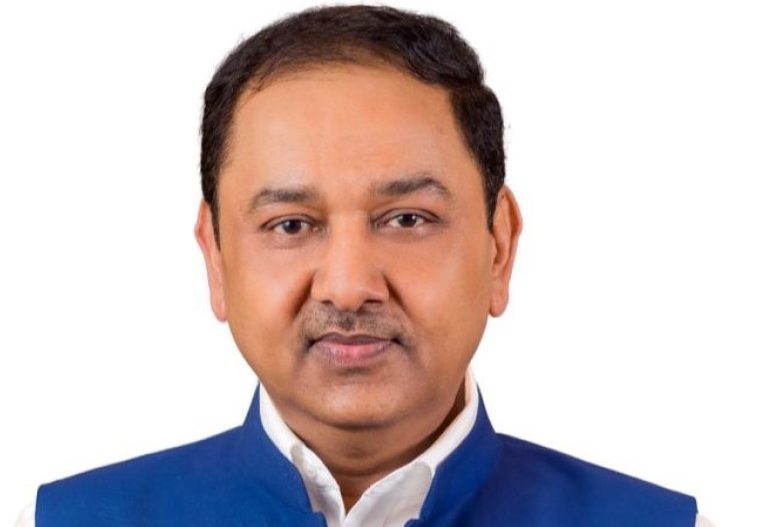
Hinduja Group flagship Ashok Leyland is stepping up investments in new technologies, products and emerging market opportunities as it pursues a premiumisation-led growth strategy, Managing Director and Chief Executive Officer Shenu Agarwal said during the company’s Q1 FY27 earnings conference call.
The commercial vehicle maker, which traditionally invested around ₹400-500 crore annually, has increased its capital expenditure to about ₹900-1,000 crore over the past two years. The company expects capex to rise further over the next two to three years as it looks to strengthen its product portfolio and enter new “white spaces”.
“Capex will continue to increase over the next two to three years,” Agarwal said, adding that the company is evaluating new technologies, differentiated products and segments where it currently has limited presence.
According to Agarwal, the higher investment is aimed at laying the foundation for the company’s growth over the next five years, with the availability of stronger cash flows providing greater flexibility to invest in future opportunities.
Focus on premiumisation and new products
Ashok Leyland is continuing to pursue premiumisation by focusing on products and services that can offer customers better total cost of ownership (TCO) and operating efficiency.
A key product highlight during the quarter was the introduction of a new air suspension technology in multi-axle trucks. The company claims the technology is an industry first and enables higher payload capability and improved TCO for customers.
The company has also seen strong customer response to its recently launched HIPPO tractor and TAURUS tipper ranges, which feature higher power and torque.
Agarwal said the company has a strong new product pipeline, with several launches planned for the remainder of FY27.
Service network expands
Ashok Leyland is also accelerating the digitalisation of its service operations under its flagship “Throw” programme.
The initiative is aimed at making service processes increasingly automated and intelligent through the deployment of artificial intelligence and other digital tools.
During Q1 FY27, the company added 33 touch points across its medium and heavy commercial vehicle (MHCV) and light commercial vehicle (LCV) businesses, with a greater focus on the North and East markets.
At the end of the quarter, the company’s network stood at 2,137 touch points, comprising 1,177 for MHCVs and 960 for LCVs.
Switch Mobility builds electric bus order book
Ashok Leyland’s electric mobility operations also continued to scale up during the quarter.
Its EV subsidiary, Switch Mobility India, recently secured an order for 650 electric buses, taking its order book to around 2,100 e-buses.
During the quarter, Switch Mobility delivered 225 electric buses and close to 300 electric light commercial vehicles.
Meanwhile, OHM Mobility, Ashok Leyland’s E-MaaS subsidiary, increased its operational fleet to more than 1,900 electric buses, adding over 500 units during the quarter.
The expansion of the electric bus fleet and Switch Mobility’s order pipeline underline Ashok Leyland’s increasing focus on electric commercial mobility alongside its conventional internal combustion engine portfolio.
GCC disruption hits exports
Agarwal said the company’s exports faced a temporary setback in Q1 FY27 due to operational disruptions at its Ras Al Khaimah (RAK) facility in the UAE, which assembles Ashok Leyland products for the GCC markets.
Operations at the facility were severely affected during April and part of May due to labour and material-related issues, including disruptions in the supply of locally procured components.
The company has since stabilised operations and is ramping up production. The facility produced around 600 units last month, with production expected to rise to 700 units this month and reach about 800 units next month.
While the facility has a nominal capacity of 600 units, Ashok Leyland has previously operated it at around 800 units through temporary arrangements.
Importantly, the company has not seen a loss of retail business in the GCC markets, Agarwal said. The decline in exports during Q1 was largely due to lower wholesale volumes and inventory reductions across the distribution chain.
The company, however, managed to offset some of the weakness through strong growth in the SAARC and African markets, where exports grew by around 40-60% year-on-year.
Agarwal said the GCC disruption was largely behind the company and expressed confidence in a recovery in export volumes as operations return to normal.